Goldman strategist says rally needs central bank rate cuts to continue
Goldman’s top asset-allocation strategist said the record rally still needs rate cuts to keep going, putting traders and advisers on alert for a fragile rebound.
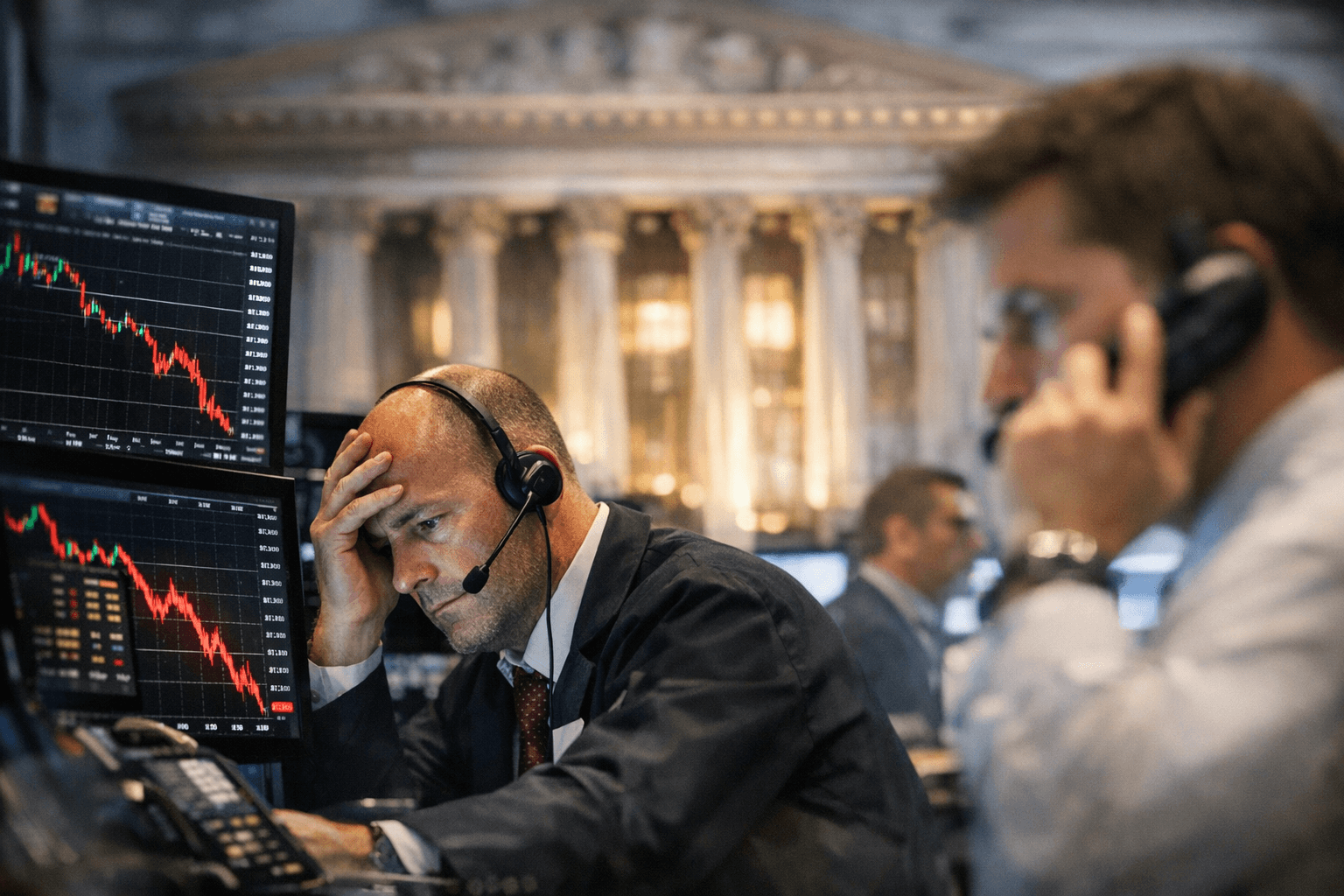
Goldman Sachs is telling clients that the record-setting run in U.S. stocks may not have much more room to run unless central banks start cutting rates again. Christian Mueller-Glissmann, Goldman Sachs’ head of asset allocation research, said the rally that pushed both the S&P 500 and Nasdaq 100 to records needs a friendlier policy backdrop to keep its momentum.
That message matters inside Goldman because it shapes how sales teams, traders, and client advisers explain the market from day to day. The bank’s call is not simply that stocks have risen; it is that the rebound could prove brittle if the Federal Reserve and other central banks do not deliver more easing. Mueller-Glissmann also discussed how the recent U.S.-Iran de-escalation affected sentiment, a reminder that geopolitics and policy expectations are moving markets at the same time.
The timing makes the warning sharper. The Federal Reserve left the benchmark federal funds rate unchanged at 3.50% to 3.75% at its March 17 to 18 meeting, and officials’ projections pointed to just one rate cut in 2026. Chair Jerome Powell said any further cuts would depend on progress on inflation. That leaves Goldman’s strategists advising clients in a market that has already rallied hard, but still lacks the kind of rate relief that typically gives risk assets a second wind.
Goldman has been airing this framework internally for months. In its Outlook 2026 series, Mueller-Glissmann appeared alongside Peter Oppenheimer, Kamakshya Trivedi, and Daan Struyven in a discussion of assets and allocation, underscoring that rates, growth, and portfolio positioning were already central to the firm’s year-ahead playbook. For people on the trading floor, that kind of house view matters because it influences where clients get pushed, how duration risk is framed, and whether equity desks lean into the rebound or treat it as a tactical move.
The caution also lands against a market that has already forced managers to chase performance. CNBC reported on April 15 that the S&P 500 closed above 7,000 for the first time and that the Nasdaq posted its longest winning streak since 2009. Yet Goldman’s message is that a record does not equal durability. Reuters-related coverage said Goldman’s rates-trading business was hurt when interest rates surged after the U.S. and Israel attacked Iran, showing how quickly macro shocks can hit both revenue and positioning.
Goldman’s first-quarter 2026 earnings reinforced that tension between opportunity and volatility. The firm reported earnings per share of $17.55, ahead of analyst expectations of $16.47, even as its own strategists warned that the path for stocks may stay narrow without lower rates. For Goldman employees, that means the market may keep rewarding strong calls, but only if the firm’s view stays one step ahead of a rally that still looks dependent on central bank support.
This article was produced by Prism’s automated news system from verified source data, official records, and press releases, then run through automated quality and moderation checks before publishing. The system is built and supervised by the people who set the standards it runs under. Read our full AI policy.
Did this article answer your question?