Jamie Dimon says AI will reshape bank hiring, Goldman Sachs takes note
Dimon’s warning that AI will mean fewer bankers and more specialists lands as Goldman already calls itself a “human assembly line” and leans into AI-driven scaling.
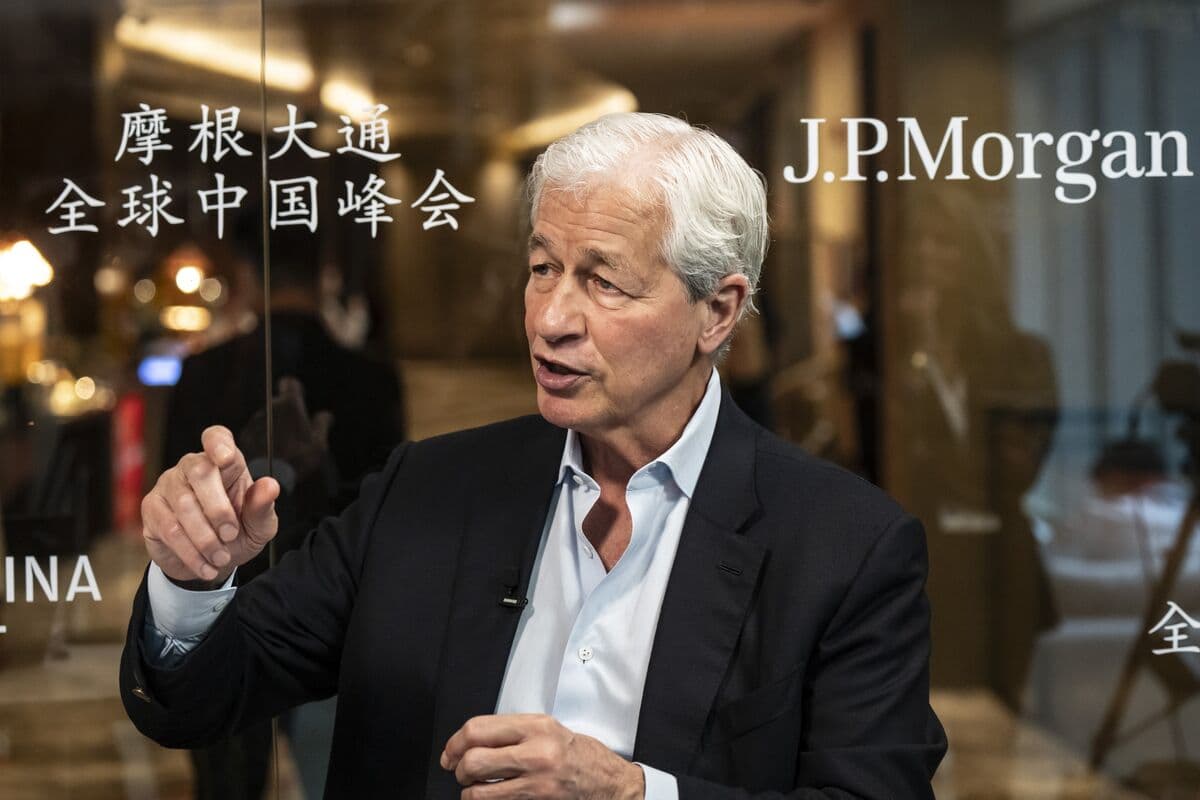
Jamie Dimon’s latest hiring comments read less like a JPMorgan Chase & Co. footnote than a warning for Wall Street’s talent ladder. During a Bloomberg Television interview at the bank’s China Summit in Shanghai, he said JPMorgan would likely hire more artificial intelligence specialists and fewer traditional bankers in some categories, adding that AI would reduce jobs down the road while making employees more productive.
For Goldman Sachs Group Inc. employees, the message is hard to ignore. The roles most exposed are the ones built on repeatable production: junior bankers cranking out models, pitch books, market updates, and data clean-up, along with midcareer dealmakers who spend too much time coordinating inputs instead of originating strategy. The skills rising in value are more technical and more hybrid, including AI fluency, automation, data handling, and the ability to turn software into faster, cleaner client work.

Goldman has already been saying as much in public. On May 12, Goldman President and COO John Waldron said AI is helping the firm scale without requiring much more hiring. He described Goldman as a “human assembly line” and said banks have not automated to the same extent as manufacturing. That framing matters inside a place where analysts, associates, vice presidents, and managing directors have long been sorted by judgment, stamina, and the ability to survive long stretches of manual work.
Now the prestige hierarchy is shifting. At Goldman, the bankers most likely to gain leverage are the ones who can pair financial judgment with technical fluency and use AI tools to move faster than their peers. That matters for promotion tracks, bonus pools, and exit options. People who can build workflows around automation may look more valuable than people who only know how to execute the old way. People who cannot adapt may find their work compressed, their teams leaner, and their path upward narrower.
Goldman’s own May 2026 research agenda points in the same direction. The firm highlighted pieces on whether corporate investment in AI will pay off, how AI agents could boost tech cash flow, how U.S. data center power demand may double by 2027, and how large the AI build-out could become. It also posted work on optical networking and the “HALO effect” in the AI era. Taken together, the message is clear: AI is no longer just a technology theme at Goldman. It is becoming a filter for who gets hired, who gets promoted, and which kind of banker Wall Street will reward next.
This article was produced by Prism’s automated news system from verified source data, official records, and press releases, then run through automated quality and moderation checks before publishing. The system is built and supervised by the people who set the standards it runs under. Read our full AI policy.
Did this article answer your question?