Solomon warns oil prices could keep rates higher for longer
Solomon said higher oil prices could hit spending and keep rates elevated, raising pressure on Goldman teams tied to consumers, energy and financing.

Higher oil prices could leave Goldman Sachs employees facing a split-screen: more demand in energy-related work, but slower momentum across consumer and financing businesses if inflation stays hot and rates remain elevated.
David Solomon set out that risk on June 2 at the Economic Club of New York, saying consumers are likely to show “more shifts in consumer behavior” in the second half of 2026 if inflation picks up. He added that any change could begin to show up in the data over the next six months, though “for the moment, that’s not coming through.” For Goldman bankers and analysts, that points to a tougher stretch for client conversations that depend on confident consumers, stable borrowing costs and a clear path to lower rates.
The macro backdrop has already turned less forgiving. Reuters reported that U.S. inflation rose at its fastest pace in three years in April, with higher energy prices tied to the Iran war helping drive the pickup. Economists are watching that energy shock as a reason the Federal Reserve may keep rates unchanged well into next year, a setup that matters directly for Goldman’s deal pace, financing pipelines and the kind of risk appetite that drives fee activity.
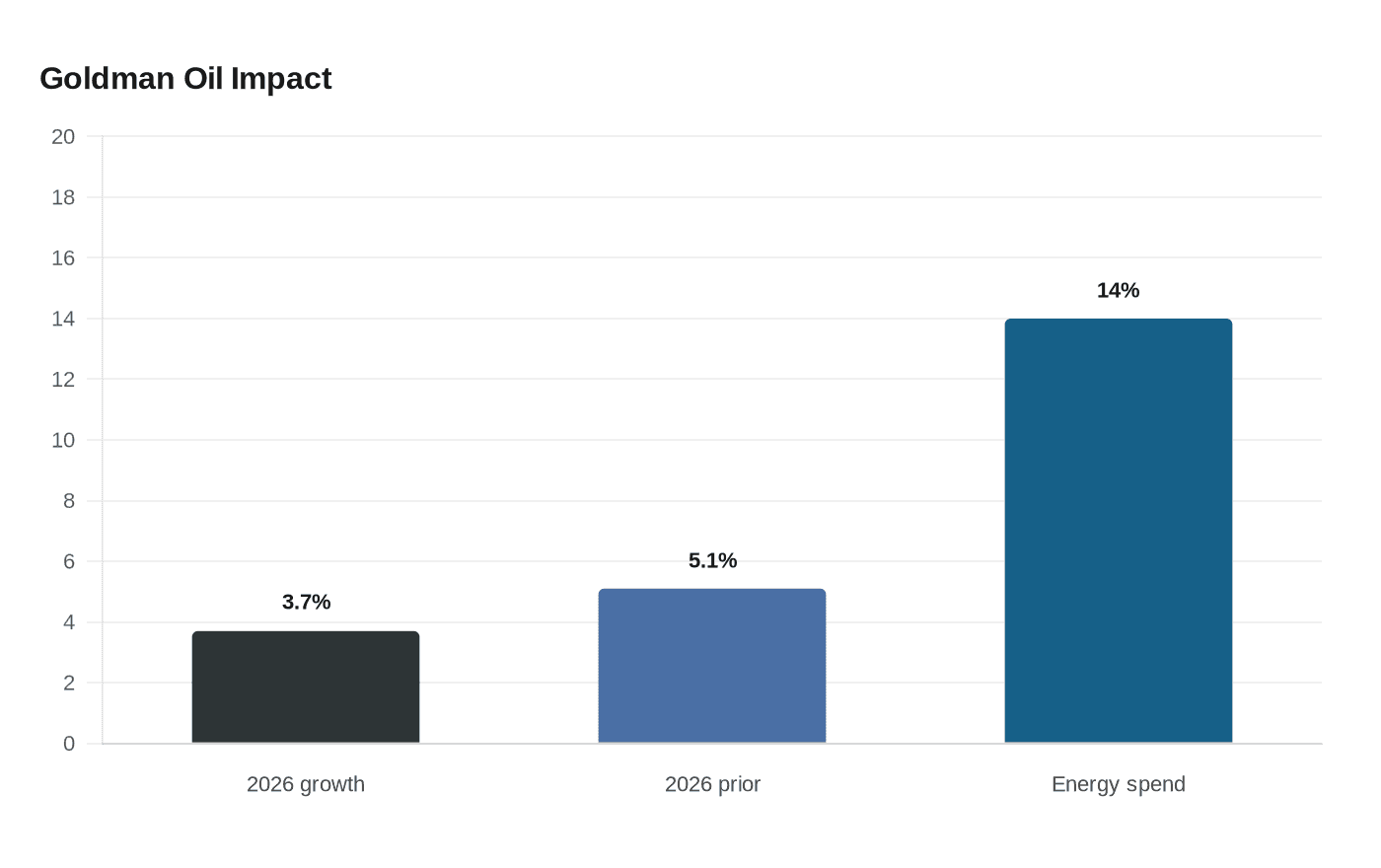
Goldman’s own research has already translated the oil move into consumer pain. On May 8, the firm said rising prices linked to disrupted Middle East oil flows are filtering through to U.S. households. It cut its forecast for 2026 discretionary cash inflow growth to 3.7% from 5.1% and estimated U.S. energy spending will rise about 14% this year. Goldman also said lower-income households are likely to be hit hardest because they spend roughly four times as much on gasoline as a share of after-tax income as the top income quintile. That is the kind of squeeze that can show up quickly in retail sales, credit-card spending and the outlooks of companies that rely on discretionary purchases.
The policy risk is not just theoretical. Research from the Federal Reserve Bank of San Francisco says oil supply shocks can raise inflation and make central-bank rate increases more likely. Fed Vice Chair Philip Jefferson said on March 26 that a sustained energy-price shock could have material implications for the economy. For Goldman, that means teams covering consumer-facing sectors, lenders and rate-sensitive companies may face more pressure to explain weaker demand, while energy bankers could see a busier pipeline as clients try to fund production, hedge exposure or navigate a more volatile price backdrop. If oil stays high and inflation does not ease, the firm’s clients may spend the rest of 2026 planning for a costlier, slower market rather than the rate cuts many had been counting on.
This article was produced by Prism’s automated news system from verified source data, official records, and press releases, then run through automated quality and moderation checks before publishing. The system is built and supervised by the people who set the standards it runs under. Read our full AI policy.
Know something we missed? Have a correction or additional information?
Submit a Tip