Standard Chartered cuts back office, a warning for Goldman Sachs staff
Standard Chartered plans to cut more than 15% of corporate roles by 2030, a blunt sign that support jobs are being reassessed across banking.

Standard Chartered drew a hard line under a new banking playbook on May 19, saying it will cut more than 15% of corporate functions roles by 2030 while pushing income per employee up about 20% by 2028. For Goldman Sachs staff in operations, controls, finance and shared services, the message is clear: banks are increasingly willing to say that the jobs furthest from revenue are the ones most exposed.
The bank tied the reduction to a broader reset in profitability and operating leverage. It set a target of more than 15% return on tangible equity in 2028 and about 18% in 2030, alongside a cost-to-income ratio of about 57% in 2028, down from 63% in 2025. Standard Chartered also said it had already hit its 2026 medium-term financial targets a year early, and it paired the workforce plan with a dividend payout ratio target of 30% or more.

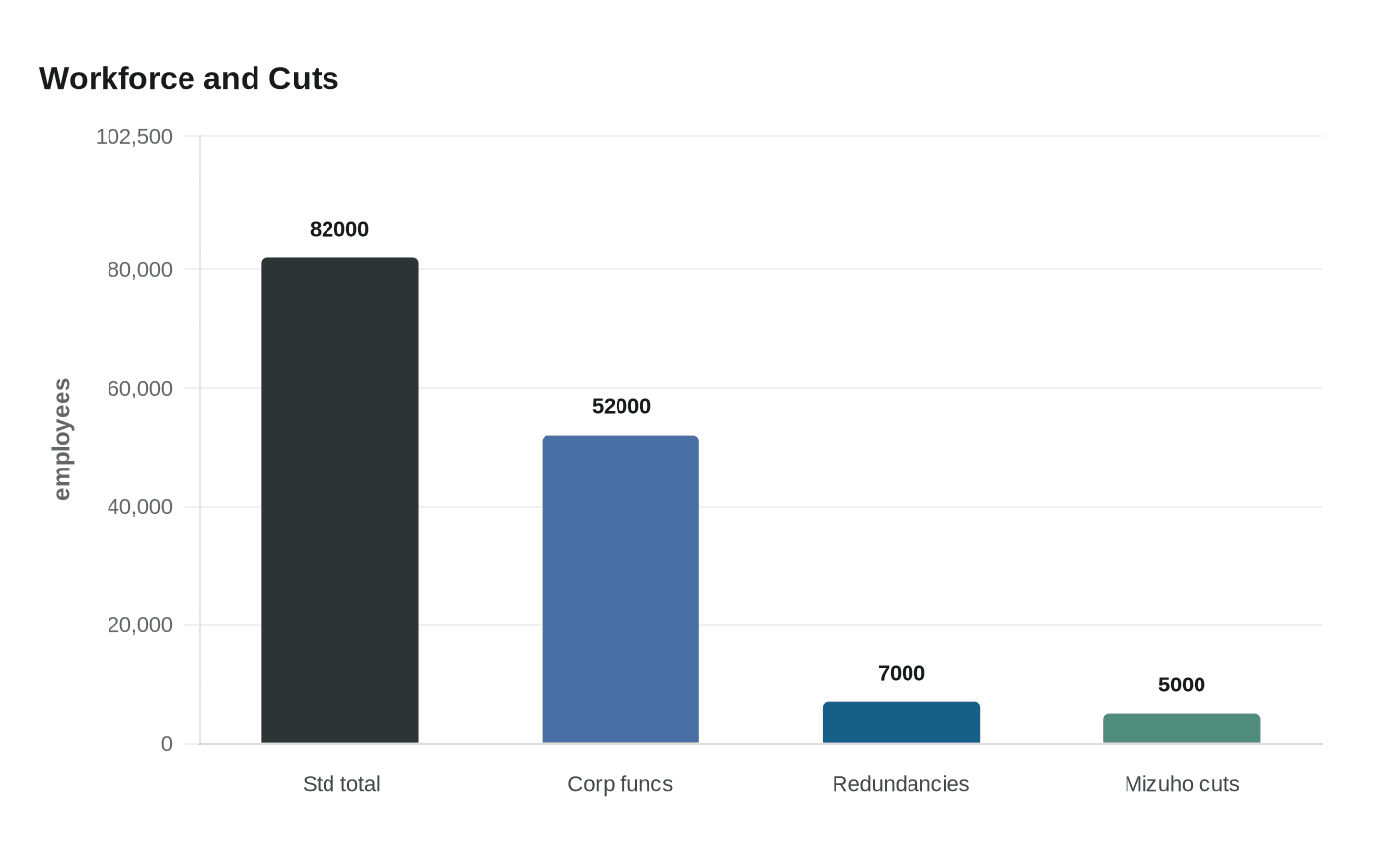
The deepest cuts are aimed at corporate functions, including human resources, corporate affairs and supply chain management. That is the part of the bank most closely watched by Goldman employees because it mirrors the areas where firms are using automation, data tools and workflow redesign to remove manual touchpoints before they make public headcount decisions. Standard Chartered has nearly 82,000 employees globally, with more than 52,000 in corporate functions, and Reuters calculated that the plan could translate into more than 7,000 redundancies. Reuters also reported that the most affected back-office centers include Chennai, Bengaluru, Kuala Lumpur and Warsaw.
Chief executive Bill Winters framed the move as a reallocation of resources, not a simple headcount purge. He said it was a shift from “lower-value human capital” toward financial and investment capital, and said employees who want to reskill would be given opportunities to reposition. He later sent a memo to staff saying the headlines about automation and workforce change could be unsettling and that the bank would prioritize reskilling and redeployment where possible. That language will sound familiar to anyone who has sat through an internal presentation about efficiency, only to see the staffing plan tighten later.
The strategy also leaned on a stronger wealth business. Standard Chartered said its Wealth & Retail Banking arm is now the third largest and fastest growing wealth manager in Asia, and it is targeting $200 billion of net new money by 2028. Analysts said the new targets were at the conservative end of expectations, but the direction of travel was unmistakable: fewer support roles, more pressure on productivity, and a larger premium on the functions that directly feed revenue.
The wider pattern is already visible. Mizuho has disclosed up to 5,000 job cuts over a decade as banks race to integrate frontier AI models and improve efficiency. For Goldman staff, that makes the next watchpoint less about whether back-office work changes and more about when, where and how quickly the change reaches bonus pools, promotion tracks and staffing models.
This article was produced by Prism’s automated news system from verified source data, official records, and press releases, then run through automated quality and moderation checks before publishing. The system is built and supervised by the people who set the standards it runs under. Read our full AI policy.
Did this article answer your question?