Chicago Man Files BIPA Suit Against Home Depot Over Facial Scans
A Chicago man sued Home Depot after a self-checkout kiosk captured his facial geometry without the written consent required by Illinois law, raising privacy and workplace surveillance concerns.
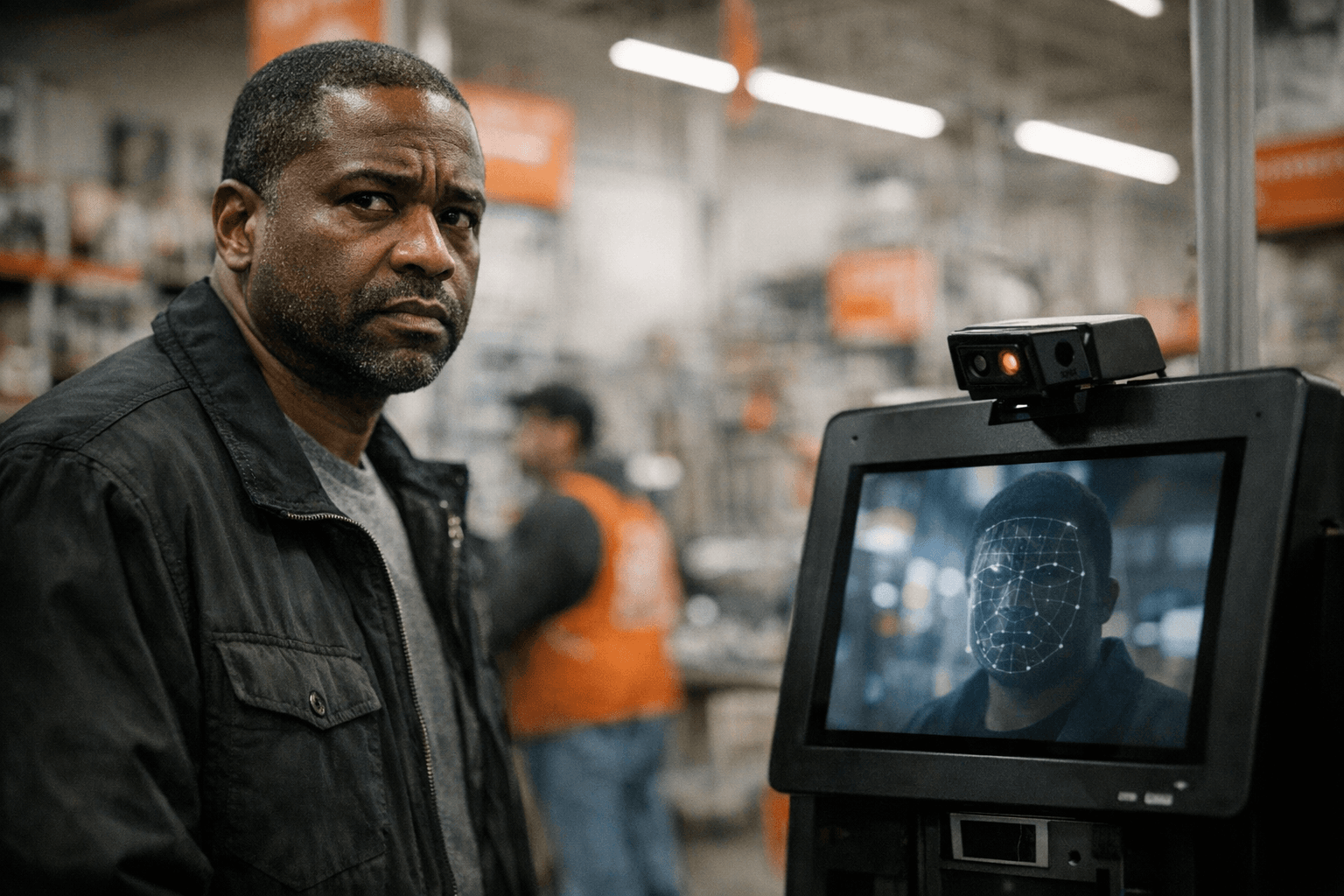
A Chicago shopper filed suit against Home Depot on January 15, 2026, alleging that a self-checkout kiosk at an Illinois store captured his facial geometry without the written consent required by the Illinois Biometric Information Privacy Act, known as BIPA. The complaint describes a camera and an on-screen green box at the self-checkout that captured the plaintiff’s face, and it seeks to represent others whose facial geometry was collected at Home Depot stores in Illinois.
The complaint notes that Home Depot has previously deployed computer-vision tools in its stores, initially rolled out to assist associates and in some instances used for theft mitigation. The plaintiff alleges that Home Depot failed to provide the notices or obtain the written consent BIPA requires, and did not disclose how long biometric data would be retained or how it would be used or shared. The suit seeks statutory damages under BIPA.
BIPA requires companies doing business in Illinois to obtain informed, written consent before capturing biometric identifiers and to disclose retention and disclosure policies. The statute has produced a steady stream of litigation over facial recognition and other biometric systems, particularly in retail settings where cameras and computer-vision tools are increasingly common. For Home Depot, a large national retailer with many Illinois locations, the complaint raises potential exposure across multiple stores.
For associates and hourly staff, the case highlights how technology deployed to help workers can also expand surveillance. Devices promoted as operational aids - for inventory, queue management, or self-service efficiency - may collect biometric data without clear notice to employees or customers. That can affect trust on the sales floor, complicate management-employee relations, and create legal risks for stores and individual managers who supervise hardware and software deployments.
From an operational perspective, litigation over biometric practices can impose immediate costs beyond statutory damages. Retailers typically must review vendor agreements, update signage and consent processes, and retrain staff on data-handling policies. For frontline employees, those changes can alter daily workflows and the scope of monitoring they experience while performing routine tasks.
The Home Depot complaint positions itself as a potential class action for others whose facial geometry was collected in Illinois stores. If the case moves forward, it could prompt broader policy changes at the company and affect how other retailers balance in-store computer vision tools with privacy obligations under BIPA. For workers and customers in Illinois, the lawsuit underscores the importance of clear notices and consent mechanisms when biometric systems are in use, and it signals that legal scrutiny of workplace surveillance technologies is likely to continue.
This article was produced by Prism’s automated news system from verified source data, official records, and press releases, then run through automated quality and moderation checks before publishing. The system is built and supervised by the people who set the standards it runs under. Read our full AI policy.
Did this article answer your question?