Deloitte says smarter labor planning can help Home Depot stores boost service
Deloitte’s case fits Home Depot’s scale: better labor planning can improve service, reduce friction, and keep pro and seasonal work moving.
Home Depot ended fiscal 2025 with 2,359 stores. A Home Depot schedule is not just a payroll file. It is a service plan for freight, pro desk demand, seasonal spikes, fulfillment, and the customer who needs an answer in aisle 12 right now. Deloitte’s latest retail labor analysis argues that labor is still one of the biggest controllable costs in retail, but it is also one of the least modernized, which makes staffing a performance issue as much as a cost issue.
Labor is the operating system
Large chains have already moved toward standards-based scheduling and auto-generated schedules, which can improve compliance and produce modest labor-cost gains. The next layer is more dynamic: AI tools that help prioritize tasks in real time and surface labor insights while the store is open, not just after the fact.
In a Home Depot store, the work is never one-dimensional. Freight flow can collide with a contractor rush at the pro desk, while seasonal projects pull associates toward garden, paint, or building materials at the same time fulfillment orders need to move. A labor model that only counts hours misses the harder question: whether the right associate is in the right place with the right product knowledge when the work arrives.
Home Depot’s scale
Home Depot’s fiscal 2025 annual report states that its stores remain the core of the business and that it will keep investing in associates and store experience. The report identifies knowledgeable associates and on-shelf availability as critical to that experience, which is exactly where labor planning shows up on the floor.
Home Depot opened 12 new stores during the year and reported $164.7 billion in sales, $14.2 billion in net earnings, and about 470,000 associates. Even small changes in scheduling discipline, task allocation, or training can affect a huge frontline base.
Home Depot plans to complete about 80 new stores by 2027 and then build 15 to 20 stores a year after that. Every new box adds more complexity to staffing, training, and fulfillment coordination, especially as pro business and delivery work take on a bigger share of the day.
What smarter scheduling looks like on the floor
The practical point is not to cut labor. It is to match it. Smaller stores can benefit from automation and simpler execution, but larger formats need more precision in forecasting, scheduling, and day-of labor adjustment. In a Home Depot setting, that means watching when contractor traffic hits, when freight lands, and when the weekend project crowd starts building before the aisles do.

The real test is how well a store can shift people without losing service. A strong labor plan should reduce the administrative burden on department supervisors and managers, keep the front end covered, and still leave enough flexibility for curbside pickups, online order pulls, and the kinds of cross-department questions that turn a browse into a sale. If the schedule cannot absorb those swings, associates feel it first as burnout and customers feel it next as delay.
Labor planning belongs in the same conversation as product knowledge and customer service. Home Depot’s filing commits it to enhancing training and product knowledge, optimizing processes, simplifying tasks, and leveraging technology to improve the customer experience.
Training
Home Depot’s 2025 Living Our Values report says the company invested approximately 11.6 million hours of training for associates in 2024, including about 10.0 million hours for frontline associates.
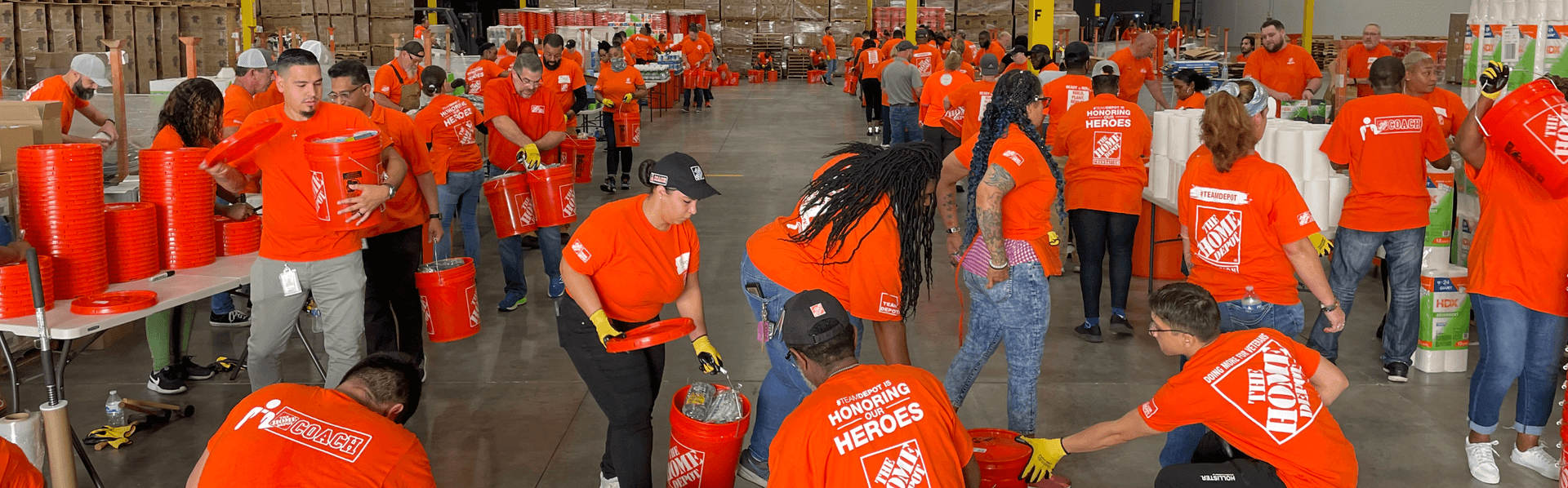
The company has also pulled headquarters closer to the store floor. In October 2024, it required corporate staff, including remote workers and senior managers, to work an eight-hour store shift each quarter starting in the fourth quarter so they could better understand frontline challenges.
Technology in the workflow
On March 18, 2026, Home Depot announced an expansion of its Pro digital experience with project management and AI tools. Pro customers do not just buy products; they move through quotes, schedules, materials, pickups, and jobsite coordination, all of which depend on clean handoffs inside the store.
Used well, that kind of technology can make labor more precise instead of more rigid. It can help managers see where tasks are piling up, where associates need support, and where the floor is getting thin before service slips.
This article was produced by Prism’s automated news system from verified source data, official records, and press releases, then run through automated quality and moderation checks before publishing. The system is built and supervised by the people who set the standards it runs under. Read our full AI policy.
Did this article answer your question?