Eighth Circuit Allows Home Depot Restriction on Customer-Facing Political Apparel
Eighth Circuit allowed Home Depot to restrict political messaging on customer-facing aprons, finding safety and reputational reasons justified a narrow limitation on Section 7 activity.
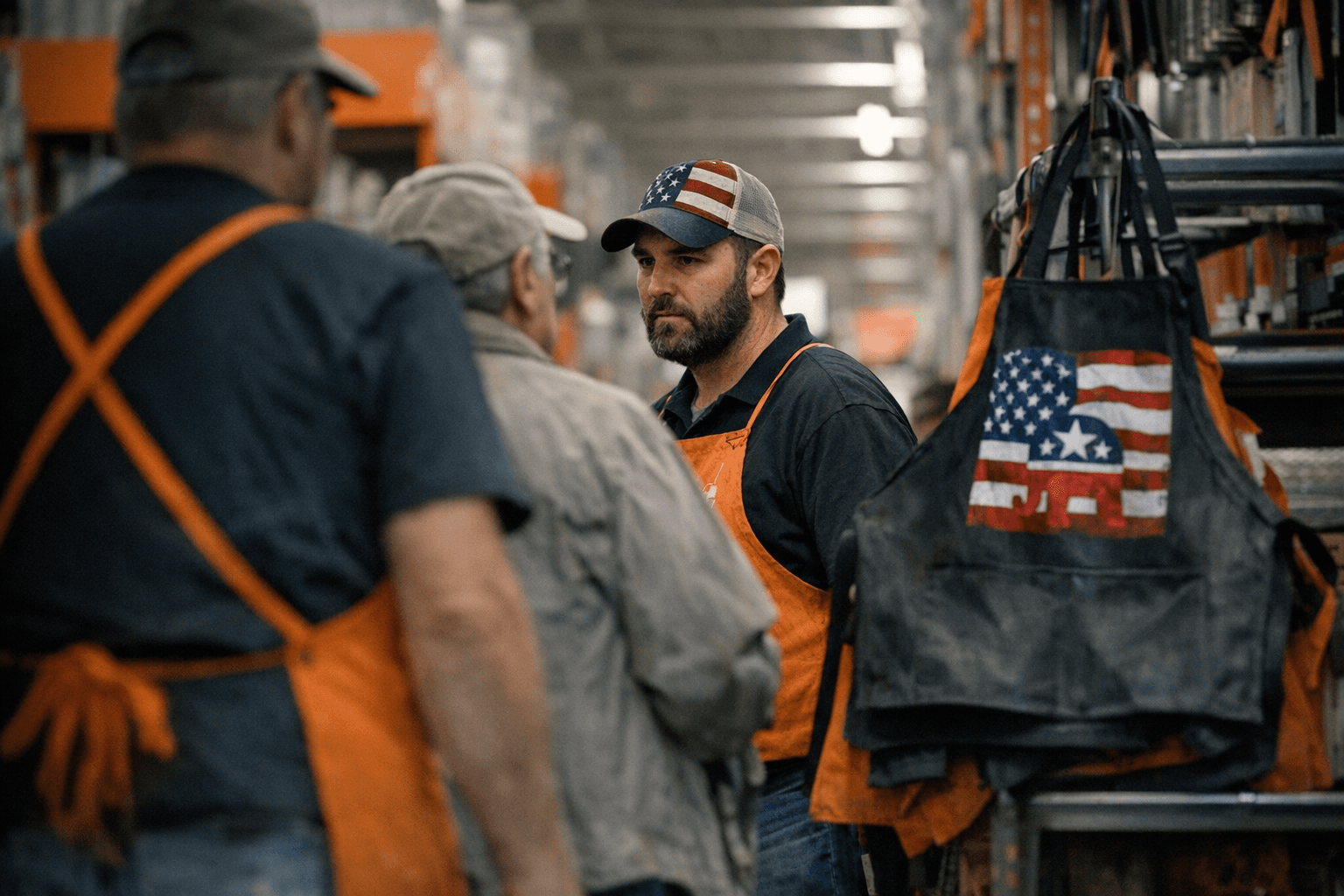
The Eighth Circuit sided with Home Depot in Home Depot U.S.A., Inc. v. NLRB, concluding the retailer had articulated legitimate business reasons for a rule that barred certain political messaging on customer-facing uniforms. The dispute began after an associate displayed “BLM” lettering on a Home Depot apron and the National Labor Relations Board found the rule unlawfully interfered with Section 7 protected concerted activity. On appeal the court accepted a business-justification -sometimes called a "special circumstances"- defense in limited circumstances and found, on these facts, the uniform policy did not unlawfully restrain employees.
The court’s reasoning focused on employer interests tied to store safety, a public-facing uniform regime, and reputational concerns among customers. Judges emphasized that the restriction was narrow and applied to customer-facing aprons rather than backstage or private concerted activity. That factual framing distinguished the case from broader rulings that protect political expression at work and preserved Section 7’s core protections while allowing an employer to bar certain messages that directly implicate customer interactions and safety.
For associates and store managers the ruling matters in practical terms. It confirms that dress-code enforcement can lawfully limit political messaging when an employer can show specific, nonpretextual business justifications and when restrictions are narrowly tailored to customer-facing roles. The decision does not erase employee rights under Section 7; employees remain free to engage in concerted activity off the sales floor and in non-public areas, and broader political advocacy still enjoys protection. The key takeaway is that context and tailoring are decisive: identical conduct may be protected in one setting and subject to discipline in another.
Store-level implications include concrete steps for policy design and enforcement. Employers should review uniform policies to ensure language is clear about customer-facing expectations, limit restrictions to the narrow categories necessary to address safety or customer experience, document the business reasons for any rule, and apply rules consistently across stores and roles. Managers need guidance on de-escalation and on when to involve human resources or legal counsel if apparel disputes intersect with protected concerted activity. Training should emphasize objective safety assessments and consistent treatment so enforcement cannot be characterized as targeting particular viewpoints.
The Eighth Circuit ruling will likely shape how retailers and other customer-facing employers write and enforce uniform rules in the region. For associates, the decision underscores that protected speech rights are robust but not absolute on the sales floor; for employers, it underscores the importance of narrowly drafted policies, careful documentation, and manager training to reduce legal exposure while maintaining safety and customer service standards.
Know something we missed? Have a correction or additional information?
Submit a Tip