Home Depot annual report shows 2025 sales growth and strategy
Home Depot’s 2025 filing points to modest growth, a 2,359-store footprint, and the operational pressure points associates should watch: tariffs, demand, speed, and Pro business.
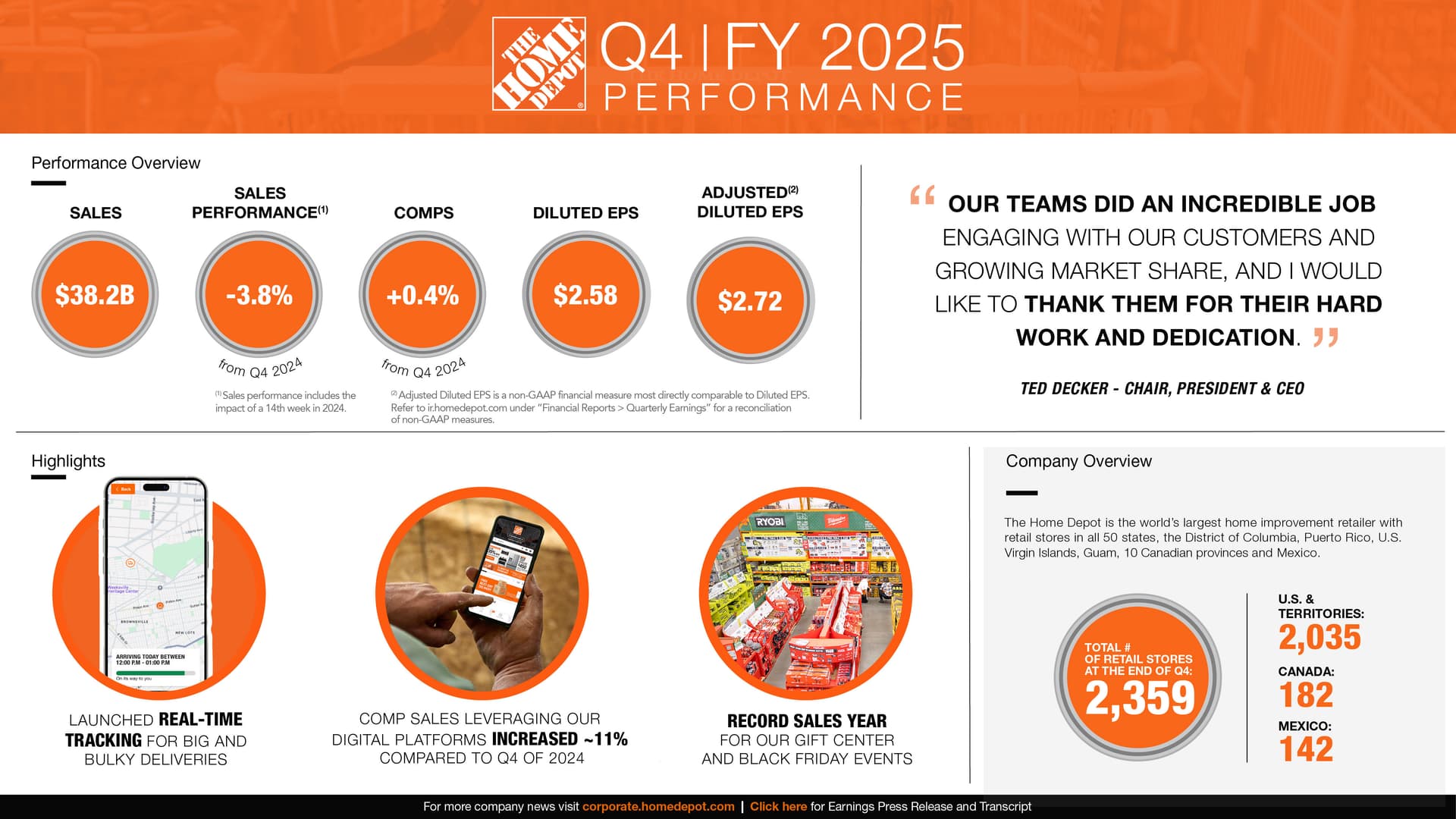
Home Depot's fiscal 2025 annual report reads like a working map of the company, not a backward-looking scorecard. It shows a business that grew sales to $164.7 billion, earned $14.2 billion, and added $5.2 billion in annual sales even as comparable sales were only up 0.3 percent companywide and 0.5 percent in the U.S. For associates, the filing matters because it spells out how Home Depot talks about its customer base, its suppliers and logistics, its labor model, and the priorities that will shape the next year.
What the numbers say about the floor
Home Depot says it was founded in 1978 and remains the world’s largest home improvement specialty retailer. The company says it has more than 2,300 retail stores in the United States, Canada and Mexico, with stores also in Puerto Rico, the U.S. Virgin Islands and Guam. That scale explains why the annual report is useful to department leads and store managers: a small shift in traffic, freight or availability can ripple across a system this large.
The sales trend in fiscal 2025 was solid but not hot. Total sales rose 3.2 percent to $164.7 billion, while comparable sales growth stayed near flat. That tells store teams the business is still relying on execution rather than broad market lift. When comps are that restrained, every stockout, every weak handoff on a special order and every slow line at checkout matters more.
What leadership is signaling to stores
The priorities that show up in the filing are the same ones that show up in day-to-day retail pressure. Fulfillment speed matters because customers expect product fast, especially during seasonal project rushes. Digital tools matter because they affect how orders move through the building and how quickly associates can connect a shopper, a Pro customer or a special-order item to the right product.
The Pro customer focus is especially important on the floor. Contractors do not shop the same way do-it-yourself customers do, and associates who know the categories, the brands and the use cases build trust faster. That is why a report like this is not just finance reading. It is a reminder that skilled-trade knowledge, product fluency and clean execution are part of the operating model Home Depot is selling to investors.
Why the store count matters
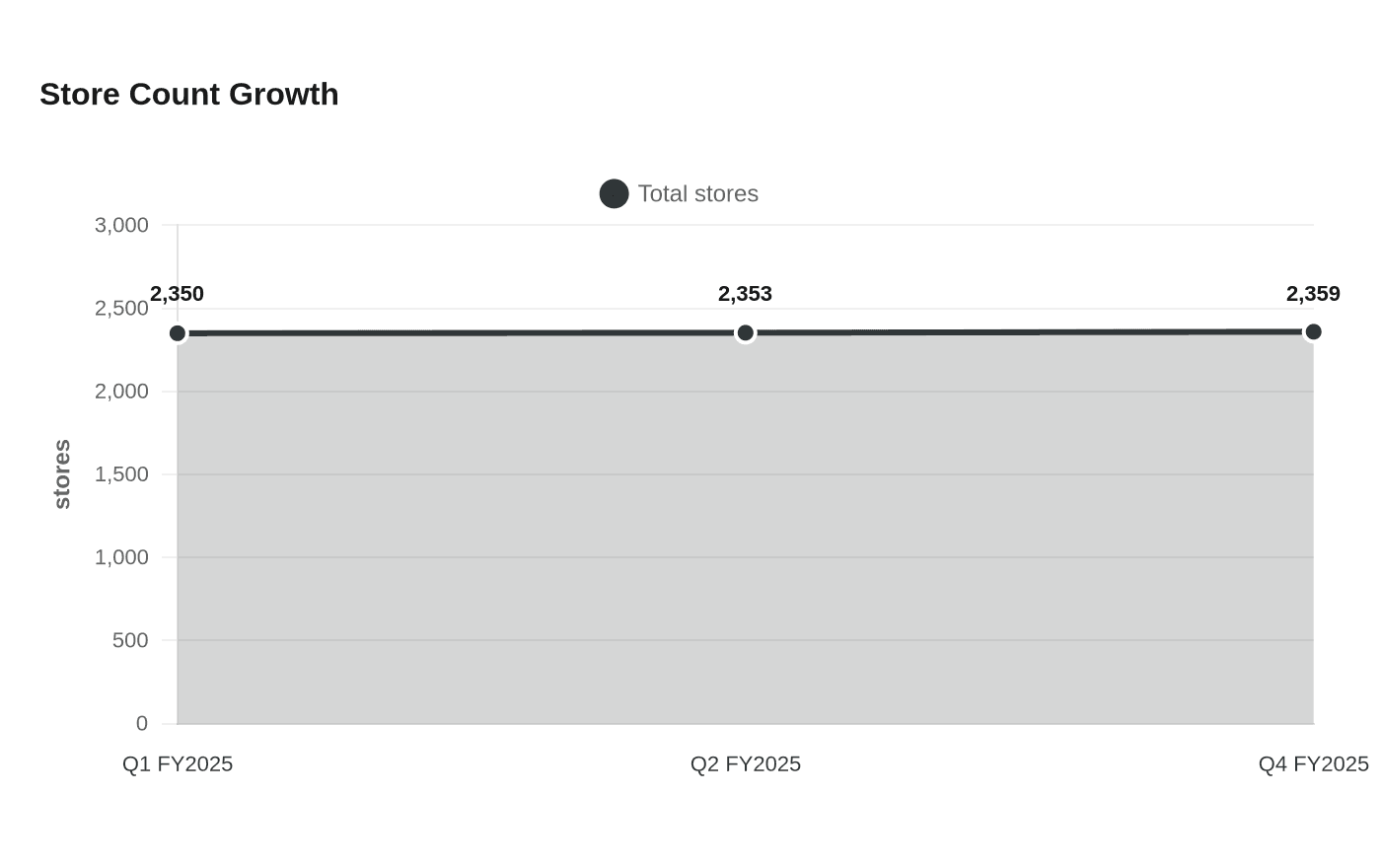
Home Depot's investor materials show the company ended the first quarter of fiscal 2025 with 2,350 total stores. By the end of the second quarter, that count had moved to 2,353, and by the end of the fourth quarter it stood at 2,359. Even without a dramatic expansion story, those numbers matter because each added store changes the burden on supply chain, district leadership, staffing and inventory flow.
For store managers, that footprint means the company is managing a network that stretches across the United States, Canada and Mexico, with additional U.S. territories in the mix. A larger network raises the stakes on consistency. Pricing, freight timing, in-stock rates and local execution all have to hold together across very different markets, from urban stores to locations serving heavy contractor traffic.
Tariffs, pricing, and what workers should watch
The tariff issue became one of the clearest operating signals of fiscal 2025. In May, Home Depot said it did not expect to raise prices because of tariffs, although it might change some items. Later in the year, it held annual forecasts steady while flagging modest price hikes tied to tariffs. That shift matters on the sales floor because pricing changes can affect customer conversations, project timing and how often associates have to explain substitutions.
It also tells managers to watch vendor concentration and replenishment more closely. When a retailer depends on suppliers and logistics partners across such a large footprint, tariff pressure can land in different ways, from cost changes to assortment changes to delayed product movement. Add weather-related disruptions and labor costs, and the operating picture becomes less about one quarter’s revenue and more about whether stores can keep enough product and enough people in the right places at the right time.
The sales path through 2025
The quarterly results help show how that pressure played out. Home Depot reported first-quarter fiscal 2025 sales of $39.9 billion on May 20 and reaffirmed fiscal 2025 guidance. In the second quarter, sales reached $45.3 billion, and the company again held to its full-year outlook. By the third quarter, sales were $41.4 billion, and on Nov. 18 the company updated fiscal 2025 guidance.
For associates, those checkpoints matter because they show how leadership views the year even when demand is uneven. If the company is keeping guidance steady while sales move quarter to quarter, the expectation at store level is usually clear: keep the shelves ready, keep the Pro counter responsive and keep the customer experience steady even when demand swings.
Why this filing is useful beyond finance
The annual report is also a practical career tool. A supervisor who understands how Home Depot frames risk and growth is better prepared for team meetings, labor planning and performance discussions. It helps translate investor language into store reality, especially when the business is balancing seasonal project rushes, digital fulfillment and the demands of contractor customers.
That is why the 2025 filing deserves attention from associates as much as from investors. It shows a company with massive scale, only modest comparable-sales growth and a strategy built around execution pressure that lands directly on the floor. The next year will be shaped less by one headline number than by whether stores can keep pace on speed, inventory, pricing and Pro service.
This article was produced by Prism’s automated news system from verified source data, official records, and press releases, then run through automated quality and moderation checks before publishing. The system is built and supervised by the people who set the standards it runs under. Read our full AI policy.
Did this article answer your question?