Home Depot Associate Uses AI Hourly to Improve Customer Service on Floor
Home Depot associate Gene Walinski uses an AI assistant roughly every hour on the sales floor to answer customer questions, showing how AI is moving into frontline retail work.
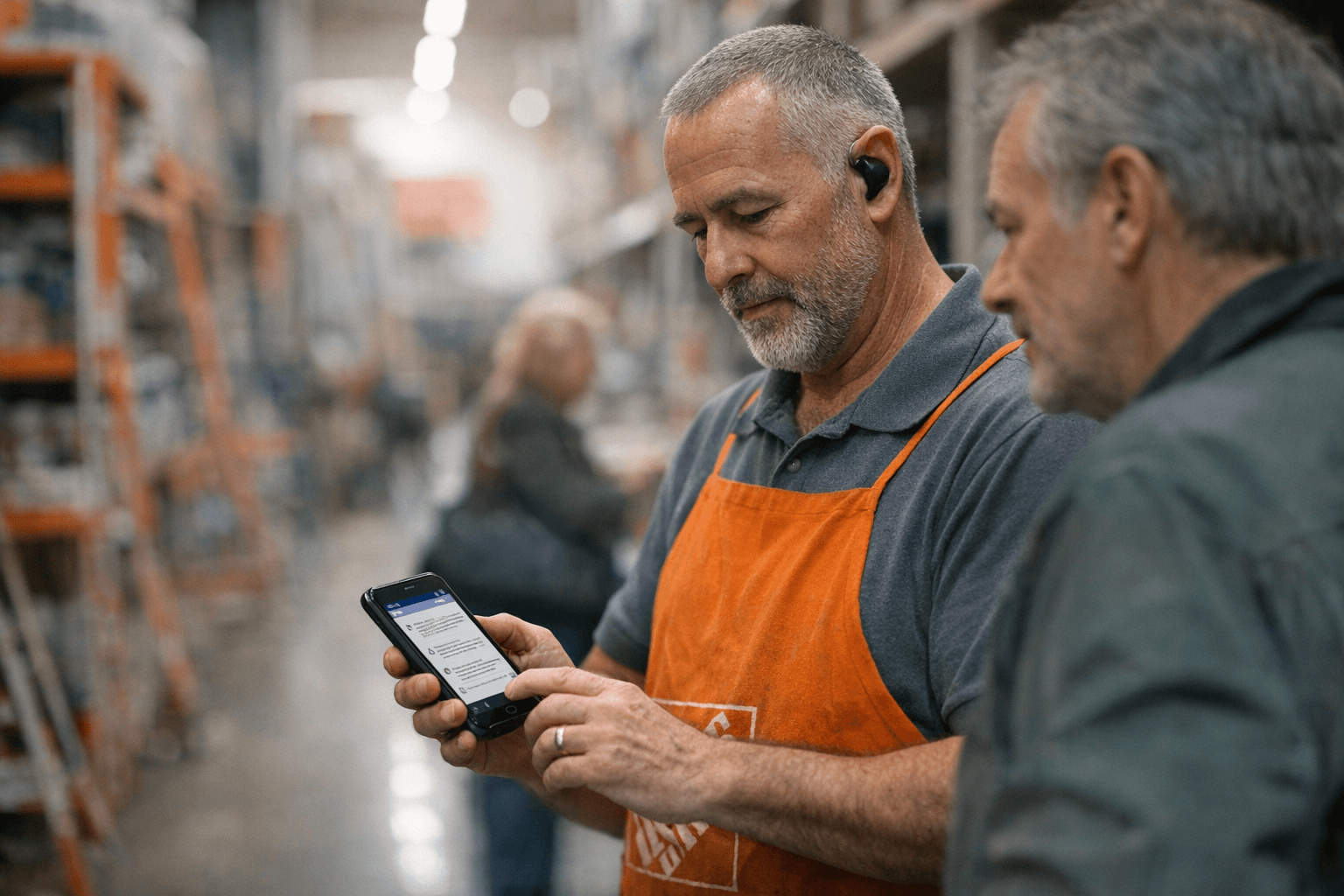
Gene Walinski, a 70-year-old Home Depot associate in the store’s electrical department in New Smyrna Beach, Florida, turns to an AI assistant on his personal phone roughly every hour on his shift so he can better answer questions about supplies he is not 100% familiar with. The frequent use is a practical response to the information demands of customers and a sign of a broader shift in how frontline retail workers are adding AI tools to their daily routines.
A Gallup Workforce survey found that some 12% of employed adults say they use AI daily in their job, and the polling noted that American workers have adopted artificial intelligence into their work lives at a remarkable pace over the past few years. For store associates like Walinski, that adoption translates into immediate, on-the-floor problem solving: product lookups, compatibility checks, and quick explanations that keep customer interactions moving without long delays.
Walinski described the difference the tool makes to his interactions with shoppers. "I think my job would suffer if I couldn’t because there would be a lot of shrugged shoulders and ‘I don’t know’ and customers don’t want to hear that," Walinski said. His reliance on an AI assistant underscores two overlapping trends in retail workplaces: customers expect fast, accurate answers, and long-tenured employees are turning to new technologies to meet those expectations rather than stepping away from service.
Employers face multiple implications as more associates adopt AI on the floor. The technology can boost productivity by reducing time spent searching for specs or calling stockrooms, and it can raise the baseline of knowledge for teams whose members have varying tenure and training. At the same time, patchy access to AI tools and uneven digital literacy could create equity issues among workers. Not all associates have personal devices they feel comfortable using at work, and not all stores have formal policies or training that govern when and how AI should be used in customer-facing situations.
The trend also creates questions about company guidelines for device use, customer privacy and the accuracy of AI-supplied information. Managers will need to weigh the operational benefits against risks such as inconsistent answers or overreliance on assistants for technical advice where formal expertise is required.
For Home Depot associates and other frontline workers, Walinski’s example suggests a practical path forward: AI as a supplement to experience rather than a replacement for customer service skills. As adoption grows beyond the roughly 12% currently using AI daily, employers will likely need to clarify policies, provide training, and ensure equitable access so that tools improve service without creating new disparities among workers.
Know something we missed? Have a correction or additional information?
Submit a Tip