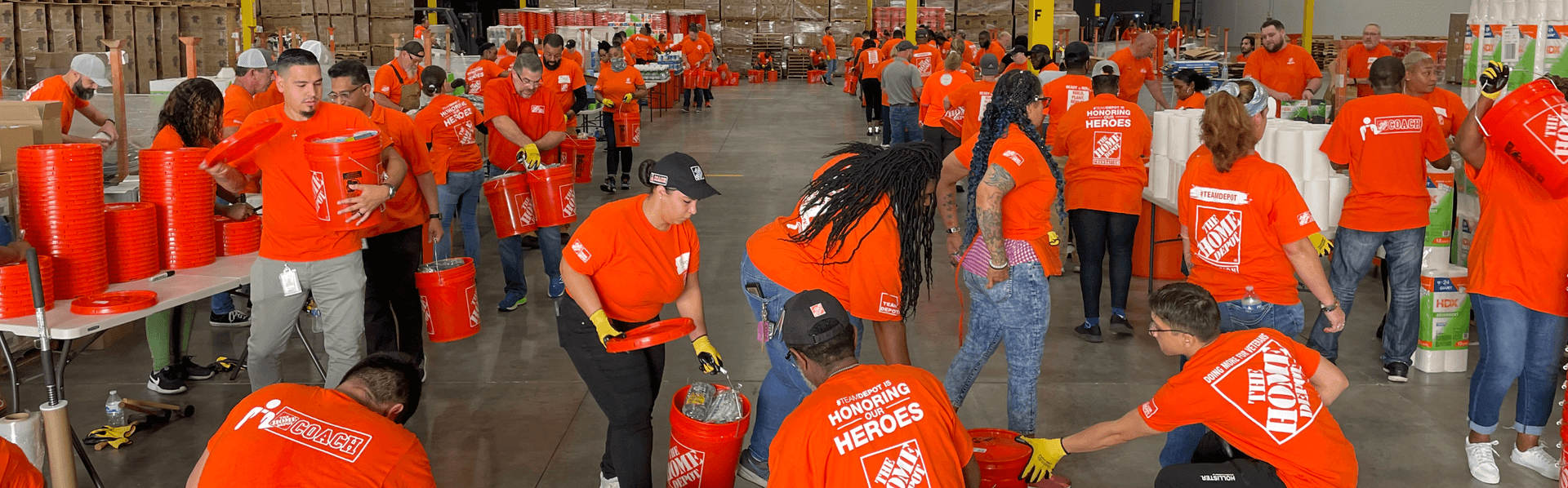
Home Depot celebrates orange apron culture as symbol of belonging and growth
Home Depot's orange apron story only matters if it shows up in promotions, training, and real mobility. The numbers suggest a path, but the floor still decides.

The orange apron only works if it opens doors
Home Depot’s orange apron story has always been about more than visibility, and that is the real test. If the apron is supposed to signal belonging, growth, and a career path, the company has to prove it with promotions, training, and move-up opportunities that people on the floor can actually feel.

That matters at Home Depot’s scale. The company says it operates more than 2,300 stores across North America and employs over 470,000 associates. In a workforce that large, culture cannot live only in polished messaging. It has to show up in the way a cashier, department lead, or outside sales associate gets coached, recognized, and moved into the next role.
Why the apron became such a powerful symbol
Home Depot has leaned on the orange apron for years because it is a simple, memorable idea. In a 2015 culture post, co-founder Bernie Marcus said he originally believed an associate in a bright orange apron would stand out “like a beacon” to customers. That logic still shapes the company’s identity: the apron is not just a uniform, but a visible promise that someone on the floor is there to help.
The latest culture piece pushes that idea further, framing the apron as a personal marker rather than a piece of retail dress code. It casts associates as mentors, parents, veterans, and community leaders, which is a useful reminder for managers who sometimes flatten people into shifts and metrics. A store usually runs better when leaders remember that the people wearing the apron bring experience from outside the building, not just tasks inside it.
That is also why the symbolism matters to workers. Belonging is not a soft, abstract idea in a big-box store. It can affect whether people stay long enough to learn the trade knowledge, customer rhythms, and problem-solving skills that make them valuable.
Where the story meets the actual job
Home Depot says its culture is meant to turn a job into a career, but that only means something if the store experience backs it up. The company’s 2025 annual report says it is “empowering our associates” through training, product knowledge, simplified tasks, and technology, and says knowledgeable associates are critical to the store experience. That is the part associates will recognize immediately: the apron has value when it comes with real know-how.
For workers on the floor, that means product expertise is not a nice extra. It is the difference between being the person who points customers toward an aisle and the person who can solve the problem, especially when contractors or pro customers need quick, accurate answers. In a retail environment built around projects, urgency, and repeat relationships, skill is part of the brand.
The same goes for managers. If the culture story is real, coaching should sound less like compliance and more like development. Recognition should not stop at attendance or speed. It should also reward the associate who learns plumbing, the one who can read a project list with a contractor, or the one who becomes the go-to person during seasonal rushes.
The career ladder is the strongest proof point
The most persuasive argument for Home Depot’s apron narrative is not emotional, it is operational. In 2022, the company said more than 65,000 associates were promoted in a single year, and it said 90% of store leadership started as hourly associates. That is the kind of statistic workers remember because it describes a ladder they can see, not a slogan they are asked to trust.
Home Depot’s 2025 Living Our Values report says the company is committed to helping associates build long-term careers. One concrete example is the Field-to-SSC internship program, which gives hourly associates enrolled in school a paid summer experience with leadership development, mentorship, and cross-functional collaboration. That matters because it shows the company is not only talking about advancement inside the store, but also about pathways into broader roles.
For associates, this is the clearest check on whether “career, not just a job” is real. A culture story lands differently when people can point to a department lead who started hourly, a manager who came up through the aisles, or a school-going associate who gets a paid shot at the next level.
Veterans, trades, and community work reinforce the same message
Home Depot’s apron story is also tied to the company’s wider identity work outside the store. The Home Depot Foundation says it has invested more than $650 million in veteran causes since 2011, improved more than 70,000 veteran homes and facilities, and pledged to invest $750 million in veteran causes by 2030. That is a big number, and it helps explain why the company keeps presenting its workforce as service-minded and community-connected.
Team Depot adds to that picture. Since 2011, it has worked with nearly 15,000 nonprofits and now completes, on average, five projects a day. That kind of volunteer footprint reinforces the idea that associates are not just selling tools and materials. They are also tied to the communities where they work and live.
The trades pipeline fits the same pattern. Home Depot’s Path to Pro initiative is designed to prepare more people for careers in the skilled trades, and in 2025 the Home Depot Foundation said it made a $10 million investment in skilled trades training and education. For store associates who talk every day with plumbers, electricians, contractors, and DIY customers, that is not background noise. It is a reminder that the company’s job is connected to a larger labor market where hands-on knowledge still has value.
What matters most for the people in orange
The orange apron is strongest when it feels earned. That means a store culture where recognition is tied to learning, where promotion is visible, and where associates can picture a path from the floor to leadership or beyond. Home Depot’s own numbers support that narrative, from more than 65,000 promotions in one year to a leadership bench built largely from hourly jobs.
But the real measure is daily experience. If the apron means guidance, skill, and the possibility of movement, it can become a genuine badge of belonging. If not, it is just a costume. Home Depot’s challenge is to keep proving that the story on the wall still matches the work on the floor.
This article was produced by Prism’s automated news system from verified source data, official records, and press releases, then run through automated quality and moderation checks before publishing. The system is built and supervised by the people who set the standards it runs under. Read our full AI policy.
Did this article answer your question?