Home Depot EVP Reports Share Disposition in Latest SEC Equity Filing
William Bastek, Home Depot's EVP of Merchandising, had 2,972 shares withheld at $321.63 each to cover taxes after equity vested — not an open-market sale.
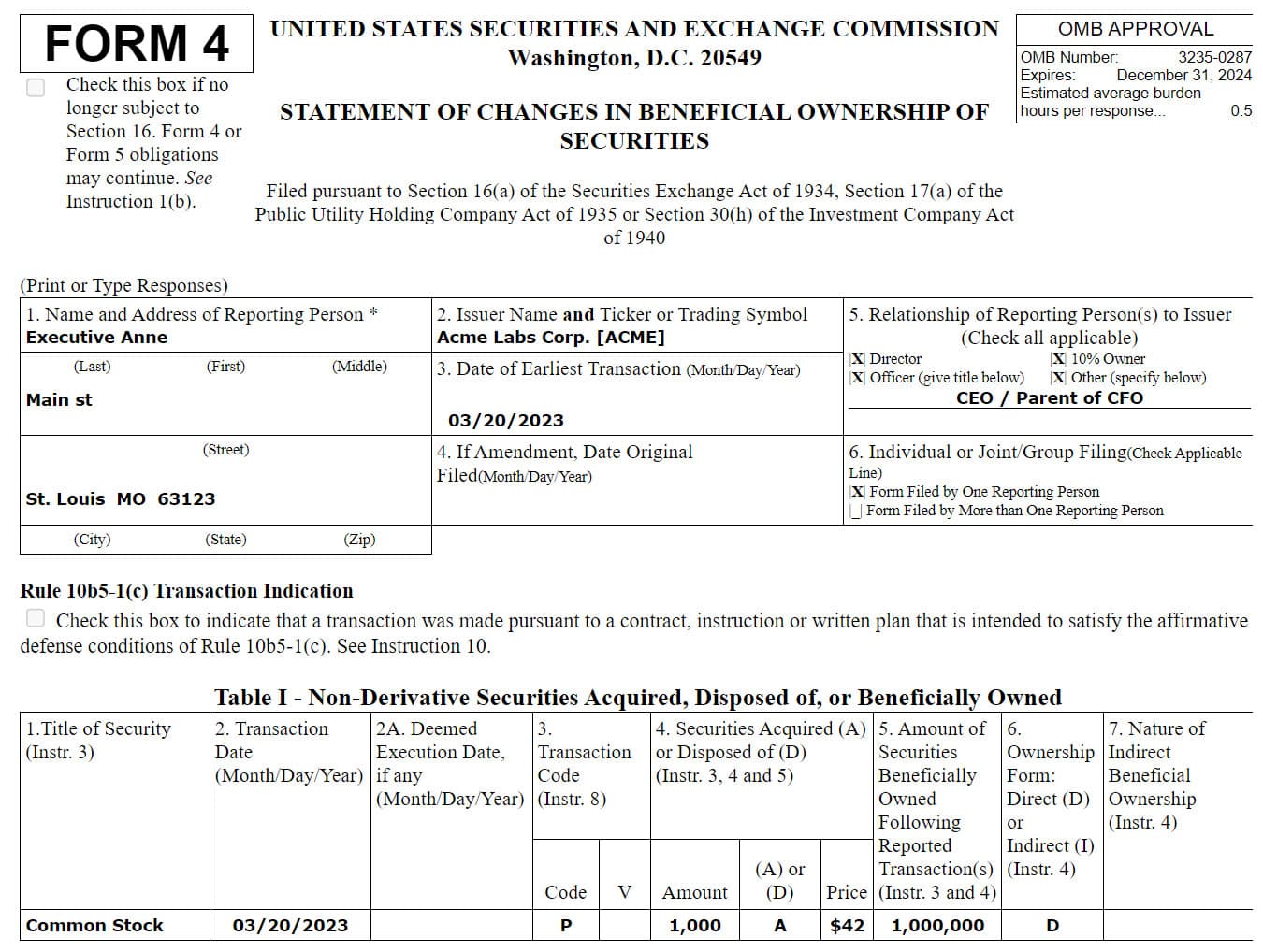
The headline number looks like a sale, but the mechanism behind it matters. William D. Bastek, Home Depot's Executive Vice President of Merchandising, reported a disposition of 2,972 shares on April 3 at $321.63 per share in a Form 4 filing distributed to the SEC this past Sunday. The transaction carries a Code F designation, which under Section 16 reporting rules means shares were withheld by the company to satisfy tax obligations triggered by a vesting event, not sold on the open market by Bastek himself. After the withholding, he directly holds 25,223.9518 shares of Home Depot common stock.
The distinction between Code F and an open-market sale is the detail most worth understanding. When an equity grant vests, the IRS treats the vested value as ordinary income in that tax year. Rather than requiring an executive to wire a separate tax payment, companies routinely withhold a portion of the newly vested shares and remit the equivalent cash value to cover the bill. No shares hit the public market; the price reported on the Form 4 reflects the share value used to calculate that withholding, not a transaction price negotiated between a buyer and seller.
Bastek's role overseeing Merchandising puts him at the center of the product and supplier relationships that drive margin across every Home Depot store. His compensation package reflects that scope: a separate filing shows he received 9,199 employee stock options at an exercise price of $332.51 per share expiring March 24, 2036, vesting in 25% increments beginning on the second anniversary of the grant date, along with 3,518 performance-based restricted shares that vest 50% after 30 months and the remaining 50% after 60 months.
For associates enrolled in FutureBuilder or the Employee Stock Purchase Plan, these filings are worth understanding in context. The same underlying mechanics that govern executive equity awards — grant dates, vesting schedules, tax-withholding events — shape the assumptions behind the educational materials HR partners use when explaining ESPP participation windows and FutureBuilder contribution matching. Seeing a large share figure tied to a senior leader's name in a news alert can prompt concern, but the Form 4 disclosure is a governance requirement, not a market signal.

Store managers fielding questions from associates can point to the SEC's EDGAR database for the definitive filing record. The Form 4 data is publicly searchable by company or individual name and presents the transaction codes, share counts, and post-transaction ownership totals in full. What EDGAR does not provide is the internal rationale: whether a specific vesting reflected a performance hurdle being met, a time-based schedule running its course, or a retention arrangement. That context lives in internal compensation materials and, for associates, in conversations with HR partners during benefit enrollment windows.
The filing itself carries no operational consequence for store teams. But recurring equity disclosures involving named executives are a predictable source of associate questions, particularly during periods when the stock is moving. Treating them as transparency artifacts rather than trading news is the cleanest framework available until Home Depot addresses the specifics through official internal channels.
Know something we missed? Have a correction or additional information?
Submit a Tip