Home Depot expands circular supply chain, turns returns into new products
Home Depot is turning returns, takebacks and scrap into a working value loop, with stores, vendors and reverse-logistics teams all feeding the system.
Returns are not the end of the job
Home Depot’s circular supply chain starts with a simple operating idea: a product’s life does not end when it comes back through the front door. The company is treating reverse logistics as a core retail function, not a cleanup task, and that changes how stores handle everything from damaged merchandise to appliance takebacks and vendor returns.
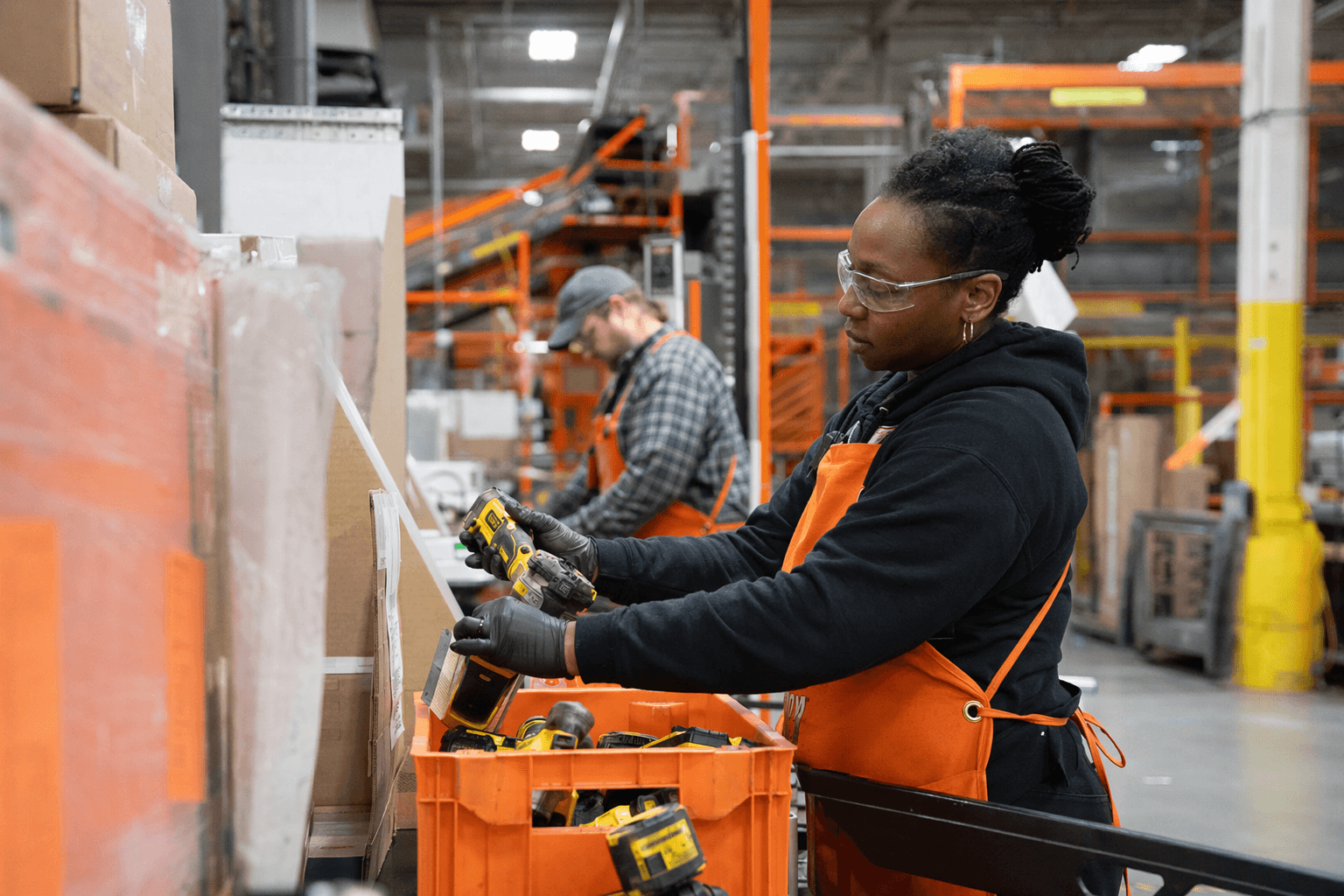
For associates and department leads, the practical message is clear. RTV work, out-for-repair items, donations and buybacks are part of a larger recovery system that protects margin, keeps the backroom moving and prevents usable material from becoming dead inventory. In a business with 2,337 stores across the United States, Puerto Rico, the U.S. Virgin Islands, Guam, Canada and Mexico, the scale of that discipline matters every day.
What gets recovered, and where it goes
Home Depot says its circular-economy work reaches from stores and distribution and reverse logistics centers to manufacturers, then back to stores and customer homes. That matters because the company is not just pulling product out of the waste stream, it is routing materials into specific next uses.
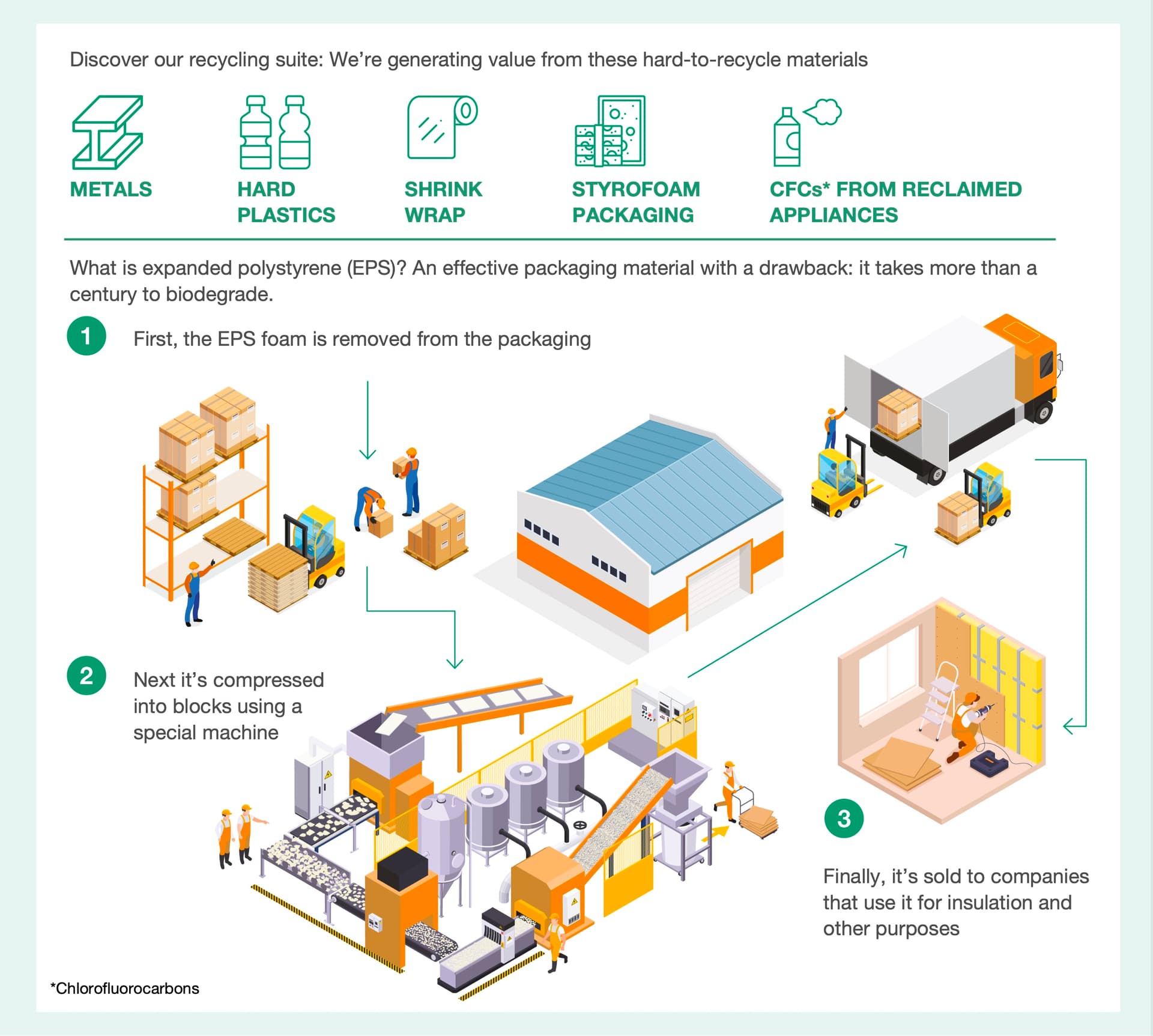
The company says it recycles metal, hard plastics, shrink wrap, expanded polystyrene packaging and chlorofluorocarbons recovered from reclaimed appliances. In April 2024, it added another example that store teams can recognize immediately: EPS foam can be revived as insulation. That is the operational logic of circularity in this business, taking something that would normally be handled as scrap and converting it into a usable building material.
The most useful way to think about the system is by flow:
- Store returns and damaged goods go into reverse logistics instead of sitting in the backroom.
- Reusable or refurbishable items move toward vendors, repair channels or donation.
- Recoverable materials such as shrink wrap, plastics, metal and EPS move into recycling streams.
- Reclaimed-appliance components, including CFCs, are captured rather than lost.
That is not just a sustainability story. It is a clean-operations story, a space-management story and a recovery-value story.
Who owns the process
Home Depot identifies Rick Cox, at the Atlanta Store Support Center, as the manager of its store inventory reverse logistics system. The company says he worked with vendors and associates to centralize its Return to Vendor and Out for Repair programs, which is exactly the kind of back-end standardization that changes day-to-day store behavior.
When those programs are centralized, store teams get fewer one-off decisions and more repeatable handling rules. That reduces confusion at the service desk and in receiving, which is where reverse logistics can either run smoothly or create clutter, delays and write-offs. Home Depot also says those changes saved the company millions annually, which tells you the work is not cosmetic. It is measurable, and it matters to the P&L.
For managers, the lesson is that the backroom is part of the customer experience. If RTV tags, repair items and return flows are handled well, the selling floor stays clearer, associates spend less time chasing exceptions and pro customers get faster answers when they need materials turned around quickly.
Why this matters on the floor
In a store culture built around know-how, the circular supply chain gives associates another way to explain why process matters. A returned tool, a damaged pallet, a takeback appliance or a donation candidate is not just clutter to be moved out of sight. Each item has a path, and choosing the right one protects value.
That is especially relevant in Home Depot’s world of seasonal rushes, project-driven demand and constant contractor traffic. When the lot is full, the pro desk is busy and seasonal labor is stretched, reverse logistics can feel like a nuisance. But if handled well, it helps keep product moving instead of backing up in receiving, and it supports store cleanliness at the same time. In a year when the company has pointed to macro pressure, high interest rates and weak consumer demand as headwinds on home-improvement spending, those recovered dollars matter even more.
The scale of the business makes the case harder to ignore. Home Depot says it employed about 465,000 associates in fiscal 2024-era company materials, and its network grew further after the June 18, 2024 completion of its roughly $18.25 billion acquisition of SRS Distribution. Home Depot said that deal expanded its total addressable market to about $1 trillion, which means the company’s supply chain is only getting broader and more complex. In that setting, reverse logistics is not a side program. It is one of the ways the company keeps a giant operation from leaking value.
The proof points are already in the numbers
Home Depot has been making this case for years through measurable recovery work. The company said it recycled more than 15.1 million pounds of plastic waste from stores in 2019, a figure that shows the scale of material moving out of stores and into a recovery stream. Ron Jarvis, then Home Depot’s chief sustainability officer and vice president of environmental innovation, was recognized in 2020 with the Council of Supply Chain Management Professionals’ Supply Chain Sustainability Award for that circular-economy work.
The company has also used its own assortment to reinforce the point. Trex composite decking sold at Home Depot was described as being made of 95% recycled materials, which gives associates a concrete example of what recovered material can become when the loop closes correctly. That is useful at the sales counter as well as in the backroom: it turns abstract circularity into a product story customers can understand.
Customer takeback is part of the system, too
The reverse-flow story does not stop at RTV. Home Depot has partnered with Call2Recycle since 2001 on in-store rechargeable battery collection, and by 2021 said it had helped recycle 14.5 million pounds of rechargeable batteries. In 2016, the company said it became the first Call2Recycle retail participant in North America to reach 1 million pounds recycled.
The company’s eco-actions materials also point to in-store customer takeback for rechargeable batteries, compact fluorescent light bulbs and plastic bags. That matters because it shows circularity is not just a distribution-center exercise. It is a customer-facing habit that depends on store execution, signage, associate direction and consistent handling. When those takeback points work, Home Depot is not only reducing waste. It is building a retail operating model where recovery, resale and recycling are part of normal service.
That is the real shift here. Home Depot is showing that the smartest back-end systems are the ones that turn returned product into recovered value, cleaner stores and a more disciplined supply chain.
This article was produced by Prism’s automated news system from verified source data, official records, and press releases, then run through automated quality and moderation checks before publishing. The system is built and supervised by the people who set the standards it runs under. Read our full AI policy.
Did this article answer your question?