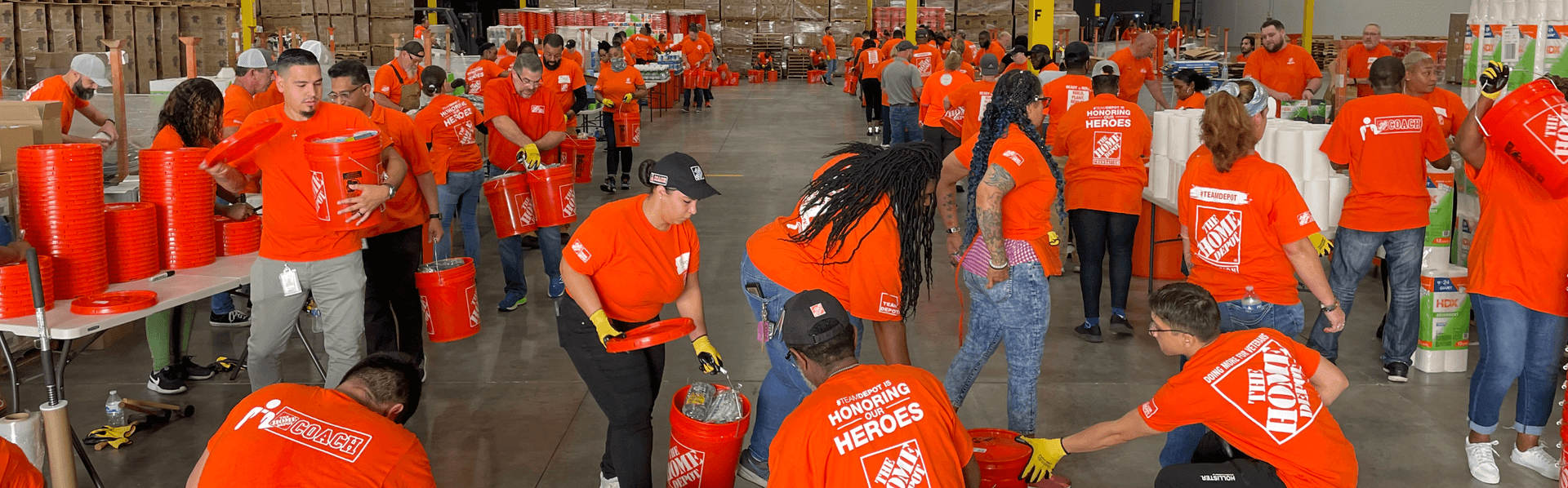
Home Depot links people development, sustainability, and ethics in new report
Home Depot's values report turns culture into operating metrics: training hours, mentor programs, emissions cuts, and community dollars. For managers, it's a playbook, not PR.
Home Depot is turning values into operating rules
Home Depot’s newest Living Our Values report does something a lot of corporate values statements never quite manage: it connects the feel-good language to the systems associates actually live with on the floor. Training, hiring, ethics, sourcing, safety, and community investment all show up as management priorities, not side projects.
That matters inside a company with about 475,000 associates and more than 2,300 stores across North America. When a business that large wants consistent behavior across aisles, districts, and markets, it cannot rely on slogans. It needs a common operating language, and this report is Home Depot’s attempt to supply one.
What the report is really saying
The report covers fiscal 2024, which ran from January 29, 2024, through February 2, 2025. It focuses on U.S. in-store and online operations, which accounted for more than 90% of sales, so this is not a niche sustainability add-on. It is aimed at the core business where associates, department leads, and store managers spend their days.
Home Depot frames the work around three pillars: Focus on Our People, Operate Sustainably, and Strengthen Our Communities. That structure is useful because it maps values to day-to-day management decisions. If you run a store, the report is telling you that people development, compliance, and community reputation all sit inside the same business model.
From culture talk to systems people can feel
The most practical part of the report is what it reveals about people development. Home Depot says its 2024 mentoring program included more than 2,400 mentor and mentee participants, which is a sign that development is being treated as a real internal process, not a perk for a small elite. For associates looking for a path up, that matters because it shows the company is trying to build habits of coaching, not just reward the occasional promotion.
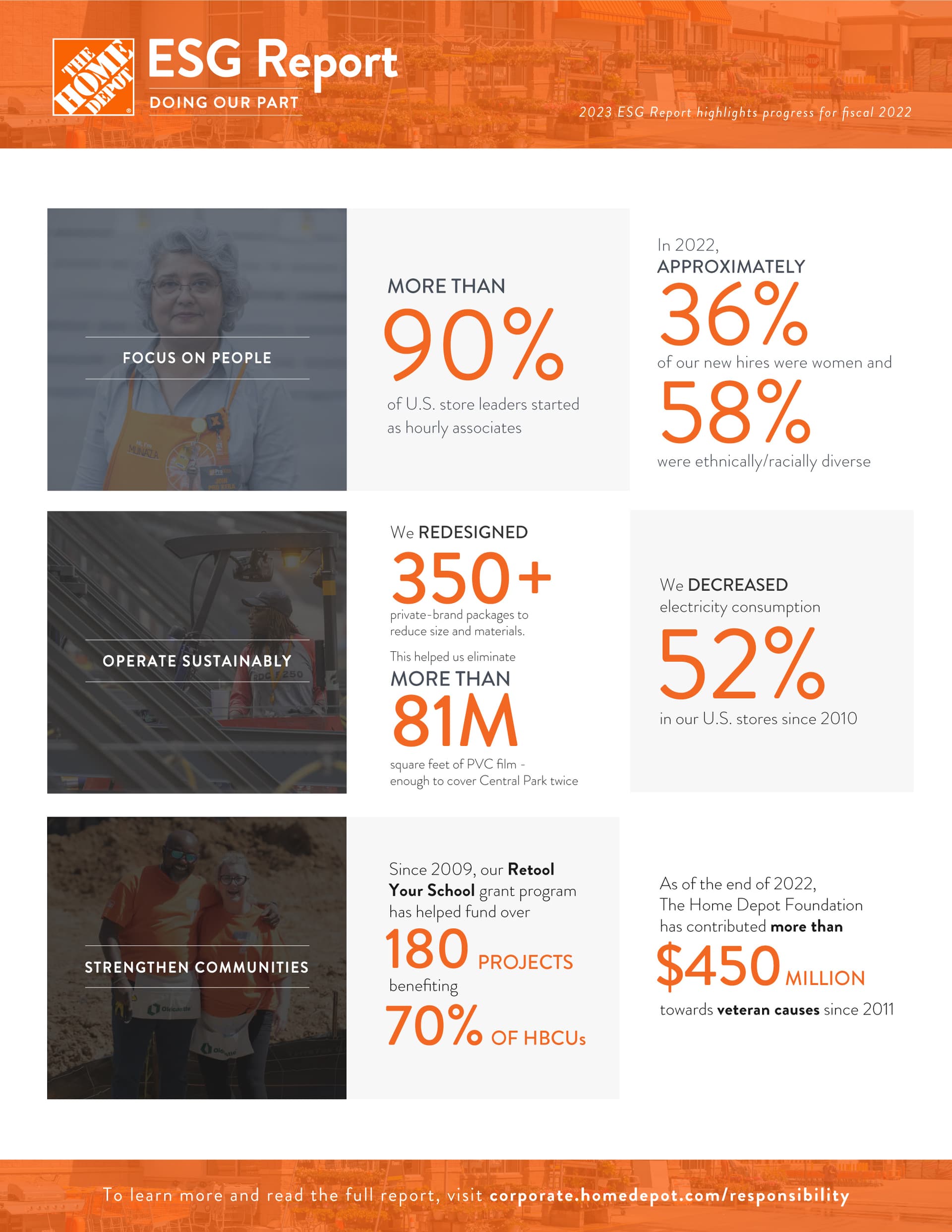
That message is reinforced by the company’s leadership pipeline. Home Depot says more than 90% of U.S. store leaders started as hourly associates. In retail, that is not a trivia point. It is the strongest proof the company can offer that front-line performance, product knowledge, and store discipline can translate into management if the chain of development is working.
The report also makes clear that development is no longer being discussed as something separate from operations. Home Depot said in 2023 that it planned to provide 10 million hours of frontline-associate training and 2.5 million hours of leadership training by 2028, then later said it hit those goals four years early. That is the kind of benchmark managers can understand: hours, completion, and speed. It tells store leaders that training is not decorative. It is a measurable operating priority.
Why ethics and sourcing keep showing up in store life
The report also helps explain why associates keep hearing about compliance, responsible sourcing, and product rules. Home Depot lists carbon emissions reduction, sustainable forestry, circularity, water conservation, responsible chemistry, code of conduct, responsible sourcing, human rights, and government relations as part of the same values framework.
For the average associate, that can sound abstract until it becomes a real store issue: which products can be sold, how returns are handled, what claims can be made on the floor, and how vendor relationships are managed. The point of the report is that these rules are not just legal guardrails. They are part of protecting customer trust and the company’s long-term reputation.
That is where the report becomes a management tool. It gives store leaders a reasoned way to explain why certain policies are nonnegotiable. It also connects training and ethics to risk control, which is a more concrete message than the usual corporate language about doing the right thing.
Sustainability is being measured in actual outcomes
Home Depot’s sustainability claims are backed by specific targets and results, which makes them more useful to managers than vague environmental messaging. In 2023, the company said it had already reduced Scope 1 and Scope 2 emissions by about 92,000 metric tons in 2022. It also set a goal for more than 85% of U.S. and Canadian sales in outdoor power equipment to run on rechargeable battery technology by the end of fiscal 2028.
That matters for the floor because sustainability is not only a headquarters issue. It shapes merchandising, supplier conversations, customer questions, and how associates explain product differences to pros and homeowners. When a customer asks why a battery-powered option costs more or what the maintenance tradeoffs are, store teams need to understand that the company sees these choices as part of its operating direction.
Home Depot also says it has already reached its goal of helping customers save $600 million in energy costs through energy-saving products. That gives sustainability a business outcome instead of a marketing aura. The logic is straightforward: if the company helps customers cut costs, the products are easier to sell, and the values story becomes a sales story grounded in utility.
Community programs are part of the business model too
The report’s community section is not window dressing either. Home Depot says The Home Depot Foundation made about $90 million in grants in 2024 to support veteran causes, disaster relief, and skilled trades training. Since 2011, the foundation says it has invested more than $650 million in veteran causes and improved more than 70,000 veteran homes and facilities.
That scale matters because it shows the company is not treating community work as occasional charity. It is building a durable set of commitments tied to the neighborhoods where employees and customers live. For store managers, that means community reputation is part of operations, not just external messaging.
The Homer Fund tells a similar story from inside the workforce. Since 1999, the fund has awarded nearly $300 million to more than 200,000 associates. In 2023 alone, it awarded nearly $17 million to about 8,500 associates. For workers who have seen how fast an injury, a storm, or a family crisis can destabilize a household, that is one of the clearest examples of values turning into direct support.
Path to Pro shows where the company sees labor pressure
Home Depot’s Path to Pro initiative gives the report another layer of relevance. Launched in 2021, it combines free training, PathtoPro.com, and a hiring network for the skilled trades. The company says there are about 400,000 open skilled-trades jobs and that 40% of current construction workers are expected to retire by 2031.
That is not just a labor-market statistic. It is a demand signal for the entire Home Depot ecosystem. The company depends on the trades, serves them every day, and also wants to help replenish the labor pipeline that keeps pro customers buying and building. For associates, especially those in stores with a heavy contractor base, Path to Pro explains why trade knowledge and relationship-building still matter so much.
The report’s logic is clear: if the skilled-trades workforce is thinning, Home Depot has an incentive to help fill the gap, build credibility with pros, and make its stores useful as a hub for learning and hiring. That is a business response to a structural labor problem, not a public-relations flourish.
The accountability layer matters
There is also a governance piece here that should not be overlooked. In February 2024, Home Depot published a racial equity assessment after a May 2022 shareholder proposal. WilmerHale reviewed the company’s U.S.-based business, including DEI initiatives, workplace experience, workplace policies, talent management, supplier diversity, and philanthropy, and concluded that Home Depot had made dedicated efforts to create a respectful and inclusive environment while identifying areas for enhancement.
That assessment matters because it shows the values conversation is taking place in an accountability environment, not just in internal messaging. For managers and associates, it means the company’s people claims can be measured, challenged, and refined. That is usually where the strongest workplace systems emerge.
Home Depot’s Living Our Values report is strongest when it stops sounding like a statement and starts acting like a management framework. It ties training, ethics, sustainability, and community support to measurable outcomes, and it does so at a scale that affects nearly every store conversation. For associates, the proof is not in the branding. It is in the hours trained, the mentorships built, the funds distributed, the emissions cut, and the career ladders that still begin on the sales floor.
This article was produced by Prism’s automated news system from verified source data, official records, and press releases, then run through automated quality and moderation checks before publishing. The system is built and supervised by the people who set the standards it runs under. Read our full AI policy.
Did this article answer your question?