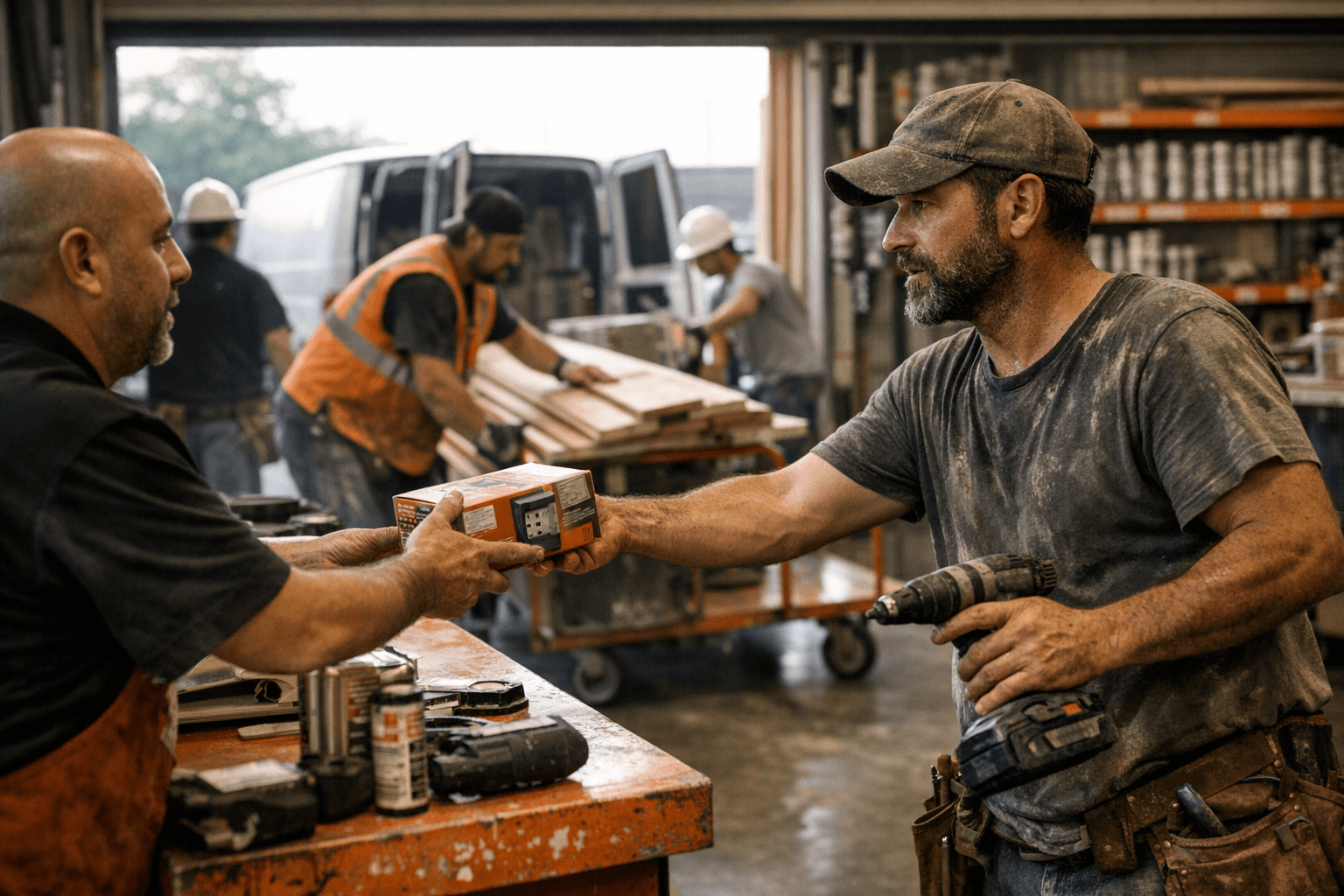
Home Depot maps store jobs, showing how the floor really works
Home Depot’s store jobs look simple from the aisle, but the floor runs on handoffs between six teams, and the most valuable work is often invisible.
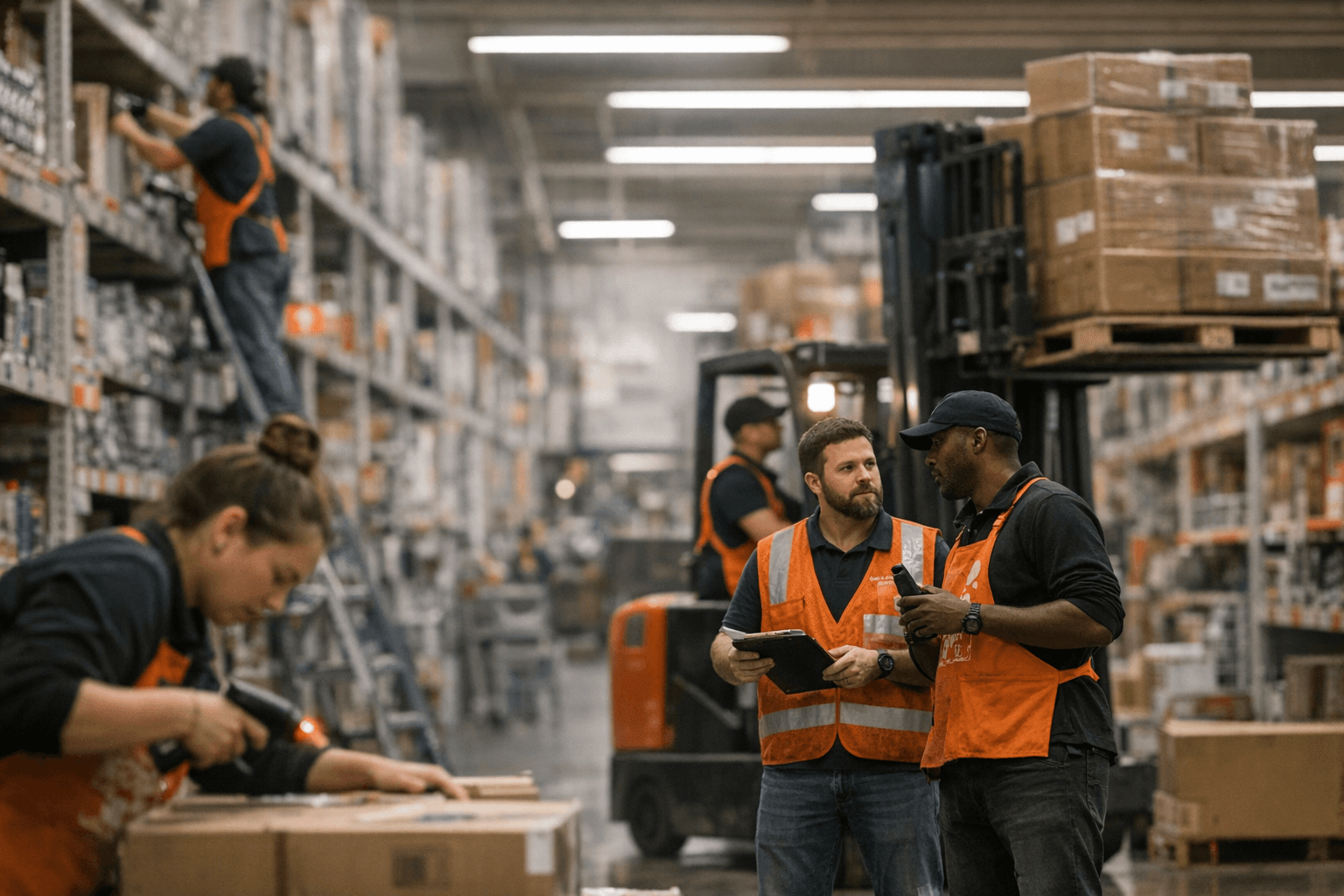
The store runs on handoffs, not one catch-all job
A Home Depot shift is really a chain of separate jobs stitched together, and that matters in a company that did $164.7 billion in fiscal 2025 sales and still says stores are its core business. If you work the floor, the key is knowing where your lane ends and the next one begins, because customers usually experience selling, stocking, pulling, and checkout as one seamless trip.
Home Depot’s own careers pages make that structure unusually clear. The company describes retail associates as frontline workers in more than 2,300 stores, and it breaks the store into customer service and sales, cashiers, merchandising execution, freight and receiving, order fulfillment, and broader support roles. That is the real map of the building: not just departments, but pressure points.
What each job family actually does during a shift
Customer Service and Sales Associates are the people expected to actively seek out shoppers, assess what they need, and provide assistance. In practice, that means greeting people before they wander, qualifying the project, recommending the right merchandise, and closing out the interaction inside the department. The role is not just about friendliness; it is about knowing enough to move a customer from problem to product without making the aisle a bottleneck.
That is also why Home Depot says it welcomes current trade professionals and people with prior career experience. A veteran electrician, plumber, or building materials worker can often cut through the guesswork fast, especially in departments like Plumbing, Electrical, Building Materials, and Hardware. On a busy day, that expertise is not a nice-to-have. It is what keeps a customer from bouncing between three aisles and a service desk.
Cashiers cover the checkout area, but the job is broader than ringing up a cart. Home Depot describes the front end as a place that has to stay safe and organized, which means managing the pace of lines, watching for errors, and keeping the area from turning chaotic when a rush hits. In many stores, that is the last handoff a customer sees, and it can shape whether the whole visit feels smooth or strained.
Merchandising Execution Associates, or MEAs, are the people keeping the store physically ready for shoppers. Their work includes planogram maintenance, overhead organization, and display and signage maintenance, all with an eye toward safety, accuracy, and efficiency. They are often the reason a department looks set, labeled, and easy to shop before customers arrive. Some of these assignments follow a consistent schedule; others involve overnight travel routes within about 30 miles, which tells you how much of the job happens before the selling starts.
Freight and Receiving associates keep the replenishment engine moving. Their work includes loading and unloading trucks, moving material through the store, and, in some roles, operating forklifts. Home Depot’s own language makes the expectation plain: these associates help ensure the store is stocked and ready for business every day. If customers think the shelf magically fills itself, freight is the part of the store that proves otherwise.
Order Fulfillment associates are the bridge between the store and digital demand. They retrieve product set aside for online customers and help shape the experience for high-volume shoppers, which means they sit right at the intersection of e-commerce and physical inventory. When pickup is running smoothly, these associates are part of the reason. When it is not, the customer usually feels the failure as a missing order, not as a backroom timing problem.
Support roles cover the non-sales work that keeps the rest of the machine running. The label is broad, but the point is not: stores cannot function if every job is measured only by how often it stands in front of a customer. Some of the most important work at Home Depot happens out of sight, in the aisles behind the aisle.
Where customers confuse the work
The biggest mistake shoppers make is assuming anyone in an orange apron can do everything. In a Home Depot store, that often means asking a sales associate to solve a freight problem, pulling a freight worker into a product question, or expecting an MEA to handle a live customer issue on the spot. The jobs overlap in the customer’s mind, but not in the labor plan.
Returns, pickup, equipment, and floor coverage are where those overlaps show up most clearly. A return usually lands with the front end or customer service side of the store because those teams are already managing checkout flow and customer handoffs. Online pickup is more likely to pass through order fulfillment, while equipment questions often pull in sales associates with trade knowledge or department experience. Freight handles the stock that makes the shelf possible, but it is not the same as the team keeping the aisle covered for customers at that moment.
That division matters for managers and department leads. If a store is understaffed in one handoff, the problem does not stay there. A late truck can become an empty shelf, an empty shelf becomes a sales missed opportunity, and a missed sale becomes a longer checkout conversation or a customer waiting for help that never arrives.
Why trade knowledge is part of the hiring logic
Home Depot keeps returning to the same theme for a reason: the best associates are not always retail lifers. The company says it wants people who can bring expertise from previous careers and turn that into customer value, and that includes workers coming from the trades. That approach fits the store model, where a sharp answer in Plumbing or Electrical can save a contractor time and build trust fast.
The Home Depot Foundation reinforces that message. The company says the foundation has invested more than $400 million in veteran causes since 2011 and has also pledged $50 million for Path to Pro training to help develop the next generation of skilled tradespeople. That is not just philanthropy layered on top of recruiting. It is part of the company’s story about who belongs on the floor and why hands-on knowledge matters.
Why the floor model keeps expanding
Home Depot’s store strategy still depends on physical locations, even as digital order flow grows. The company says knowledgeable associates and on-shelf availability are critical to the store experience, and it says it is trying to empower associates by improving training, product knowledge, processes, task simplicity, and technology. That combination tells you what managers are being asked to do: reduce friction without flattening the role into pure speed.
The scale question matters too. Home Depot says it plans to complete about 80 new stores by 2027 and then build 15 to 20 stores a year after that. So the labor model is not shrinking into a smaller, more automated store. It is scaling, which means the handoffs matter even more.
For associates, the practical takeaway is simple: know your job family, but also know the two or three teams you depend on most. For managers, the real work is making sure freight feeds the floor, fulfillment feeds pickup, merchandising keeps the aisles shoppable, cashiers keep the front end clean, and sales associates are free to do what the company says they are there to do: find customers, solve the problem, and close the sale.
Know something we missed? Have a correction or additional information?
Submit a Tip