Home Depot wins Pro loyalty by making every reorder easier
Pro loyalty at Home Depot is won in the second and third order, not the first. The stores that keep crews moving with fast reorders, clean handoffs, and fewer surprises earn the business that lasts.
The loyalty test is whether the next job starts easier
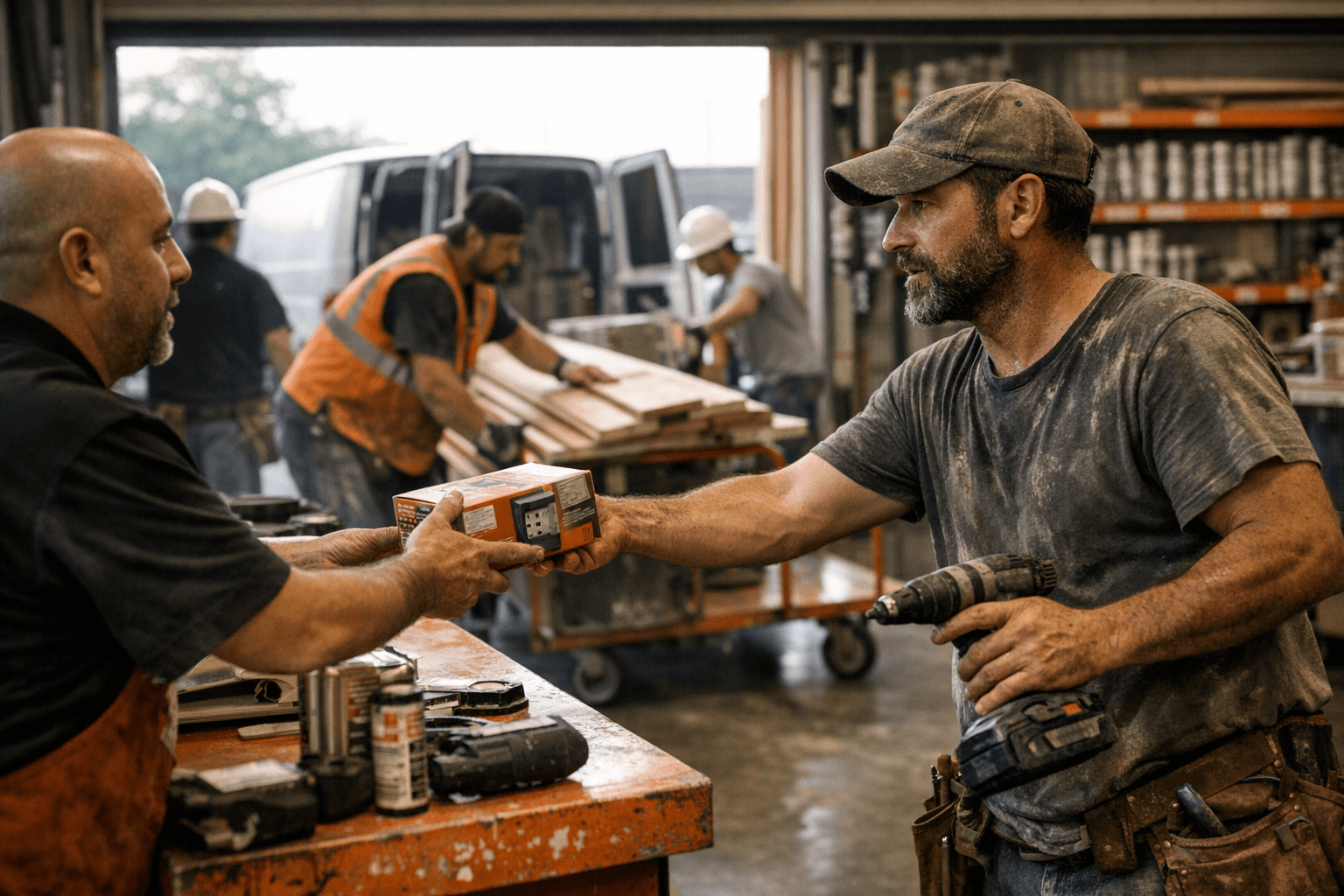
The contractor standing at the Pro Desk is not buying a box of nails, a bucket of paint, or a bundle of drywall. They are buying a smoother morning on the next job, fewer call-backs, and less time spent fixing avoidable problems. That is why The Home Depot’s push to “win with the Pro” is really an operations strategy: make reorders faster, keep promises tighter, and remove friction before a crew loses time.
That logic runs through the company’s 2025 annual report, which says the chain’s strategy is to drive its core, deliver a frictionless interconnected experience, and win with the Pro. It also fits the numbers. Fiscal 2025 sales rose to $164.7 billion, up 3.2% from fiscal 2024, after 2024 sales of $159.5 billion and a 1.8% decline in comparable sales. For store leaders, the message is clear: the Pro business matters not because it is flashy, but because it can stabilize traffic and deepen baskets when the store gets the details right.
Know who the Pro customer really is
Home Depot’s Pro base is broad, and that is exactly why the service model has to be precise. The company says its Pro customers include professional renovators and remodelers, general contractors, homebuilders, maintenance professionals, handymen, property managers, building service contractors, electricians, landscapers, insulation installers, plumbers, painters, pool contractors, roofers, and wallboard and ceiling specialists. These shoppers are not all doing the same work, but they share one trait: they care about schedule pressure.
That means the associate who wins repeat business is usually not the one who simply knows where an item sits. It is the one who helps keep a job moving. If a product is out, a better substitute can save the day. If a crew is waiting on a will-call order, a clean handoff can spare an entire shift from standing around.
The Pro Desk is a workflow tool, not just a counter
Home Depot says the Pro Desk helps Pros save time and money by organizing supply needs, getting quotes, and placing custom orders. That is the right lens for the desk: it should function like a project-control station. When an associate remembers a bid package, confirms compatibility, or checks whether a delivery window works before a crew shows up, that store is doing more than closing a sale.
Store leaders should coach teams to ask the questions that reveal the job behind the cart. How many are you taking? When do you need them? Is this for one job or multiple jobs? Do you need loading help, special-order support, or a quick compatibility check? Those questions are small, but they turn the associate from a product clerk into a project partner, which is where repeat business starts.
Accuracy matters as much as speed at the Pro Desk. A fast answer that sends a contractor back to the store is not a win. A slower answer that gets the right order, the right substitute, and the right pickup time is what builds trust.
Pro Xtra turns repeated purchases into a relationship
Pro Xtra is free to join, and Home Depot presents it as its loyalty program for professionals. Members can track purchases for up to two years, use volume pricing on qualifying purchases of $2,500 or more, and access business tools, special delivery options, jobsite delivery, tool and equipment rentals, and commercial credit options. That mix matters because it ties the account to the way tradespeople actually operate: by job, by crew, by timeline, and by the need to keep paperwork from slowing down the field.
The best Pro Xtra relationship is not one where the customer is merely enrolled. It is one where the store uses the program to remember preferences, speed up recurring orders, and make the next transaction cleaner than the last. If the customer knows the system will hold their history, their delivery needs, and their account details, the store becomes part of their operating rhythm.
Delivery speed is now part of the loyalty pitch
Home Depot has also spent heavily on the back end, and that investment is as important as any sales-floor script. The company says it has 19 direct fulfillment centers, more than 2,000 stores, and technology improvements across the chain that helped produce its fastest delivery speeds across the greatest number of products in company history. It also says same-day and next-day delivery options are available.
For Pro customers, this is not a convenience feature. It is a job-site risk reducer. A late delivery can idle a crew, push a project into overtime, or force a contractor to burn time chasing materials. When stores align inventory, fulfillment, and delivery windows well, they are not just moving product faster. They are protecting the contractor’s schedule, which is the real currency of loyalty.
The loyalty play now reaches beyond product supply
Home Depot’s Path to Pro Network shows how far the company wants the Pro relationship to extend. Launched nationally in 2021, it lets Pro Xtra members connect with skilled labor candidates by trade, location, and employment type. The Home Depot Foundation says Path to Pro has introduced hundreds of thousands of people to the skilled trades while helping address the labor shortage.
That matters because the trade shortage is one of the most persistent pressure points in the field. A store that can help a contractor find ready-to-hire job seekers is no longer just a supplier. It becomes a more useful business partner, especially for Pros trying to keep schedules intact as they juggle demand, staffing gaps, and seasonal rushes.
What good Pro execution looks like on the floor
The stores that earn repeat business tend to follow the same habits:
- They remember the job, not just the SKU.
- They confirm quantities, timing, and pickup or delivery details before the customer leaves.
- They treat substitutes as problem-solving tools, not afterthoughts.
- They keep will-call and loading handoffs clean so crews do not waste time.
- They use Pro Xtra and account history to make reorder work easier.
- They follow up when an order is special, urgent, or likely to affect a crew’s schedule.
Those habits sound basic, but in a Pro environment, basics are what separate a one-time transaction from an account relationship. The store that saves a contractor one headache every week becomes the store that gets called first on the next job.
The lesson for The Home Depot is simple: Pro loyalty is built in the operational moments that most shoppers never see. The company can advertise convenience, but the real proof is whether a contractor’s next order is faster, cleaner, and more reliable than the last one.
This article was produced by Prism’s automated news system from verified source data, official records, and press releases, then run through automated quality and moderation checks before publishing. The system is built and supervised by the people who set the standards it runs under. Read our full AI policy.
Did this article answer your question?