Home Depot military-spouse transfer policy helps associate build career
Leslie’s move with the military became a step up, not a reset. Home Depot’s transfer policy and cross-training kept her career moving with every relocation.
A relocation did not end Leslie’s Home Depot career. It widened it.
Leslie started in 2015 as a cashier, then moved to the Service Desk, supported Pro customers, and eventually became an Associate Support Department Supervisor. When her husband commissioned in the military and the family had to move, she did not have to choose between staying employed and starting over. She used Home Depot’s military transfer policy to keep advancing, store to store, while her family followed military orders.

That is the real lesson in her story: a move can break a career only if the company treats it like a dead end. At Home Depot, the better path is to treat relocation as another step in the same climb. Leslie put it plainly: “I move with the military every few years, but I’ve still been able to grow and become a leader.”
What the military-spouse transfer policy covers
Home Depot has described its military-spouse transfer policy as a guaranteed job transfer for hourly associates affected by a military-ordered move. That matters because it turns relocation from a personal crisis into a managed workplace transition. Instead of hoping a manager will make room, associates have a defined path to continue working when the family’s next assignment is not optional.
The company’s military benefits page adds another layer. Associates relocating with the military can use the Military Spouse Career Transfer program, and those moving overseas can request a Military Family International Leave of Absence and continue their careers when they return to the U.S. Home Depot also points military spouses to internal communities and quarterly military stories, which suggests this is meant to be ongoing support, not a one-time exception.
For workers, the practical meaning is simple: if your family moves, you do not have to treat that move as the end of your Home Depot path. The policy is built to preserve continuity, and continuity is what makes advancement possible.
How Leslie used a move to build, not reset
Leslie’s career shows how internal mobility can turn one store job into a stronger resume. A cashier learns the front end, the pace of customer traffic, and the pressure of keeping lines moving. The Service Desk adds problem-solving, order coordination, and the kind of store knowledge that reaches across departments. Supporting Pro customers brings another layer, because that work depends on product fluency, urgency, and the ability to match tradespeople with what they need quickly.
By the time Leslie became an Associate Support Department Supervisor, she was not just keeping a job, she was carrying experience forward. That is the part military families should pay attention to. A transfer is not only about keeping a badge active. It can also be the moment you move into a broader support role, learn a different corner of the store, and become more valuable in the next location.
If your family is moving, the lesson from Leslie’s path is to look at the transfer as a chance to stack skills. A move is disruptive, but it can also force you to prove that your knowledge travels well, whether you have been helping at the register, the Service Desk, or with Pro orders.
Why the policy matters beyond one associate
Home Depot has said it had 35,000 veteran and military-spouse associates in a 2020 announcement, and that 78% of military bases were within 20 miles of a Home Depot store or distribution center. That geography matters. It means portable employment is not a fringe benefit for a small number of people, but a realistic career structure for a large military population that often has to relocate with little notice.
The same announcement noted that 31% of military spouses were underemployed because of frequent relocations. That is the problem the transfer policy is trying to solve. Without a guaranteed transfer, a move can push a spouse into a lower-level job, a gap in employment, or a complete reset. With transfer in place, the associate can preserve seniority, experience, and momentum.
Home Depot’s military-spouse support also sits inside a larger system. Military OneSource and the Military Spouse Employment Partnership say the company has nearly 2,500 locations military spouse employees can transfer to. That gives the policy real reach across the country, which is what makes a career portable instead of merely protected.
The broader military support network behind the policy
The transfer program is only one part of how Home Depot positions itself with military families. Military OneSource says the company has been an MSEP partner since 2015 and a Career Accelerator Host since 2026. It also notes that veterans and spouses can receive special apron badges and support groups facilitated by the military relations team. That kind of signaling matters on the store floor, where day-to-day belonging can shape whether someone stays long enough to advance.
The company’s veteran footprint is also sizable. Military OneSource says Home Depot’s veteran population numbers over 35,000. It also says the Home Depot Foundation has invested more than $350 million in veteran causes since 2011 and has improved more than 48,000 veteran homes and facilities in 4,500 cities. The foundation has pledged to invest half a billion dollars in veteran causes by 2025.
There is also a future-workforce angle. Military OneSource says Home Depot has committed to training 20,000 people for skilled trades careers by 2028, with more than half expected to be exiting service members, veterans, and spouses. For associates, that reinforces a larger message: the company is not just trying to keep military families employed, it is trying to keep them moving into more skilled, more durable work.
The pattern behind Leslie, Jessica, and Courtney
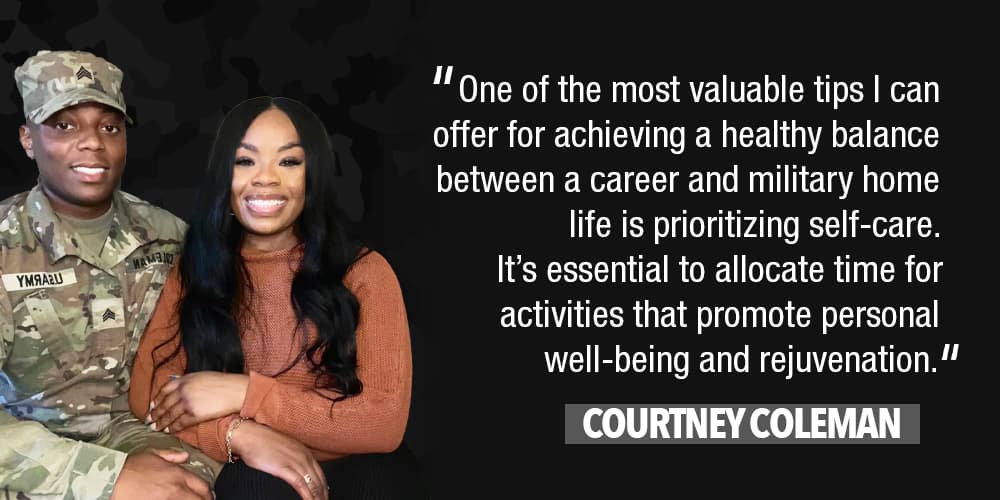
Leslie’s story fits a pattern Home Depot has highlighted before. Jessica Murchison started as a part-time cashier in Poway, California, then transferred to South Annapolis, Maryland, where she became a night replenishment manager after her husband received military orders. Courtney Coleman used the transfer program twice in three years, moving from Colorado Springs to Washington state and then to Texas while working as a general warehouse associate.
Those examples matter because they show the policy is not tied to one job type or one geography. It can support a front-end cashier moving into management, a replenishment leader settling into a new market, or a warehouse associate keeping continuity through multiple relocations. The common thread is not the job title. It is the ability to carry experience forward instead of losing it at the next duty station.
That is why Leslie’s story resonates for military families inside Home Depot. The company’s transfer policy does more than save a job. It creates a path for associates to keep learning, keep leading, and keep building a career even when the military moves the family again.
This article was produced by Prism’s automated news system from verified source data, official records, and press releases, then run through automated quality and moderation checks before publishing. The system is built and supervised by the people who set the standards it runs under. Read our full AI policy.
Did this article answer your question?