Home Depot replaces store phone menus with AI voice agents
Store phone calls are about to get faster: Home Depot says AI voice agents can identify intent in under 10 seconds and hand off to an associate when needed.

Home Depot is turning the store phone line into a faster front door. The company said it is replacing traditional phone menus with AI-powered voice agents for U.S. stores, a change meant to cut down on routine calls that pull associates away from customers on the sales floor.
The new system is built on Google Cloud’s Gemini Enterprise for Customer Experience. Instead of forcing callers through a menu, the AI lets customers explain what they need in their own words, then routes the call to automation or to a human associate when the issue needs a person. Home Depot said the agents can answer in multiple languages, check order status, confirm product availability, provide store details and start service requests.
For store teams, the practical effect could be fewer interruptions from repetitive questions and more time for in-aisle service, special orders, product advice and problem-solving. Home Depot said customers can always be transferred to a human associate, which keeps orange-apron expertise in the loop when the call turns complicated, urgent or tied to a jobsite deadline.
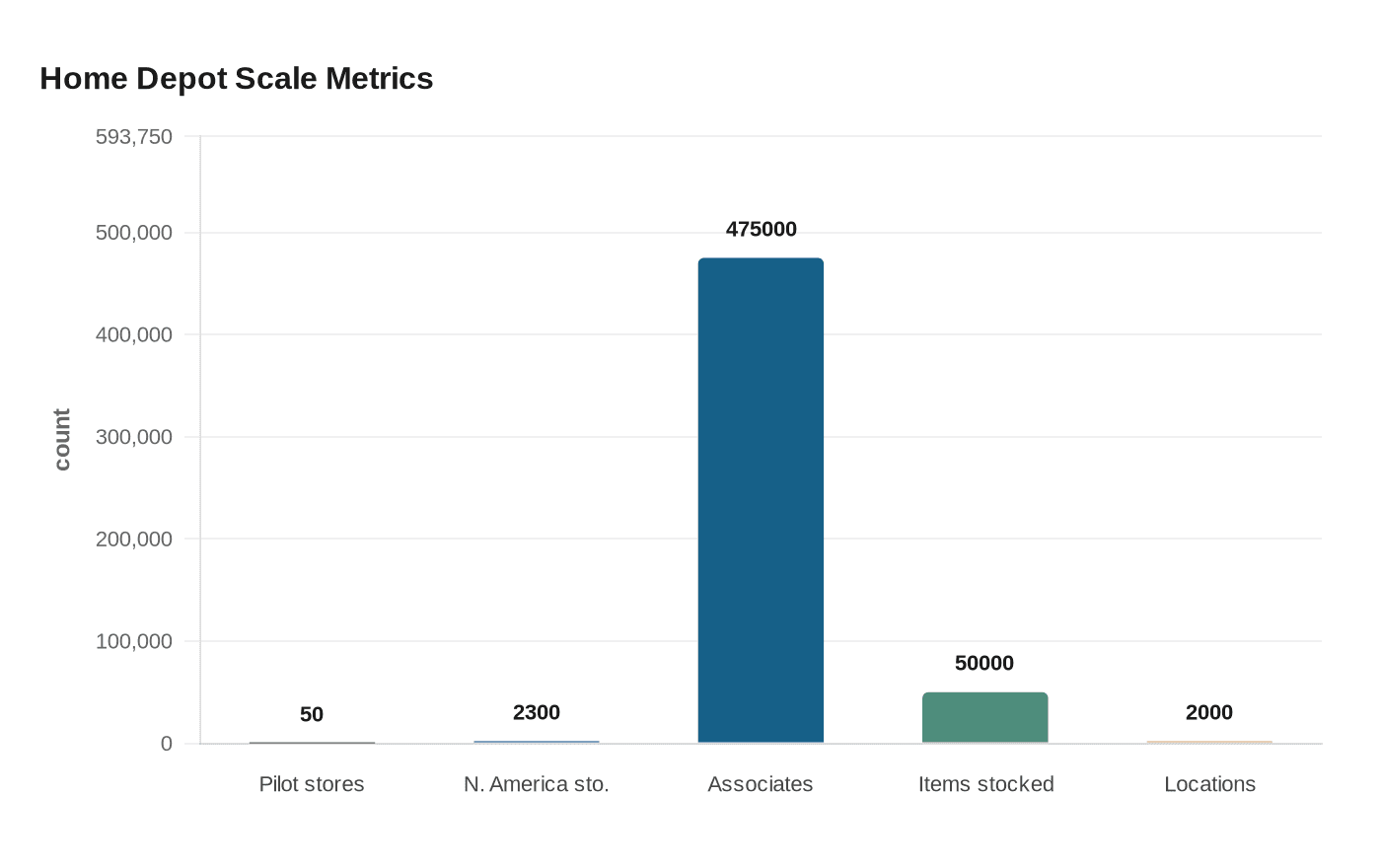
The company said a 50-store pilot showed the AI understood customer intent in fewer than 10 seconds and handled calls four times faster than a traditional phone menu. That matters in a chain with more than 2,300 stores in North America and about 475,000 associates, where even small gains in call handling can add up across a huge daily volume of customer questions.
Home Depot has been using Google Cloud since 2016, and the retailer has steadily pushed AI deeper into its operations. Google Cloud says the company uses its platform to help keep more than 50,000 items stocked in stores, monitor online applications and surface call center information across more than 2,000 locations. At NRF 2026 in January, Home Depot and Google Cloud announced new agentic AI tools, and in March the retailer said it already had more than a dozen AI-powered capabilities in use, with more under development. Home Depot also said it began rolling out its generative AI tool Magic Apron late in its prior fiscal year.
That makes the phone-agent rollout look less like a one-off experiment and more like another step in a broader operating shift. Jordan Broggi, the company’s executive vice president of customer experience and president of online, leads the customer-experience organization behind the tools, while Ted Decker has said Home Depot’s AI and digital strategy is aimed at creating a seamless interconnected shopping experience for Pro and DIY customers. For associates, the message is simple: AI is being used to absorb routine traffic, not replace store knowledge, and the real test will be whether it leaves more time for the work that only a person in an orange apron can do.
This article was produced by Prism’s automated news system from verified source data, official records, and press releases, then run through automated quality and moderation checks before publishing. The system is built and supervised by the people who set the standards it runs under. Read our full AI policy.
Did this article answer your question?