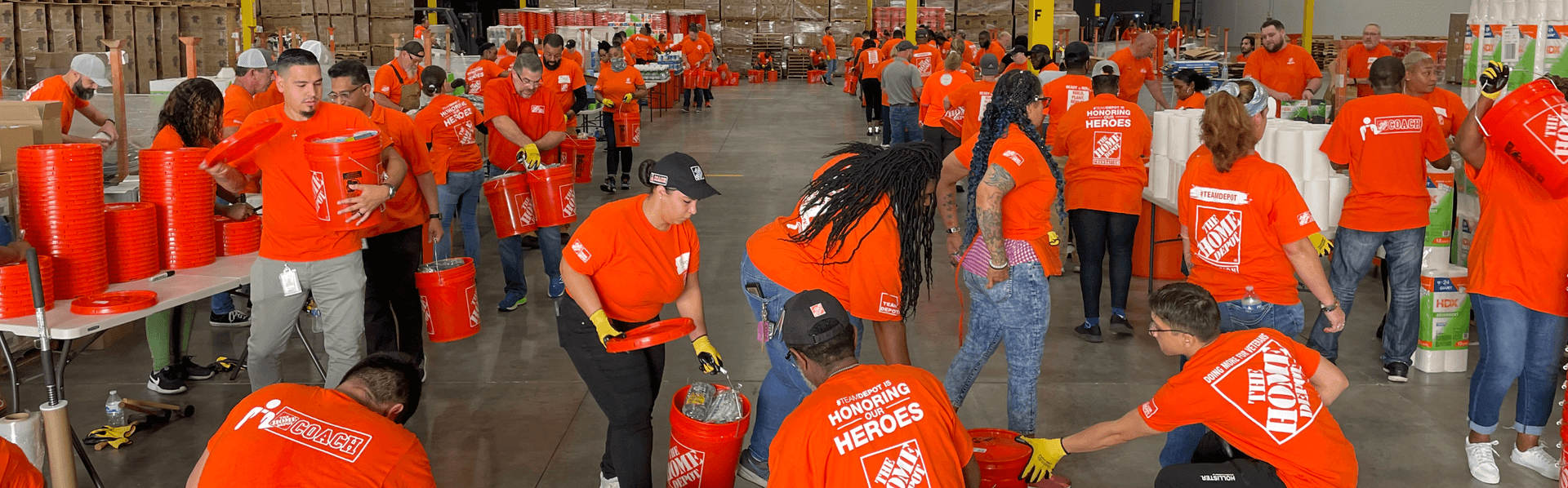
Home Depot safety starts with repetition, training, and small choices
A loose box or rushed ladder move can slow a store as fast as it causes an injury. At Home Depot, safety is daily operating work, not a paperwork task.
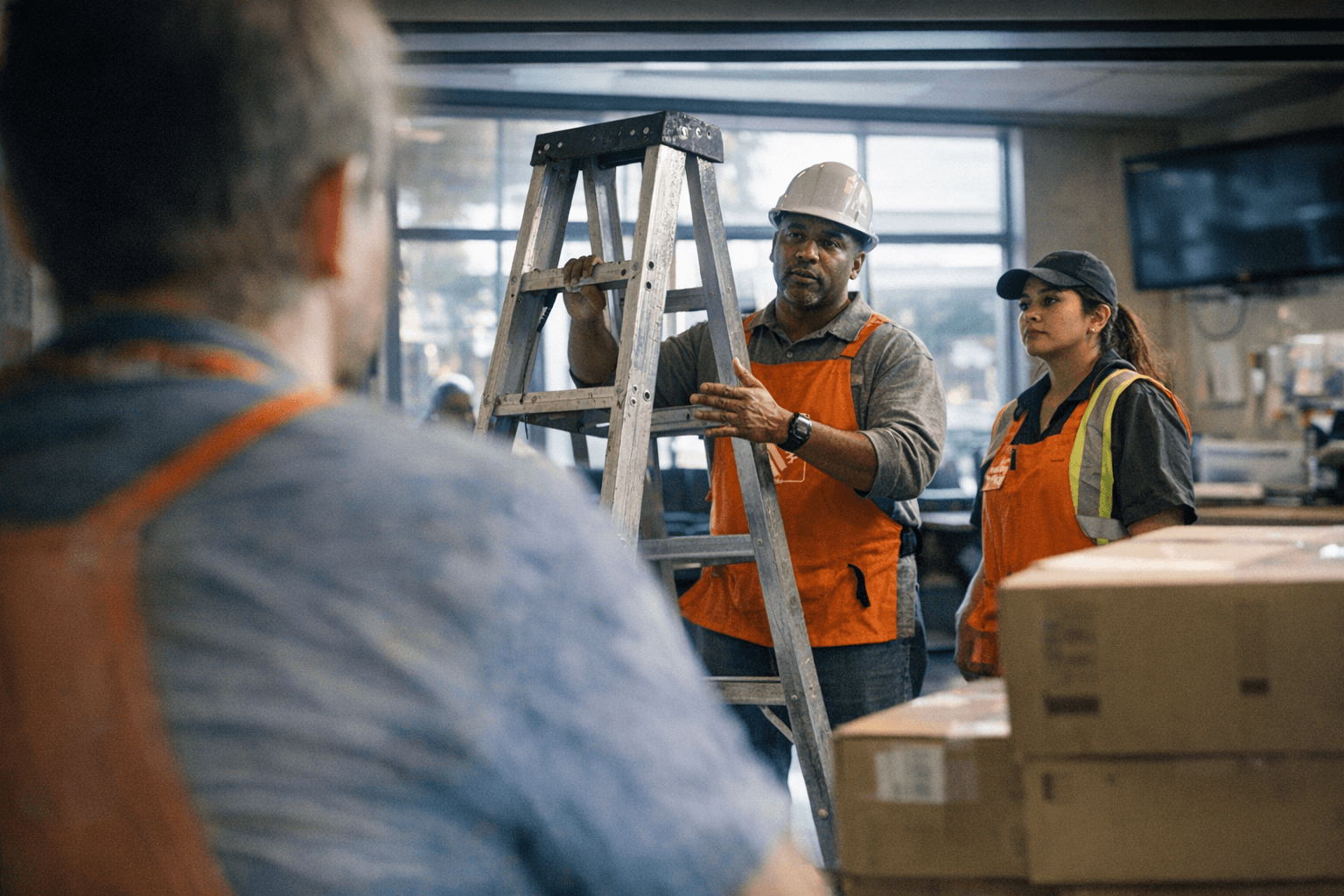
Safety is part of how the store runs
At Home Depot, safety is not a side conversation. It is built into the same work that moves freight, fills aisles, serves contractors, and keeps customers moving through the building. Forklift use, ladder habits, and basic tool handling are not paperwork items, because the store environment mixes heavy product, powered equipment, tall storage, sharp tools, and constant customer traffic.
That mix is why the stakes are so high on an ordinary shift. A rushed lift, a loose box, or a shortcut on a ladder can hurt a coworker, a customer, or yourself. It can also slow the whole store down. Every injury, near miss, or equipment incident pulls leaders off the floor, adds stress for the team, and interrupts the steady pace that retail depends on.
Repetition turns safety into instinct
The best safety cultures do not rely on memory in the middle of a rush. They rely on repetition. Associates need to know where to stand, where not to stand, which equipment requires training, how to inspect ladders or carts, and when to stop and ask for help instead of improvising.
That routine matters because the safe choice is often the efficient one. Using the right lift equipment the first time is faster than trying to muscle a heavy item into place and then fixing a damage issue. Staging a pallet correctly may take a few extra seconds, but it can prevent a spill later or keep a customer access problem from developing in the middle of a busy aisle.
The point is not to slow the store into caution for its own sake. The point is to make the safest move the most normal one, so associates do not have to decide from scratch every time they are faced with a heavy load or a tight space.
The highest-risk moments are the everyday ones
Most safety problems do not come from dramatic scenes. They happen in the ordinary pressure points of a Home Depot store: freight, lumber, receiving, overhead storage, and the constant movement of customers around active work areas. Those are the moments when a shortcut feels tempting and when a small mistake can become a serious incident.
New hires are especially vulnerable because they often want to help immediately but do not yet have the instincts that experienced associates build over time. They may know the basics of customer service before they fully understand the risks around heavy product, powered equipment, or ladder work. That is why coaching and correction matter so much. The goal is not to make the floor feel paranoid. It is to make safe behavior normal before a bad habit becomes automatic.
Where safe habits matter most
A strong floor culture usually shows up in a few repeat behaviors:
- Stopping before moving anything heavy and making sure the right equipment is being used.
- Checking ladders, carts, and other gear before relying on them.
- Keeping clear of areas where equipment is active and knowing where not to stand.
- Asking for help instead of forcing a move that feels awkward or unstable.
- Staging product so it does not create a spill, blockage, or customer access issue later.
These are small choices, but they are the choices that keep a normal day from turning into a recovery effort.
Safety and customer service are the same conversation
A controlled work area is not just safer. It is better service. Customers can tell when an associate is confident, focused, and managing the space around them well. They can also tell when a work area feels disorganized or risky, and that uncertainty spills into the interaction.
That is why safety and customer trust are connected. A confident associate can answer a question while still keeping the area under control. An unsafe one creates confusion for everyone nearby, including the customer who is trying to shop and the coworker who has to step in. In a store built around speed, access, and convenience, control is part of the customer experience.
For department leads and managers, that connection matters just as much as injury prevention. Safety is a productivity issue because every interruption changes the rhythm of the shift. A team that avoids preventable incidents does more than protect itself. It keeps freight flowing, keeps the floor organized, and keeps leaders available to support the rest of the store.
Why the culture has to be coached, not assumed
Home Depot stores work best when safety is treated as a skill that gets reinforced, not a value that is assumed. Associates learn it through repetition, correction, and shared expectations on the floor. That matters most when the store is busy, because pressure is exactly when people fall back on habit.
Leaders set the tone by treating training as ongoing work, not a one-time orientation box to check. Associates need reminders about equipment, ladder discipline, and where to pause instead of pushing ahead. The more often those standards are reinforced, the less likely someone is to improvise in the middle of a rush.
That approach helps the whole team. Stores that take safety seriously usually run smoother, train faster, and retain more people, because the team trusts that leadership is paying attention to their well-being. In a business built on heavy product, constant motion, and customer traffic, that trust is not soft. It is operational.
What good safety looks like on a busy floor
The safest stores do not look cautious in a way that slows everything down. They look organized. Associates know who is trained on what. They know when to stop moving and ask for help. They keep work zones controlled even while serving customers, and they understand that a few extra seconds at the start can save much more time later.
That is the real lesson for every shift. Forklifts, ladders, carts, and tools are part of the job, and so is the discipline to use them correctly every time. The stores that build that discipline into daily habits protect their people, protect the customer experience, and protect throughput at the same time.
This article was produced by Prism’s automated news system from verified source data, official records, and press releases, then run through automated quality and moderation checks before publishing. The system is built and supervised by the people who set the standards it runs under. Read our full AI policy.
Did this article answer your question?