Home Depot Sidekick app changed how stores prioritize tasks and work
Home Depot developed an internal mobile app called Sidekick, and rolled it out in early 2023 to use machine learning to surface time sensitive work and help associates prioritize daily tasks. The tool aims to boost on floor productivity and reduce manual coordination, and its adoption has implications for training, task assignment and how stores track performance.
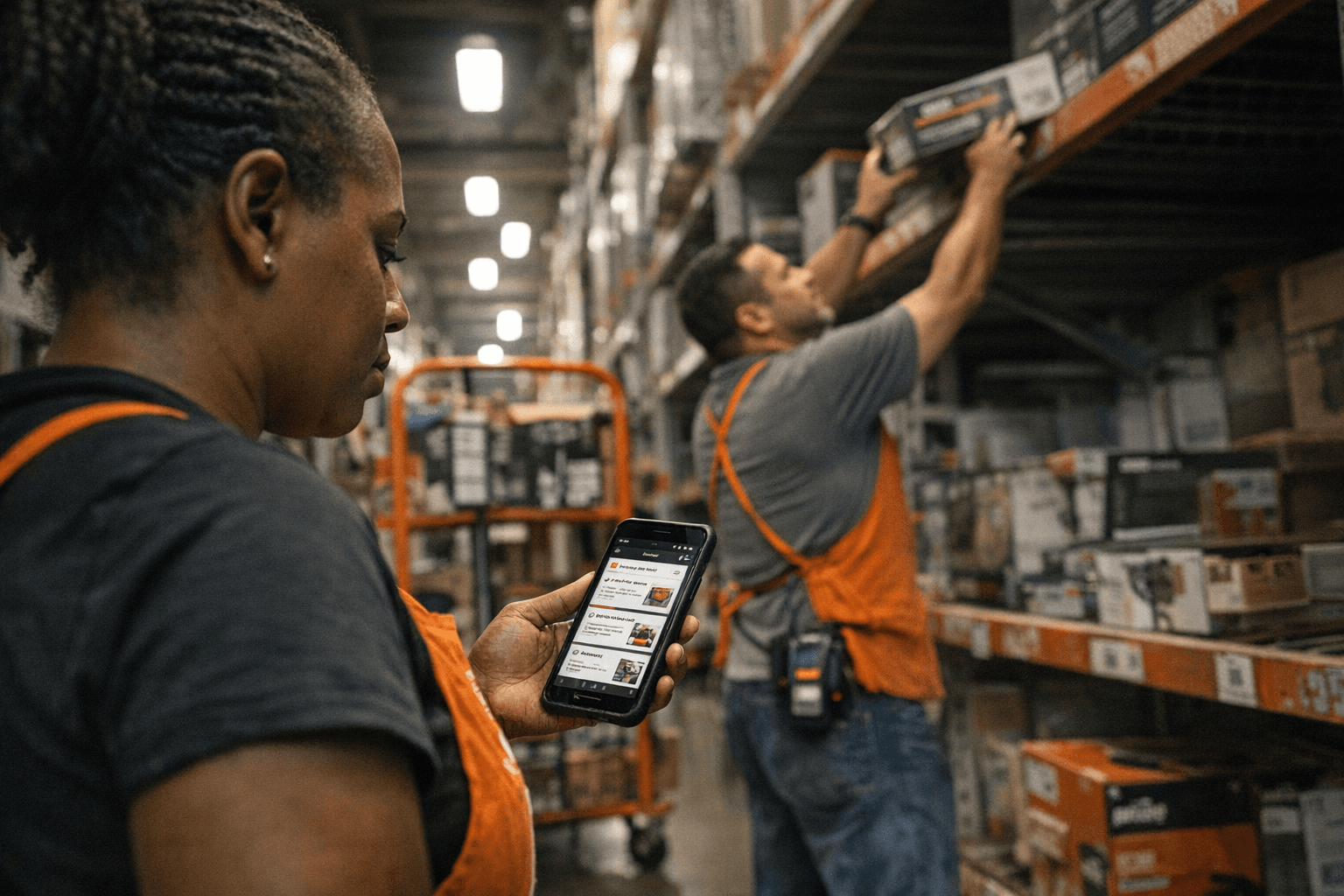
Home Depot built an internal mobile app called Sidekick and launched it to stores in early 2023. The app uses machine learning to identify time sensitive tasks, such as out of stock situations and urgent merchandising needs, and to recommend priorities for associates throughout the day. Company developers created the tool in house to accelerate feedback loops with end users and to make it easier for store teams to act on real time information.
At its core, Sidekick is intended to free associates from lower value coordination tasks by putting prioritized work and alerts directly into their hands. Stores that adopted the app reported shifts in how daily work was assigned, with managers able to push time sensitive items to the floor and rely less on manual lists and ad hoc coordination. The company framed the change as a way to increase on floor productivity while improving response times for issues that affect sales and customer experience.
The technology also affected how stores measure and track performance. Automated task prioritization intersected with local metric tracking, giving managers new data points and changing the cadence of check ins and staff planning. That raised expectations for consistent use, and made training a central part of rollout. Local store leadership was responsible for implementation choices, including how to integrate Sidekick into daily routines, how to train teams and how to balance algorithmic priorities with local knowledge and customer conditions.
For associates and supervisors the practical impacts were clear. Time spent on manual coordination and status checks could decline, allowing more focus on restocking, customer service and merchandising that drives sales. At the same time adoption required learning new workflows and relying on a tool that surfaces priorities based on machine learning models. As retailers continue to digitize frontline work, Home Depot stores provide a case study in how technology can reshape task assignment, measurement and the day to day experience of in store teams.
This article was produced by Prism’s automated news system from verified source data, official records, and press releases, then run through automated quality and moderation checks before publishing. The system is built and supervised by the people who set the standards it runs under. Read our full AI policy.
Did this article answer your question?