Home Depot spotlights veteran skills across stores, operations and offices
Home Depot is signaling that military discipline, calm under pressure and team execution can move into freight, asset protection and management. Store leaders can use that map when hiring and coaching.
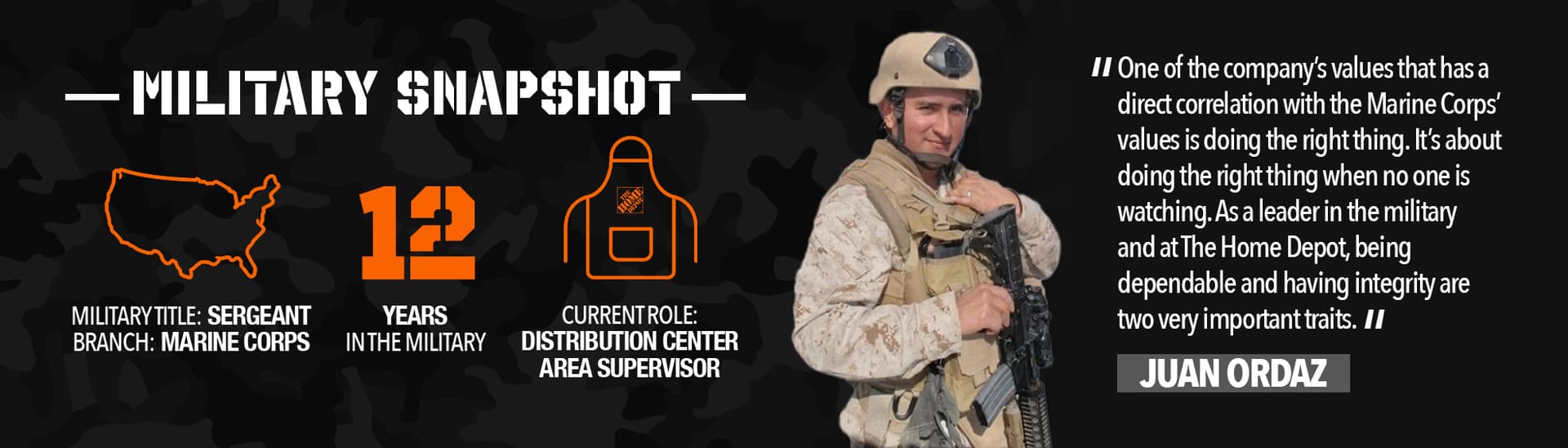
Juan Ordaz, a Marine Corps veteran, joined Home Depot as a garden associate and later marked a 20-year anniversary. Home Depot’s military careers page maps how the company wants veterans and military spouses to fit into the business, from stores and distribution centers to corporate offices, and it makes clear that leadership and decision-making matter as much as retail experience.
For current associates and store leaders, the page shows what Home Depot rewards: people who can stay calm, work as part of a team and execute under pressure. Those are the same traits that can carry someone from service into freight, asset protection, customer service, operations work or a leadership track.
What Home Depot is really signaling
Home Depot says tens of thousands of veterans are continuing their careers there as part of a broader people-first culture. Home Depot is signaling that military experience can translate into civilian work without needing to be flattened into one narrow retail résumé.
The page points veterans and military spouses toward roles in stores, distribution centers and corporate offices, a useful reminder for managers coaching applicants: military experience does not have to be translated only into front-end or sales-floor language. A person who supervised a crew, handled tight deadlines or operated in a chain-of-command environment may fit just as naturally in receiving, inventory flow, merchandising, operations support or department leadership.
Home Depot is not just looking for people who have sold lumber or stocked shelves before. It is open to people who can lead, adapt and make decisions when the floor gets busy, the pro desk backs up or seasonal demand spikes.
Where those skills fit inside a store
The company’s military framing lines up well with the realities of a Home Depot store. Discipline and team-based execution matter when freight has to be moved, aisles have to stay clear, customers are waiting for help and the building still has to look shoppable by opening time. Calm under pressure matters when contractors need fast answers, when loading zones get crowded or when a department lead has to reset priorities on the fly.
The page emphasizes leadership because veterans often bring habits that map neatly onto store-floor jobs: following a process, keeping a team aligned, reading a situation quickly and taking responsibility when something goes wrong. Those traits are valuable in asset protection, where judgment matters, and in operations roles, where consistency matters even more.
For military spouses, mobility is part of the job reality, and Home Depot has leaned into that with a transfer program for military spouses. The company has also highlighted a spouse who used that transfer program twice in three years.
The scale behind the message
Home Depot says it employs over 470,000 associates companywide, including tens of thousands of veterans and military spouses.

In one corporate post, Home Depot said it had about 35,000 veteran and military-spouse associates and was expanding resources for transitioning service members.
The Home Depot Foundation says it has invested more than $475 million in veteran causes since 2011 and improved more than 55,000 veteran housing facilities. In an earlier corporate update, the company said the foundation had contributed more than $400 million to veteran causes and improved more than 50,000 veteran homes and facilities in more than 4,500 cities.
The employee stories that make the path visible
Home Depot has also used associate stories to show how military service can turn into a long retail career.
The company has also highlighted a Navy service member who became a merchandising assistant store manager in Greenville, South Carolina. That progression is especially useful for people coaching applicants because it shows how military experience can move into leadership, not just entry-level work. Merchandising assistant store manager is a real step into store management.
How managers can use this when coaching applicants and new hires
For store leaders, the page is a practical coaching tool. It gives a clean language bridge between military service and Home Depot work, which can help in interviews, onboarding and succession planning.
- Ask applicants to translate service into outcomes. A military résumé should become examples of leading people, managing equipment, staying composed under stress or following safety and operating procedures.
- Look for team execution, not just retail vocabulary. Someone may not have Home Depot experience yet, but if they have run a crew, handled logistics or worked in a high-pressure environment, that can fit freight, receiving or operations.
- Match military strengths to the role, not just the title. A veteran with strong judgment may belong in asset protection; a spouse with a strong transfer history may be a fit for store operations or department support in a new market.
- Treat mobility as a staffing fact. The spouse transfer program shows why retention can depend on flexible placement, especially for families tied to military moves.
This article was produced by Prism’s automated news system from verified source data, official records, and press releases, then run through automated quality and moderation checks before publishing. The system is built and supervised by the people who set the standards it runs under. Read our full AI policy.
Know something we missed? Have a correction or additional information?
Submit a Tip