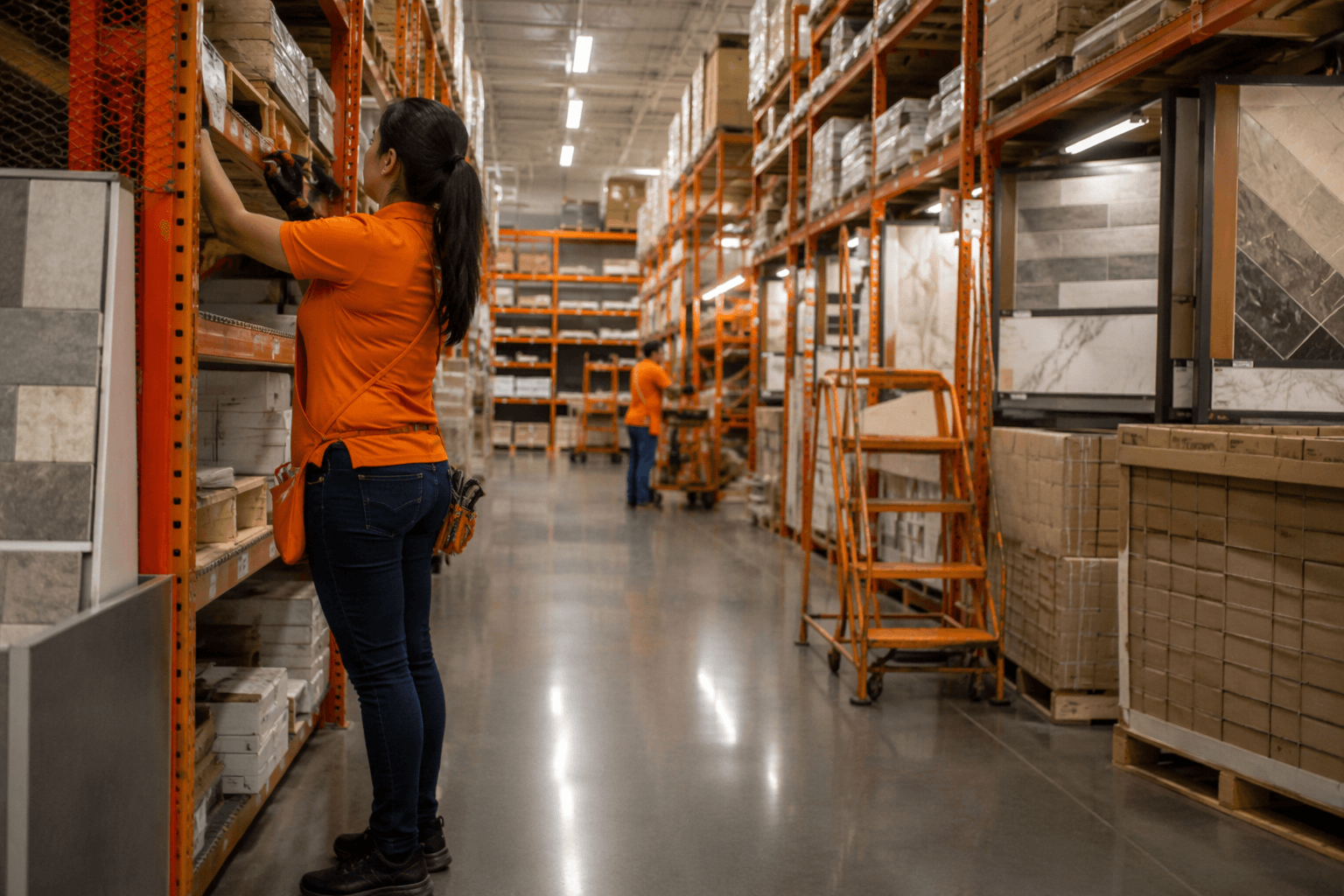
Home Depot warehouse job became Josue’s path to career growth
Josue turned an RDC job into a leadership track by learning the flow of freight, mastering equipment, and building the habits managers trust.
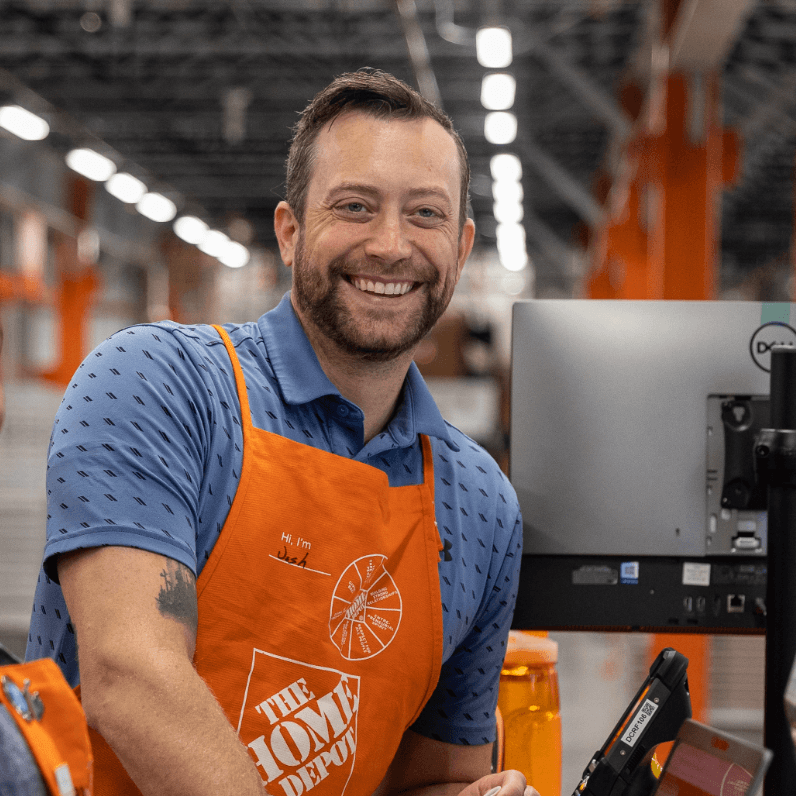
How a warehouse shift became a career track
Josue did not walk into a distribution center looking for a lifetime story. He came in 2020 while finishing college and starting a family, looking for stability, solid benefits, and a job that could pay off beyond the next schedule. At one of Home Depot’s Rapid Distribution Centers, he found more than that: a place where warehouse work, if you learn it well, can become a path into frontline leadership.
That matters inside Home Depot because the company treats supply chain work as part of the customer experience, not a separate back-room function. When a store has the right product on the shelf for a contractor starting a job or a homeowner heading into a weekend project, that usually starts with warehouse associates moving freight efficiently through the network.
What the RDC job actually teaches
Josue’s outbound role was hands-on from the start. He staged product for stores and distribution centers, operated forklifts to load trucks and move materials, and packaged shipments for the next stop in the chain. Those tasks sound routine until you connect them to the rest of the business: every pallet staged correctly, every load handled safely, and every shipment sent on time helps keep inventory moving where it needs to go.
Home Depot says warehouse associates unload vendor trucks and move product with hand trucks, forklifts, and motorized conveyors before loading it for delivery. That mix of manual work and equipment use is what makes the job a strong training ground. You are not just moving boxes. You are learning how product flow, safety, timing, and accuracy fit together in a retail operation that depends on stores having the right inventory when customers arrive.
For associates trying to build a future in the company, that is the first lesson to replicate: treat every freight task as a way to learn the chain. Know where product comes from, where it is headed, and what can slow it down. The people who stand out are usually the ones who understand more than their own lane.
The skills that turned reliability into promotion
Josue’s next step was not luck. He became the go-to person on his team, built leadership skills by serving as an outbound point of contact, and then moved into an Area Supervisor role at a Crown Bolt Distribution Center. That progression shows how Home Depot tends to reward dependable execution, communication, and a willingness to own more than a single assignment.
The forklift detail matters here too. Safe equipment operation is not just a technical requirement, it is part of management credibility. Associates who can operate machinery accurately, keep freight moving, and protect the flow of the building tend to get noticed because they are helping prevent the delays that ripple outward into stores and customer orders. In a busy distribution center, speed only matters if it is matched with control.
Josue’s advice centered on owning his development and building strong relationships. That is the same pattern store managers often look for when they identify future supervisors: people who can earn trust, solve problems without drama, and understand that their work affects the next person down the line. A reliable associate who communicates clearly can become the person everyone else depends on when the workload spikes.
Why Area Supervisor is a real step up
Home Depot describes Area Supervisors as manager-level associates who help inventory flow through distribution centers and oversee the day-to-day tasks of warehouse associates. That is a meaningful shift from individual contributor to operational leader. It means watching the work as a system, not just completing your own assignment.
For associates in the supply chain, this is the promotion to aim at if you want more than steady hours. It asks you to understand labor planning, movement through the building, and how to coach other associates while keeping the operation on pace. Josue’s move into that role shows that the path from the floor to leadership is not abstract. It is built on the habits you form while moving freight, staging loads, and being the person people can count on when the building gets busy.
For store leaders, the lesson is equally practical. If you want future supervisors, the bench is often in the warehouse. Associates who can see the full chain from inbound freight to stocked shelf are already learning the language of operational leadership. They just need room to grow, plus coaching that ties their work to the bigger business.
The network behind the opportunity
Josue’s story also makes more sense when you look at how Home Depot has built its supply chain. The company says that network includes rapid deployment centers, bulk distribution centers, flatbed distribution centers, direct fulfillment centers, market delivery operations, reverse logistics centers, and stocking distribution centers. John Deaton, who leads strategic efforts tied to logistics, distribution, delivery, transportation, and inventory management, has framed that network as part of a push to build the fastest, most efficient and reliable supply chain in home improvement.
This is not a side operation. Home Depot says it opened its first Rapid Deployment Center in 2007, and by 2011, with the opening of the 19th RDC, its distribution centers served 100 percent of U.S. mainland stores. That history shows how central the warehouse footprint has become to the company’s retail model.
The expansion has kept going. In 2024, Home Depot said it was opening four new distribution centers in Detroit, southern Los Angeles, San Antonio, and Toronto. That kind of growth creates more entry points for associates who want to build careers in logistics, operations, and leadership. When the network grows, so does the number of people who can learn it from the inside.
Why the job can fit a long-term life plan
Josue also represents something important about the worker side of warehouse jobs: stability matters. Home Depot says its warehouse roles offer consistent schedules, competitive pay, and on-the-job learning and career growth. The company also points to tuition reimbursement, paid family leave, backup dependent care, 401(k) matching, and a company stock purchase program. For someone juggling college, work, and a new family, that combination can make the difference between taking a job and building a future.
That is why supply chain work can be more than a stopgap at Home Depot. The benefits help, but the bigger value is the way the job opens a ladder. If you learn the equipment, understand the flow, build trust with your team, and stay ready for added responsibility, the warehouse can lead to leadership faster than many people expect.
Josue’s path is a reminder that Home Depot’s supply chain is not just moving freight for the stores. It is also moving people forward.
This article was produced by Prism’s automated news system from verified source data, official records, and press releases, then run through automated quality and moderation checks before publishing. The system is built and supervised by the people who set the standards it runs under. Read our full AI policy.
Did this article answer your question?