Home Depot’s Homer Fund boosts support for associates in need
A fire, medical crisis, or sudden layoff can trigger Homer Fund aid. Here is how Home Depot associates can check eligibility, apply, and get help fast.
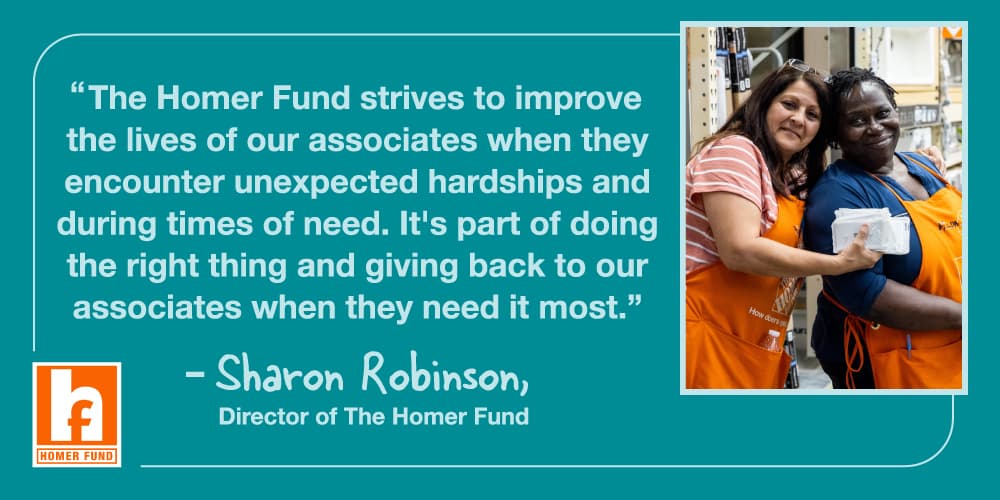
The Homer Fund is the kind of benefit most associates do not think about until a flood, fire, surgery, or family layoff blows up the household budget. Funded by both Home Depot and associates, it is the company’s employee assistance program and a 501(c)(3) nonprofit created in 1999 for associates and their families.
What The Homer Fund covers
Home Depot’s FAQ breaks the program into two grant types: Direct Grants and Matching Grants. Direct Grants are the part most associates will reach for first in a true emergency, because the fund says they can help with death, natural disaster, fire, illness or injury, and a spouse’s layoff. The fund also offers scholarships to associates’ children, with eligibility tied to financial need and academic performance.
That mix matters on the sales floor and in the back room. A pro desk associate juggling contractor orders, a paint department lead managing seasonal traffic, or a freight associate trying to make a schedule after a family crisis all face the same basic problem: life does not wait for payday. The Homer Fund exists to keep that kind of disruption from becoming a permanent exit from the job.
How to start the process
The first step is a quick-test online to determine preliminary eligibility. The Direct Grant Prep Pack says that if you are eligible for a Direct Grant, you complete page 4 of the prep pack and the page tied to your qualifying event, then sign to verify the information and authorize the fund to check it. The packet also tells associates to gather supporting documentation relevant to their situation, which is where the process gets practical instead of symbolic.
A key point for associates and managers alike: the prep pack is not the application. It must accompany the electronic application, and the packet instructs associates to partner with their manager to apply. For a Matching Grant, the matching grant pre-approval packet says that if you are eligible for a Direct Grant, do not move forward with the matching packet. If you are eligible for a Matching Grant, complete that packet in its entirety.
A simple way to think about the sequence is this:
1. Take the quick-test to check preliminary eligibility.
2. Use the result to choose the Direct Grant or Matching Grant path.
3. Complete the proper prep packet and any event-specific pages.
4. Gather the documentation the checklist asks for.
5. Work with your manager to submit the electronic application.
The Homer Fund’s site also has consult, donate, resources, and contact functions, which makes it a year-round access point rather than a once-a-year campaign page. For anyone trying to help a teammate, those tools matter because they can point the associate toward the right next step before stress, confusion, or embarrassment gets in the way.
Why Orange at Heart matters to the store
Orange at Heart is the annual fundraising campaign that keeps the fund visible inside the company. Home Depot used the 2025 campaign to frame the effort around Growing the Gift of Hope, and the company marked 25 years of The Homer Fund in 2024, underscoring that this is a standing part of the culture, not a temporary relief effort.
The company has also tried to personalize the program through associate stories. One feature followed Angie Richardson of Oak Lawn, Illinois, after a house fire. Another highlighted Shawn, a Rapid Deployment Center associate, in an Orange at Heart story. In a separate account, Jennifer, a Home Depot associate and Homer Fund donor, put it plainly: “Nobody plans for anything like that to happen.”
That kind of messaging lands because the stakes are real. When a company tells associates it is a family, the test is whether that language survives a hardship. The Homer Fund is one place where the answer is visible in dollars, paperwork, and speed, not slogans.
The numbers show the scale
Home Depot’s own historical materials show the fund has grown steadily. A 2019 Homer Fund FAQ said more than 138,000 associates had received support totaling over $176 million. A 2022 captain’s guide said nearly $233 million had been awarded to more than 165,000 associates since 1999. By 2023, the captain’s guide said nearly $255 million had been awarded to more than 178,000 associates in need since 1999.
Those figures matter because they show the program is used at scale, not just celebrated in theory. For managers, that means knowing the basics can reduce stress, prevent unnecessary absenteeism, and help a valued associate stay connected to work during a hard stretch. For associates, it means the fund is worth understanding before a crisis hits, not after.
The clearest read on The Homer Fund is simple: if a home fire, medical emergency, or sudden job loss threatens your stability, the program is there to help bridge the gap, and Orange at Heart is the company-wide effort that keeps that safety net funded and visible.
This article was produced by Prism’s automated news system from verified source data, official records, and press releases, then run through automated quality and moderation checks before publishing. The system is built and supervised by the people who set the standards it runs under. Read our full AI policy.
Did this article answer your question?