Home Depot’s merchandising associates shape store standards and customer experience
A missed reset can turn into a lost sale, a frustrated customer, and more recovery work. Home Depot’s MET role sits right at that pressure point.

Why merchandising is a revenue lever, not backroom housekeeping
A shelf can look full and still fail the customer. If the bay reset is late, the sign is wrong, or the product is sitting in the wrong place, the shopper does not experience inventory, they experience confusion, another trip through the aisle, and a question for the next associate. That is why Home Depot’s merchandising execution work matters far beyond presentation: it shapes the two questions store teams hear most often, whether the item is actually there and why it is not on the shelf.
For department leads and store managers, that makes merchandising execution one of the clearest links between standards and sales. A clean, accurate, well-labeled aisle supports attachment sales, speeds decision-making during project traffic, and keeps the store looking credible when weekend demand hits. When merchandising slips, the cost shows up twice, once in lost conversion and again in the extra recovery work that lands on the next shift.
What MEAs actually do on the floor
Home Depot’s Merchandising Execution Associates, or MEAs, handle in-store merchandising service activities that are designed to improve the customer experience. The company says that includes merchandising projects, planogram maintenance, overhead organization, and display and signage maintenance. In practice, that means the role sits inside the daily mechanics of how a store looks, shops, and sells.
Core tasks that keep the store readable
- Keeping products stocked and properly merchandised
- Maintaining planograms so the shelf matches the intended setup
- Organizing overhead areas so freight and product flow do not spill into the customer experience
- Updating displays and signage so shoppers can trust what they are seeing
- Executing price changes, product rotation, and special projects that improve product presentation
Home Depot also says MEAs keep safety, accuracy, and efficiency at the forefront. That matters because merchandising is not only visual work. It is also about moving fast without creating hazards, setting the right product in the right place, and avoiding the kinds of errors that force managers to spend time cleaning up preventable problems.
Why the work affects customer service and recovery work
In a home-improvement store, an incomplete reset can create a chain reaction. A customer looking for a seasonal item may assume the store is out of stock when the product is actually misplaced or the signage has not been updated. A contractor on a deadline may not wait around for a second check, which means a missed display or late placement can quickly become a lost sale and a damaged service impression.
That is where merchandising becomes a workload lever for the whole building. Better execution reduces the number of times associates have to stop and explain a location, walk a customer to the correct bay, or clean up an aisle that no longer matches the floor set. It also supports the kind of fast, confident shopping Home Depot needs when project season is in full swing and decisions happen in seconds, not minutes.
How merchandising fits Home Depot’s operating model
Home Depot’s annual reporting makes clear that merchandising is tied to broader store performance, not just shelf appearance. The company said in its 2025 annual report that knowledgeable associates and on-shelf availability are critical to the store experience. It also said it is empowering associates to drive sales by enhancing training and product knowledge, optimizing processes, simplifying tasks, and leveraging technology to improve the customer experience.
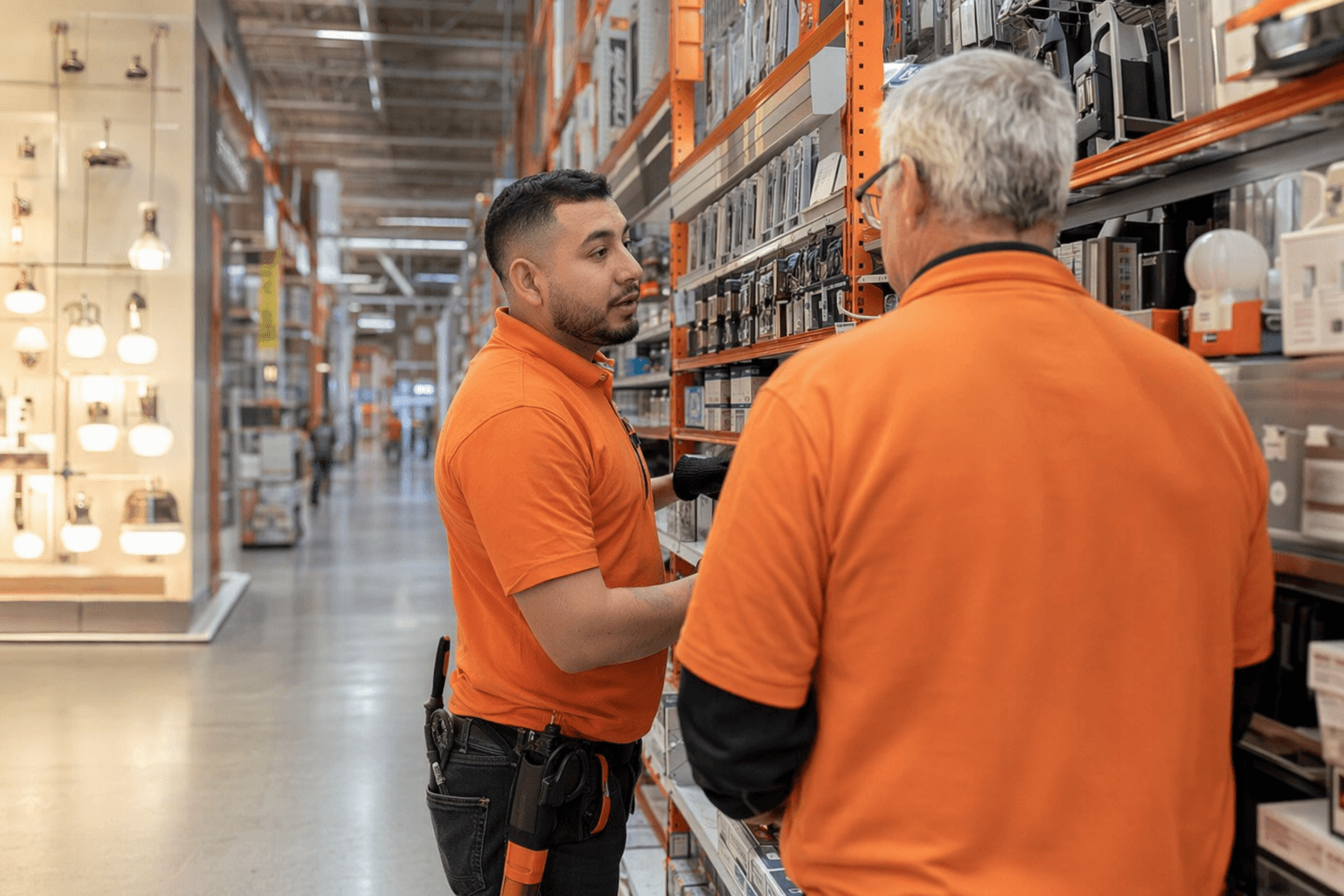
That broader system matters because merchandising teams do not work in isolation. Home Depot says its merchandising team partners with leading suppliers to deliver innovation, exclusivity, and everyday value. The company also says merchandising works closely with inventory and supply chain teams, along with supplier partners, to manage assortments and adjust inventory levels in response to demand. In other words, the shelf is the last mile of a much bigger operating machine.
The practical takeaway for leaders
If the inventory flow is good but the shelf is wrong, the store still loses the sale. If the display is right but the on-hand count is off, the customer still gets friction. Merchandising execution is the point where supply chain, pricing, presentation, and customer trust all meet in the aisle.
Why scale makes execution even more important
The stakes are higher because Home Depot is not a small chain with a handful of stores. The company says it is the world’s largest home improvement specialty retailer, with more than 2,300 retail stores across the United States, Canada, and Mexico. At that scale, one missed bay reset is not just a local annoyance. It is the kind of issue that repeats across thousands of aisles if standards drift.
That scale is also still growing. Home Depot said in 2023 that it planned to build 80 new stores over five years, including in fast-growing areas and where existing high-volume stores need relief. New stores make merchandising discipline even more important, because the company has to replicate the same standards in mature markets, expanding suburbs, and pressure-heavy locations that already run hot on traffic.
The latest sales backdrop adds another layer. Home Depot reported comparable sales growth of 0.4% in the fourth quarter of fiscal 2025. When growth is modest, every detail that nudges conversion, speeds shopping, or reduces friction matters more, especially in a business where store execution can influence whether a customer finishes the project basket or walks away with part of it.
What this role rewards in real life
For associates, merchandising can be a strong fit if they like structure, visual order, and hands-on work that improves the whole building instead of only one aisle. It tends to reward people who notice details quickly, keep track of multiple product areas without losing the thread of the reset, and take pride in making a store easier to shop for the customer and easier to run for the team.
That pride matters in a Home Depot environment where product knowledge is part of the culture and the pro customer expects accuracy the first time. The best merchandising work is often invisible because it prevents problems before they surface. But when it slips, everyone feels it, from the shopper asking where the item went to the department lead cleaning up the aisle after the fact.
Billy Bastek, Home Depot’s EVP of Merchandising, thanked associates, suppliers, and supply chain partners as the company reported fourth-quarter and fiscal 2025 results. That acknowledgment points to the real job of merchandising at Home Depot: keeping the store credible enough that customers can move quickly, find what they need, and trust that the shelf reflects the business behind it.
At Home Depot’s scale, merchandising execution is not decorative. It is one of the daily systems that protects sales, reduces confusion, and keeps store standards from slipping under the pressure of project traffic and constant change.
This article was produced by Prism’s automated news system from verified source data, official records, and press releases, then run through automated quality and moderation checks before publishing. The system is built and supervised by the people who set the standards it runs under. Read our full AI policy.
Did this article answer your question?