JOLTS shows tight labor market, Home Depot faces hiring and retention pressure
JOLTS says workers are still moving, which keeps pressure on Home Depot managers to hire fast, hold talent, and protect schedules and service.

What the latest labor data means on the sales floor
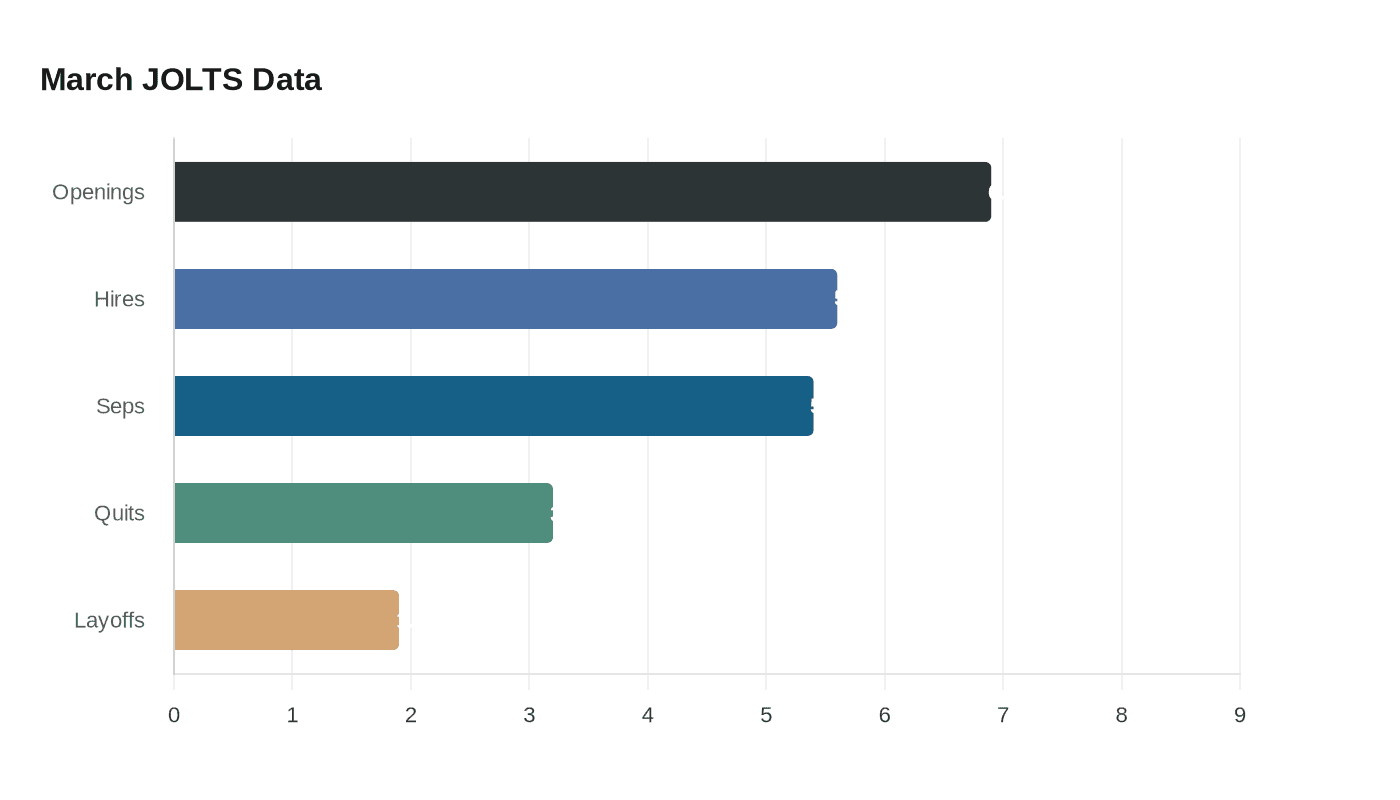
The labor market is still asking managers to do two hard things at once: hire into open roles and keep the people already on the clock. March JOLTS data showed job openings unchanged at 6.9 million, hires rising to 5.6 million, and total separations holding at 5.4 million, a mix that says turnover is still a live operating issue, not a solved one. Quits stayed at 3.2 million and layoffs and discharges at 1.9 million, which means workers still have options and employers still have to compete for dependable hourly talent.
For The Home Depot, that matters far beyond a headline labor report. The company runs more than 2,300 stores across the U.S., Canada and Mexico, and its model depends on stores, interconnected fulfillment, and a supply-chain network that has to work every day. If associates leave faster than they can be replaced, the effect shows up in scheduling gaps, more pressure on overtime, slower replenishment, and less time for the kind of customer help that makes a pro or DIY shopper come back.
Where the pressure is strongest
The JOLTS report is especially useful because it does not treat all labor markets as the same. Hires in transportation, warehousing, and utilities rose by 108,000 in March, a reminder that support functions tied to inventory flow are still drawing workers. Job openings also fell in professional and business services by 318,000 and increased in construction, underscoring that competition is uneven, but still active across the sectors that Home Depot depends on.
That matters for store leaders because the hardest vacancy is often not the most visible one. Freight, replenishment, delivery support, pro-facing roles, and skilled in-store positions tend to be tougher to backfill than basic entry-level work. When a market still has millions of openings, the associate who can stock quickly, speak confidently with a contractor, or keep a department tight on overhead and on-shelf availability is more likely to have choices, and managers have to act like it.
What this means for scheduling, overtime, and retention
A tight labor market changes what a “normal” week looks like. When openings remain high and workers keep moving, stable schedules become part of the retention conversation, not just a payroll issue. Associates notice whether shifts are predictable, whether overtime is spread fairly, and whether managers are building enough bench depth to avoid last-minute call-outs and double shifts.

The same pressure shapes internal promotion opportunities. If turnover is too high, training time gets eaten by coverage needs, and development stalls. If turnover is steadier, store leaders can move stronger associates into more advanced roles, build cross-training on freight and service desks, and create a path that makes staying feel better than starting over somewhere else.
Home Depot’s own scale makes every vacancy matter more
Home Depot’s 2025 annual report makes clear that labor is tied directly to the store experience. The company said knowledgeable associates and on-shelf availability are critical, and it reported fiscal 2025 sales of $164.7 billion and net earnings of $14.2 billion. Those numbers reflect a business that can absorb a lot, but not one that can ignore weak staffing for long.
The company has also signaled that growth will keep creating hiring needs. In December 2025, it said it expected to complete its approximately 80 new-store plan in 2027 and then continue building 15 to 20 stores per year for the foreseeable future. That kind of expansion keeps pressure on recruiting pipelines even if the broader labor market cools, because new stores do not open without supervisors, freight teams, sales associates, and the back-end support that keeps the floor running.
Why retention is now part of the customer experience
Home Depot says it is investing in competitive wages and benefits, plus culture, tools, training and development opportunities, to attract and retain associates. That is not just a public message; it is a practical response to a labor market where workers still have leverage and can move if a job feels unstable or unrewarding. In a store, retention shows up in better product knowledge, faster problem-solving, and stronger service at the moment a contractor needs an answer or a homeowner needs help finishing a project.
Managers should read that as a reminder that hiring is only half the job. If associates are leaving, the issue may not be headcount alone. It may be the schedule pattern, the workload in freight or garden, the pace of cross-training, or whether a store is creating enough room for someone to see a future beyond the next quarter.
The skilled-trades backdrop matters too
Home Depot’s labor challenge does not stop at store staffing. The company’s Path to Pro Foundation carries a $50 million commitment to train the next generation of skilled tradespeople, and since 2018 the company says its partnerships have certified more than 70,000 participants and introduced nearly 600,000 people to the skilled trades. That effort sits in a market where Home Depot says there are more than 400,000 open trade jobs in the United States and about 40 percent of current construction workers are expected to retire by 2031.
For Home Depot, that shortage is strategically important. The retailer serves contractors, installation customers, and serious do-it-yourselfers who rely on associates with real trade knowledge, not just product familiarity. A shrinking pool of experienced trades talent can make pro-facing service harder to staff, and it can raise the value of the associates who can speak the language of the job site.
What managers and associates should watch next
The March JOLTS figures point to a labor market that is still tight enough to shape day-to-day store life. Flexibility and speed still matter when there are 6.9 million openings nationwide, but speed without retention is expensive and unstable. The practical test for store leaders is whether they can fill vacancies without burning out the people who stayed, and whether they can keep freight, replenishment, and pro-facing teams strong enough to support the sales floor.
For associates, the message is simpler: the market is still active, and that gives leverage. Internal moves, schedule quality, training, and pay all matter more when workers can still find other openings. For Home Depot, the challenge is to make the job worth keeping while the company continues to grow, because in a labor market like this, the real competition is not just for applicants. It is for the next reliable person who can be counted on when the truck arrives, the aisle is short, and the customer needs an answer now.
This article was produced by Prism’s automated news system from verified source data, official records, and press releases, then run through automated quality and moderation checks before publishing. The system is built and supervised by the people who set the standards it runs under. Read our full AI policy.
Did this article answer your question?