New Jersey ABC test rules could reshape Home Depot contractor use
Appliance installers, delivery crews and project laborers are the third-party roles most exposed as New Jersey's ABC test gets stricter on October 1.
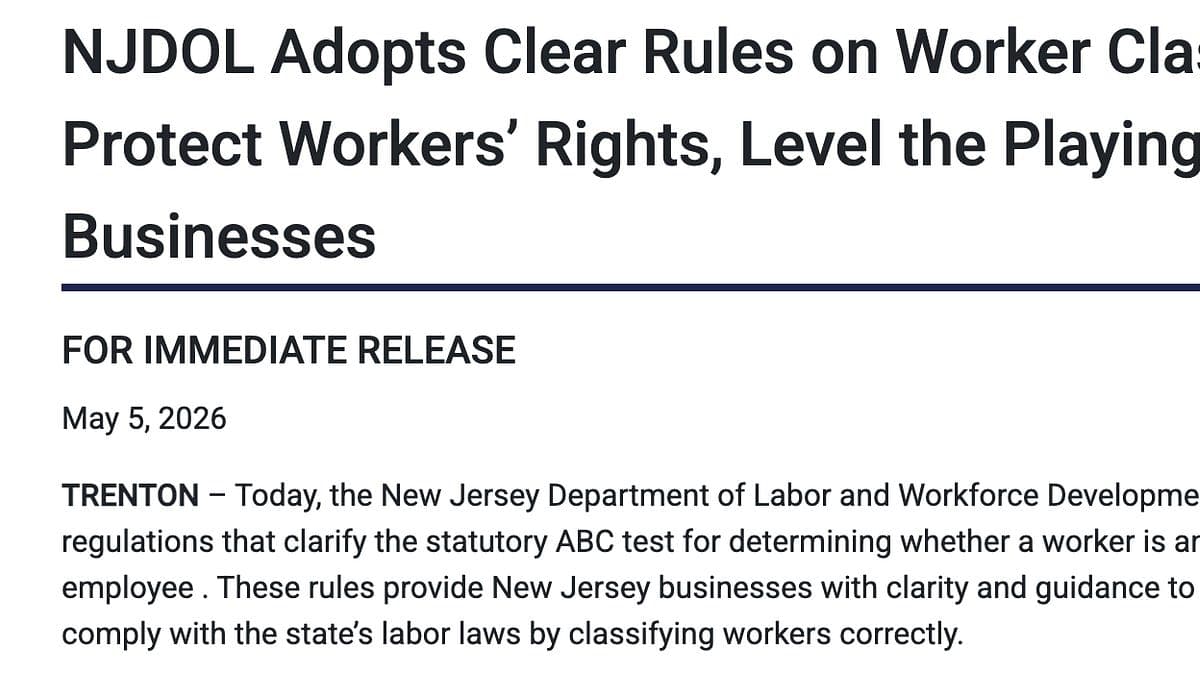
A Home Depot delivery crew hauling a refrigerator or a flooring installer finishing a weekend project could be the kinds of workers New Jersey now puts under a tighter lens. The state adopted new ABC test regulations on May 5, and when they take effect on October 1, 2026, retailers that rely on outside labor will have to prove those workers are truly independent or face employee status, with all the cost and compliance that follows.
The rules matter because they reach beyond one statute. New Jersey said the regulations clarify how it applies the ABC test under the Unemployment Compensation Law, the Wage and Hour Law and the Wage Payment Law. Under the state’s framework, the burden sits on the employer to satisfy all three parts of the test. If it cannot, the worker is treated as an employee. The Department of Labor and Workforce Development said the new rules synthesize decades of court decisions, including the New Jersey Supreme Court’s East Bay Drywall case, where 16 alleged subcontractors were found to be employees under the ABC test.
For retailers, the practical exposure is highest in the work that looks and feels like part of the store’s own service operation. At Home Depot, that includes appliance installation, flooring installation, bathroom remodeling, HVAC, electrical, plumbing and painting, along with delivery and other home services. Home Depot says its installation work is done through licensed independent contractors who are screened and background checked, and it describes service provider sourcing, onboarding and compliance as part of its Home Services operation. That makes the line between vendor and worker especially important in the field, where store-linked crews are showing up at customers’ homes under tight windows and customer expectations.
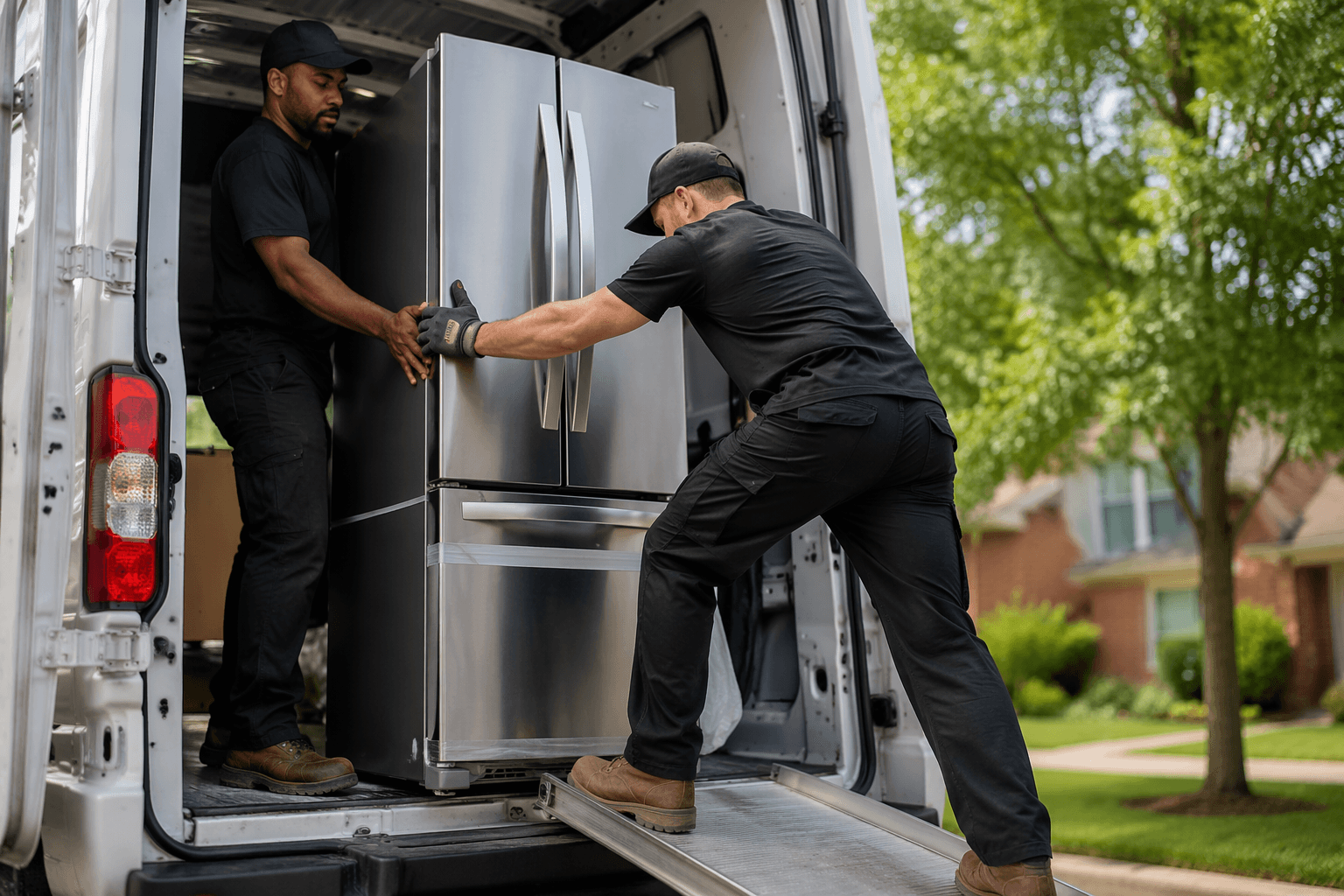
The most vulnerable arrangements are the ones with regular schedules, close supervision, store-directed pricing or routing, branded customer-facing work, or little proof that the contractor runs an independent business of its own. In the ABC test, control is only part of the issue. The state also looks at whether the work falls outside the usual course of the business and whether the worker is customarily established in that trade. A delivery driver who works almost entirely for one retailer, or an installer who follows the retailer’s scripts and schedule, can start to look less like a vendor and more like staff.
The stakes are not abstract. New Jersey says misclassification can trigger penalties of up to $250 per worker for a first violation and up to $1,000 per worker for later violations, plus a payment to the worker equal to up to 5% of gross earnings over the prior 12 months. The state also maintains a misclassification hotline at 609-292-2321. For Home Depot and other large retailers, the warning is simple: outside labor will need cleaner contracts, cleaner oversight and cleaner boundaries before October 1, or the cost of convenience could turn into payroll, tax and liability exposure.
This article was produced by Prism’s automated news system from verified source data, official records, and press releases, then run through automated quality and moderation checks before publishing. The system is built and supervised by the people who set the standards it runs under. Read our full AI policy.
Know something we missed? Have a correction or additional information?
Submit a Tip