OSHA urges Home Depot managers to boost heat safety, hydration and breaks
Heat risk at Home Depot starts long before an extreme-weather alert. OSHA wants managers to treat hydration, shade, rotation and early warning signs as part of the shift.
Heat safety starts on ordinary shifts, not just the hottest days
At Home Depot, heat exposure is built into the work itself. Garden center runs, loading, curbside handoffs, lot work, freight moves and repeated trips between air-conditioned aisles and outdoor heat can wear workers down before anyone notices a problem. That is why OSHA’s heat guidance matters on a normal summer day as much as during a heat wave.
The practical lesson for associates and supervisors is simple: heat safety cannot be left to individual toughness. It has to be managed like any other store operation, with water, rest, shade, pacing and backup coverage built into the day.
What OSHA says should be in place
OSHA’s guidance is direct. Employers should provide cool water and place it near the work area so workers do not have to hunt for it. Workers should be encouraged to drink regularly instead of waiting until they feel thirsty, with a general target of about one cup, or 8 ounces, every 20 minutes in hot conditions.
That advice becomes even more important on longer assignments. For jobs lasting two hours or more, OSHA says workers should also have access to fluids that contain electrolytes, not water alone. For Home Depot teams, that covers the people most likely to spend hours outside or moving product through hot spaces: garden center associates, lot attendants, freight teams and curbside or loading crews.
Why the pressure is different at Home Depot
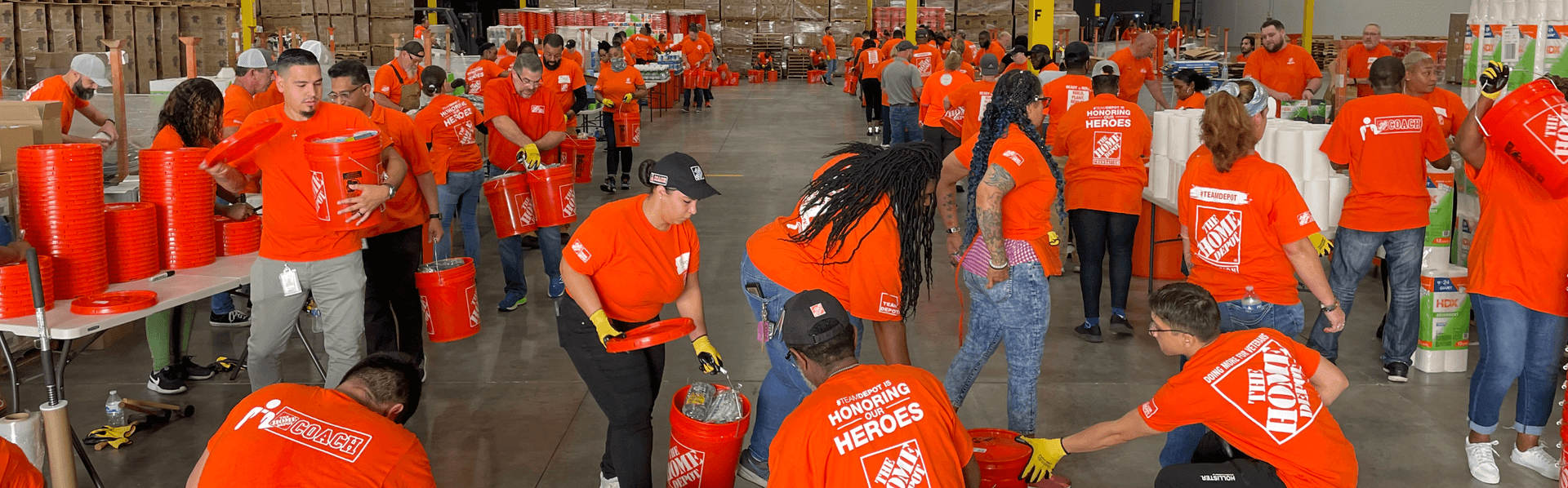
Home Depot’s store model creates a mix of heat exposure that can sneak up on workers. The company’s retail stores employ frontline teams including cashiers, sales associates, freight teams, field distribution centers, outside sales and drivers, and its retail footprint includes 2,200-plus stores. That means heat safety is not a niche issue for one department. It reaches the sales floor, the receiving area, the parking lot and the garden center.
The company’s job listings also include lot associate roles, which is a reminder that some positions spend real time outdoors. In the middle of a seasonal rush, especially when pro customers and DIY shoppers are both moving through the store, managers can be tempted to keep labor focused on customer flow. OSHA’s guidance cuts against that instinct: when heat is rising, staffing and rotation need to be part of the safety plan.
Breaks only work if they are truly cooling breaks
OSHA says breaks should happen in shade or a cool area. That sounds basic, but it is where a lot of real-world heat plans fall apart. A short pause beside a hot loading zone is not the same as a meaningful recovery break, and a worker who sits in a sunny cart corral or beside a warm receiving door is still accumulating heat stress.
For managers, that means planning where the break happens as carefully as planning when it happens. It also means adjusting workloads before the hottest part of the shift, not after someone is already struggling. If the garden center is slammed, the smartest move may be to rotate associates sooner, shift heavier lifting to cooler hours or add coverage to the lot and curbside lanes so one worker is not absorbing all the exposure.
- Water staged close to the work area
- Scheduled drink reminders, not just an open invitation to hydrate
- Shaded or air-conditioned recovery spots
- Earlier rotations for outdoor or heavy-lift tasks
- Backup coverage when a worker needs to step off the floor
A workable store routine should include:
New hires and returning workers need more protection, not less
OSHA warns that new workers are especially vulnerable while they acclimatize. That matters at Home Depot because summer hiring, seasonal staffing and schedule changes can put inexperienced associates into outdoor or freight assignments quickly. The answer is not to expect younger workers or seasoned employees to simply push through it.
CDC and NIOSH add an important point: acclimatization depends on a worker’s initial fitness level and total heat stress, and workers can keep some acclimatization even after a few days away from the job, such as over a weekend. In practice, that means managers should not assume a long-time associate is automatically safe because they worked outside last month. Heat tolerance changes with the workload, the temperature and how recently the person has been exposed.
A strong store plan treats acclimatization as something to manage through staffing, rotation and supervision. New people need ramp-up time. Returning workers may need a slower first day back. And any worker pulling double duty between indoor and outdoor tasks may need more frequent checks than the schedule makes obvious.
The warning signs are not a coaching issue, they are an emergency
Heat illness can move fast, which is why OSHA’s warning signs matter so much. Dizziness, heavy sweating, nausea, weakness, hot dry skin, abnormal thinking or behavior, slurred speech, seizures and loss of consciousness are signals that the situation has crossed from discomfort into danger.
If those symptoms appear, the response is not to send the worker home alone or wait to see if they improve. OSHA says to call emergency services, cool the worker, move them to a cooler place and do not leave them alone. The worker information guidance is even more explicit about medical emergency signs such as abnormal thinking or behavior, slurred speech, seizures or loss of consciousness: call 911 immediately, cool the worker with water or ice and stay with them until help arrives.
That is where buddy checks matter. In a busy store, one person can be sweating through a shift while everyone around them is focused on pallets, customers and freight. A simple habit of checking in on one another can catch the worker who is getting confused, stumbling or acting unlike themselves before the condition becomes severe.
Heat and lifting can combine into a bigger hazard in the backroom
Home Depot’s freight, receiving and backroom work adds another layer. OSHA says the most common injuries in warehousing are musculoskeletal disorders, mainly from overexertion in lifting and lowering, and that warehousing hazards also include powered industrial trucks and other materials-handling equipment. Heat makes that environment less forgiving.
A worker who is already overheated is more likely to make a bad lift, misjudge a load or lose focus around moving equipment. That means summer safety is not just about keeping people hydrated. It is also about reducing strain, slowing the pace when needed and making sure powered equipment, pallets and heavy merchandise are being handled with enough supervision and spacing.
The real management test
The hardest part of OSHA’s message is also the most practical: heat safety is a leadership issue, not a personal responsibility issue. Water, rest, shade, pacing and backup coverage have to be built into the shift, especially when the garden center or receiving area is busy.
For Home Depot managers, that is the real standard. Associates should not have to choose between getting the job done and staying safe. The stores that treat heat like an operational risk, not a personal weakness, will protect their people better and keep the floor running more steadily when summer demand is at its peak.
This article was produced by Prism’s automated news system from verified source data, official records, and press releases, then run through automated quality and moderation checks before publishing. The system is built and supervised by the people who set the standards it runs under. Read our full AI policy.
Did this article answer your question?