Productivity rises, but labor costs keep climbing for Home Depot workers
Productivity rose 0.8% in the first quarter, but labor costs rose faster. For Home Depot workers, that points to tighter scheduling, sharper pacing and more pressure to do more with less.
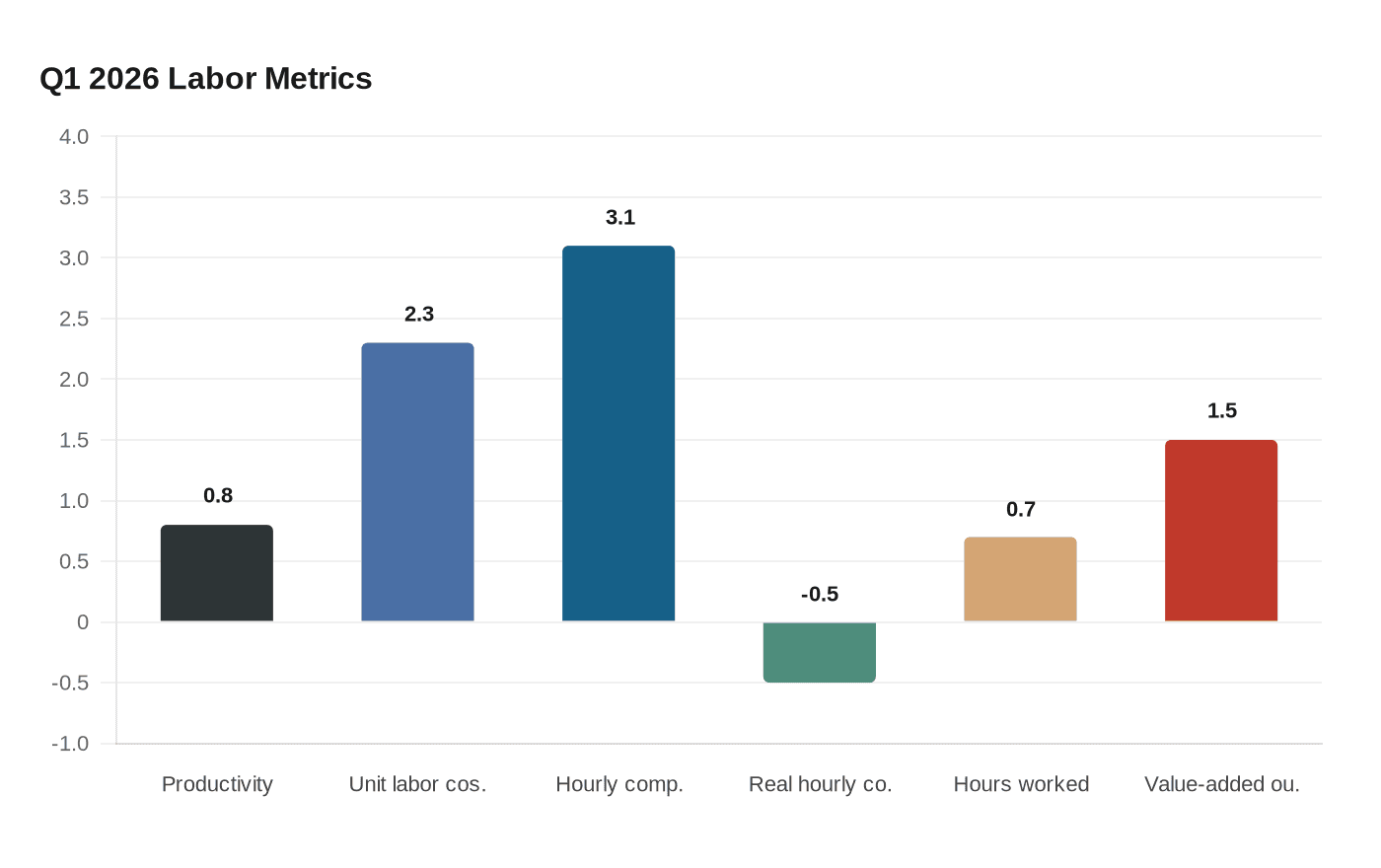
The latest labor data explains why store leaders keep pushing on speed, accuracy and technology even when sales teams say the floor already feels stretched. In the first quarter of 2026, nonfarm business labor productivity rose 0.8%, but unit labor costs still climbed 2.3% because hourly compensation increased 3.1%, according to the U.S. Bureau of Labor Statistics. Real hourly compensation fell 0.5%, while the labor share of income dropped to 54.1%, the lowest point in a series the agency says dates to 1947.
For Home Depot associates, the message is not that workers are dragging performance down. It is that every avoidable delay, bad handoff or rework cycle becomes more expensive when pay is rising faster than output. The BLS also said hours worked rose 0.7% in the quarter and real value-added output rose 1.5%, which helps explain why productivity improved even as cost pressure remained. Compared with the prior quarter, productivity had risen 1.8% in the fourth quarter of 2025, while unit labor costs rose 4.4%, so the pressure on employers did not ease much.
That matters inside The Home Depot, Inc., which says it was founded in 1978, is the world’s largest home improvement specialty retailer and ended fiscal 2025 with $164.7 billion in net sales and $14.2 billion in earnings. The company says it has more than 470,000 associates and more than 2,300 stores in the United States, Canada and Mexico, so even small gains in throughput, order flow or shelf accuracy can ripple across the chain.

Home Depot’s own annual report shows how management is responding. The company says it is optimizing product flow to improve on-shelf availability and reduce the time associates spend locating products, expanding an enhanced order management system and rolling out real-time mobile learning tools for associates. It also says knowledgeable associates and on-shelf availability are critical to the store experience, a sign that the company wants higher productivity without lowering customer-facing expectations.
The timing makes the pressure more visible. Home Depot has scheduled its first-quarter 2026 earnings release for May 19, 2026, with a webcast on May 21. It reported fourth-quarter fiscal 2025 sales of $38.2 billion and comparable sales growth of 0.4%, a reminder that even modest sales gains can lead management to press harder on labor efficiency. HR Dive reported in May 2025 that the company was emphasizing localized training and generative AI knowledge tools to improve in-store service, another sign that better output, not lower expectations, is the preferred answer when labor costs keep climbing.
For associates and department supervisors, the practical read is simple: more attention on scheduling precision, fewer tolerated mistakes and stronger pressure to use training and technology to cover the same workload. In a year where compensation is still rising and productivity gains remain modest, the stores that win will be the ones that move freight, orders and customers faster without asking the floor to absorb the inefficiency.
This article was produced by Prism’s automated news system from verified source data, official records, and press releases, then run through automated quality and moderation checks before publishing. The system is built and supervised by the people who set the standards it runs under. Read our full AI policy.
Did this article answer your question?