Residential building wage growth cools as housing activity softens
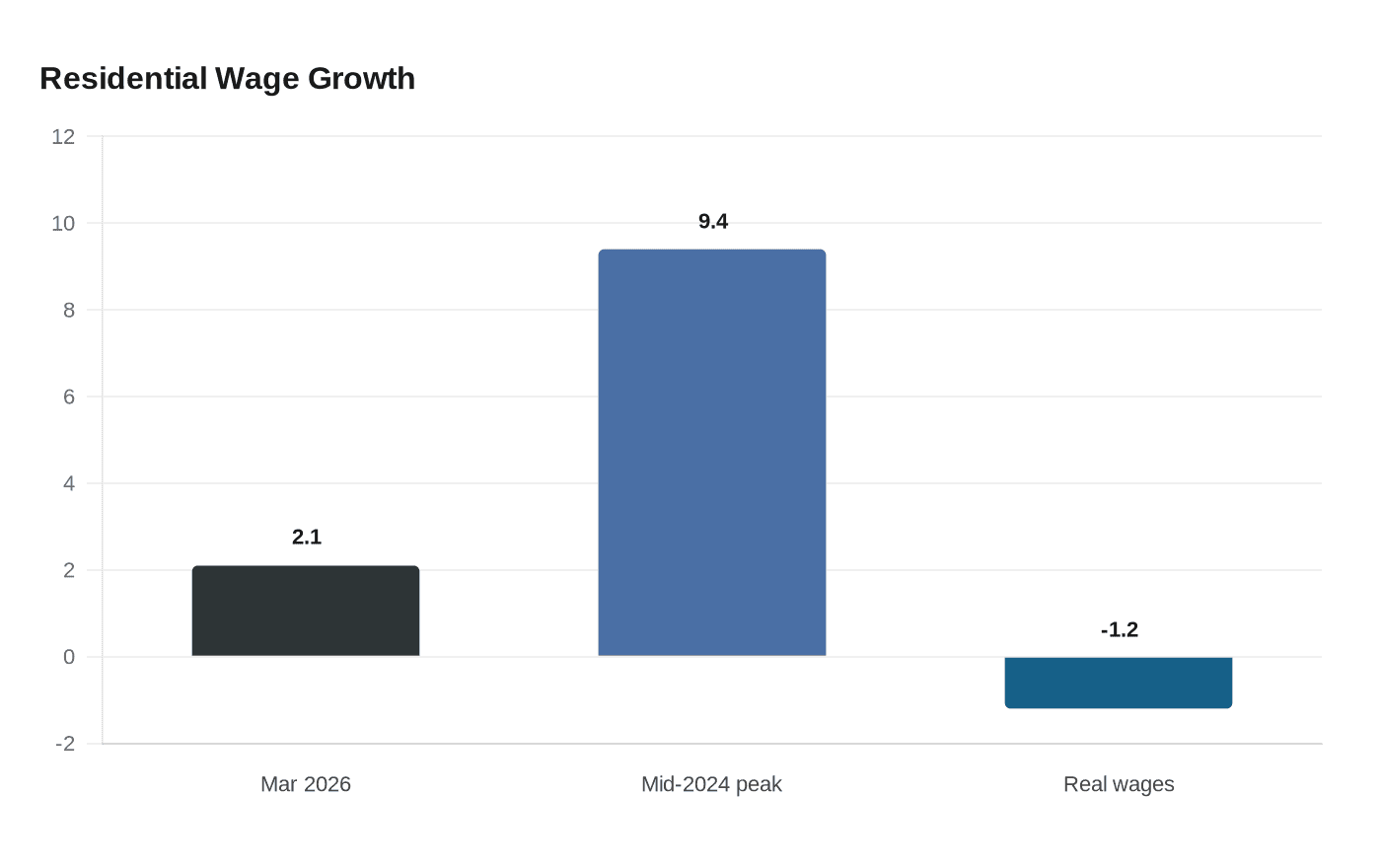
Residential building pay rose just 2.1% in March, far below 2024’s 9.4% peak, signaling a cooler pro market and more cautious spending.

Wages in residential construction are still climbing, but only modestly, and that matters for the sales floor as much as the jobsite. On May 11, Eye on Housing said average hourly earnings for residential building workers rose 2.1% year over year in March 2026, down sharply from the 9.4% peak reached in mid-2024. Real wages fell 1.2% over the same stretch. Residential workers still earned 8.4% more than manufacturing workers and 22.4% more than transportation and warehousing workers, though they earned 3.6% less than mining and logging workers. The takeaway is straightforward: the trade labor market is cooling rather than collapsing.
For Home Depot associates, that shift usually shows up in the pace of Pro business. Contractors under less wage pressure tend to bid more carefully, stretch out project timelines and spend more time checking price, substitutions and delivery windows. That can mean fewer urgent same-day orders, longer back-and-forth on special orders and more conversations about which materials will hold up without blowing the margin on a job. In stores, it raises the value of associates who can steer a pro to the right product the first time and keep the work moving.
The tension is that a softer wage environment does not erase the labor shortage. The Home Depot’s April 2026 Pro Forecast said high demand for skilled labor continued to drive the 2026 construction market, even as residential builders competed with infrastructure, data center, energy and manufacturing projects for the same workers. The forecast said 92% of firms reported difficulty finding qualified workers, estimated 349,000 new workers would be needed in 2026 and 456,000 in 2027, and noted that about 20% of the workforce was over age 55, with 41% of current workers projected to retire by 2031.
That combination helps explain why wages can cool even while the pipeline stays tight. The National Association of Home Builders said in its February housing outlook that the market faced headwinds from a softening labor market and affordability problems. Home prices had risen 53% since 2019, while median household income had climbed only 24%. First-time buyers made up just 21% of the market in 2025, down from 44% in 1981, and the median age for first-time buyers reached 40.
Home Depot’s own fiscal 2025 numbers show the company is still leaning on Pro customers in a careful market. Sales reached $164.7 billion, comparable sales rose 0.3% and net earnings were $14.2 billion. Ted Decker said underlying demand remained relatively stable after adjusting for storms, but housing pressure and consumer uncertainty were still part of the backdrop. The practical read for stores is that work is still there, but it is more selective, more price-sensitive and more dependent on speed, accuracy and trade know-how.
Know something we missed? Have a correction or additional information?
Submit a Tip