Glassdoor data shows KPMG salary ranges from associate to managing director
KPMG’s 2026 pay snapshot shows an associate at $90,855 and a managing director at $282,194.
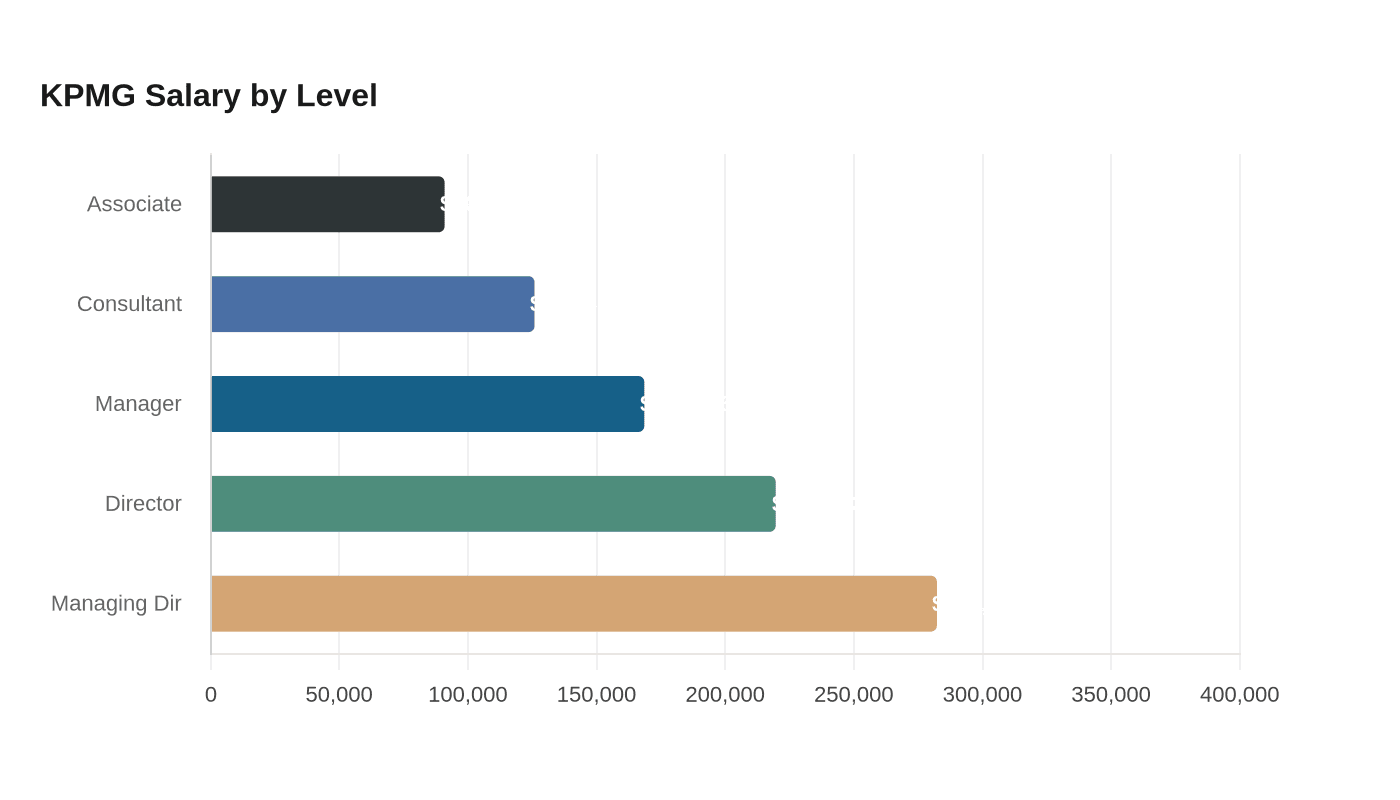
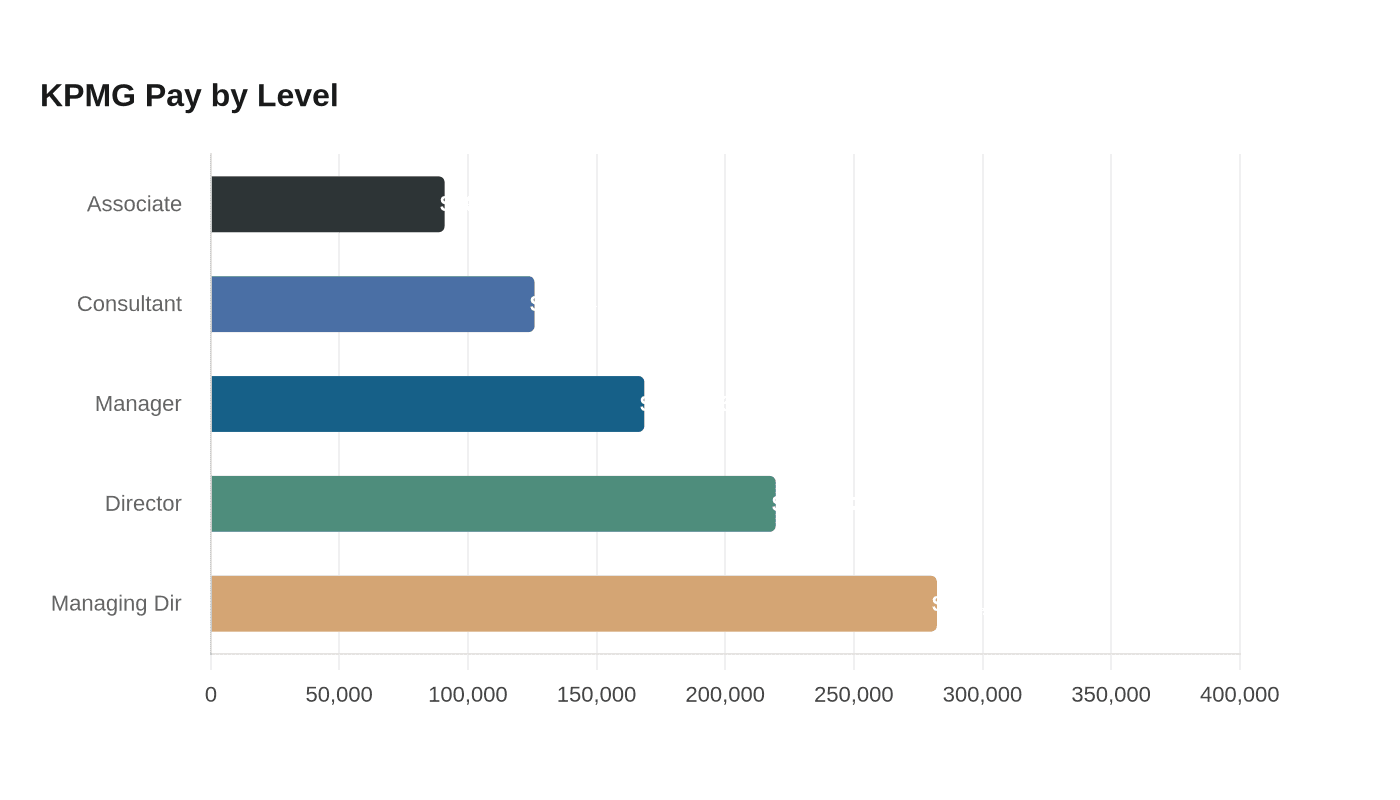
Glassdoor’s July 2026 KPMG salary snapshot, based on 42,896 U.S. submissions, puts annual pay at roughly $43,984 for an EVS Associate and $324,736 for a Managing Director. For KPMG staff trying to read the firm’s ladder, the more useful markers are the level averages: Associate at $90,855, Consultant at $125,812, Manager at $168,483, Director at $219,533 and Managing Director at $282,194.
The size of each step helps explain why title changes matter so much in Big Four careers. The move from Associate to Consultant adds $34,957, or about 38.5 percent, while Consultant to Manager adds $42,671, Manager to Director adds $51,050, and Director to Managing Director adds $62,661. In a firm where client load, travel, busy-season hours and promotion timing all stack on top of one another, those jumps are not abstract. They are the price of staying in the game one more cycle.

KPMG’s own pay-transparency page says any offered salary is set by skills, performance, job responsibilities, prior relevant experience, degrees and certifications and market considerations, with employees potentially eligible for an annual discretionary bonus. That makes Glassdoor’s figures a directional check, not a fixed rate card, and a reminder that one year of waiting for the next title can be worth tens of thousands of dollars.
The broader context is a firm that says its U.S. offices are home to thousands of teams and that its history in the American market spans more than 130 years, with the New York office established in 1897. KPMG International says the network operates in 142 countries and territories and had 276,030 people and $39.8 billion in FY25 revenue. That scale helps explain why compensation is structured around level, market and judgment rather than a single published pay band.
This article was produced by Prism’s automated news system from verified source data, official records, and press releases, then run through automated quality and moderation checks before publishing. The system is built and supervised by the people who set the standards it runs under. Read our full AI policy.
Did this article answer your question?