KPMG CPA licensure tracker helps navigate state CPE requirements
Passing the CPA exam is just the start. KPMG's tracker helps staff keep up with CPE, ethics, and state-by-state rules before a missed deadline puts a license at risk.

The exam is only the beginning
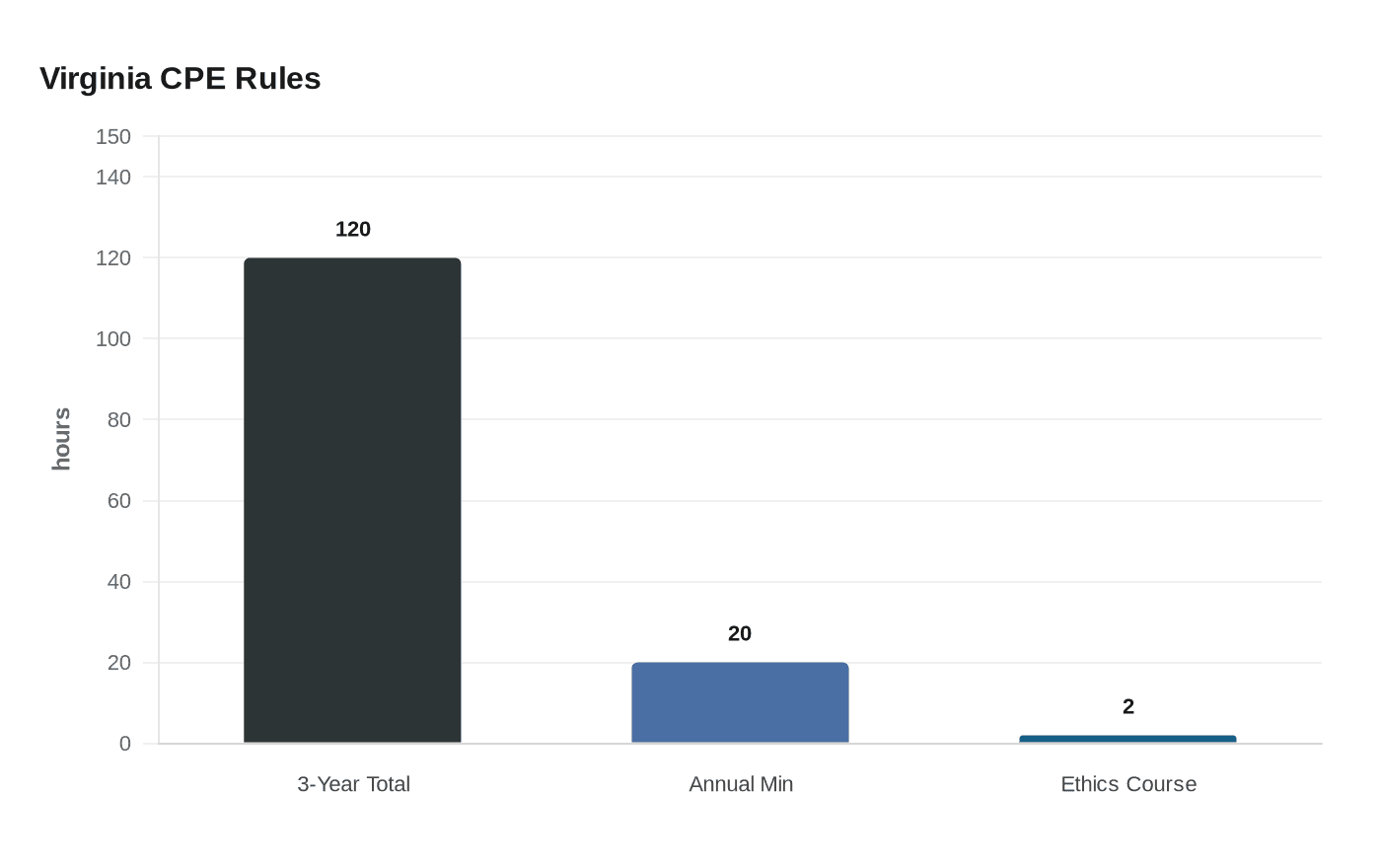
Passing the CPA exam does not end the compliance work. It starts a second job: keeping the license active through continuing education, ethics training, renewals, and whatever extra rules your state board demands. In Virginia alone, that means 120 CPE hours over a rolling three-year period, at least 20 hours a year, a two-hour ethics course every year, and records kept for four prior calendar years.

That is the hidden maintenance burden many accountants only feel after they are already deep into client work. At KPMG, where audit sign-off, promotion timing, and client trust all hinge on having the credential current, the cost of missing a deadline is not just administrative. It can interfere with mobility, credibility, and the pace of a career built on keeping deadlines for everyone else.
Why the rules are harder than they look
NASBA and the AICPA jointly publish the Statement on Standards for Continuing Professional Education, and the revised standards were approved in 2023 and took effect on January 1, 2024. NASBA describes those standards as an evergreen framework for developing, presenting, measuring, and reporting CPE. That matters because the rules are not just about accumulating hours, they are about how those hours are documented and classified.
The real complication is that state boards control licensure, and their rules do not line up neatly. NASBA says CPAs are responsible for complying with all applicable continuing education rules and regulations from state boards, professional associations, and other organizations. For people who move, switch employers, or hold licenses in more than one jurisdiction, that turns renewal season into a moving target rather than a single yearly task.
Virginia shows how detailed that can get. Beyond the 120-hour rolling requirement, the state expects annual ethics training and retention of CPE documentation for the four calendar years before the current one. That kind of specificity is exactly why a licensure tracker is more than a convenience. It becomes the difference between staying ahead of a deadline and discovering a problem only when a renewal is due.
Why KPMG staff feel it more acutely
For KPMG employees, a CPA license is not just a personal credential. It is part of the machinery of audit credibility and client confidence. KPMG’s Code of Conduct says that when staff sign an audit or deliver an engagement, they are “binding each of our individual reputations together,” a reminder that one person’s compliance lapse can reflect on the team around them.
The firm also says in its 2025 Transparency Report that audit quality is the cornerstone of its service to the capital markets. That makes licensure maintenance a business issue, not just an HR formality. When a staffer is balancing busy season, client hours, performance reviews, and the push toward manager, senior manager, or partner track, the administrative load of CPE tracking can fall to the bottom of the list until it becomes urgent.
The pressure is even clearer in audit and tax, where a missed license requirement can affect eligibility for client-facing work, signing responsibilities, or transfers across jurisdictions. In a profession that already asks people to manage unpredictable hours and heavy travel, the compliance burden often shows up as one more quiet task that has to be handled after the day’s real work is done.
Why internal training is helpful, but not enough
KPMG does offer CPE-eligible courses through its executive-education offerings, and its client learning portal says credits are awarded immediately upon successful completion of a course. That helps staff collect hours without leaving the firm’s learning ecosystem. But the firm’s own training does not replace state-board rules, and it does not automatically answer whether a course will count toward licensure in a specific jurisdiction.
That distinction matters because credit acceptance can depend on how a state classifies the content and how it applies its own reporting standards. A course may be useful for professional development, yet still fail to satisfy a state-specific ethics requirement or a specialized accounting and auditing category. The safest approach is to treat firm training as one input into a broader compliance plan, not as proof that the license is covered.
For busy KPMG professionals, the tracker should do more than store certificates. It should help sort credits by jurisdiction, flag ethics deadlines, and preserve the documentation trail that states can ask for later. A practical system usually needs to capture three things:
- The number of hours completed and the cycle they apply to
- Whether the course fits a required category, such as ethics or accounting and auditing
- Proof of completion, saved long enough to satisfy state retention rules
The bigger pipeline problem behind the paperwork
The burden of keeping a license active sits inside a larger staffing challenge for the profession. KPMG has said accounting bachelor’s-degree completions fell 7.8% from 2021 to 2022, and the firm has argued that the 150-hour licensure requirement is among the top reasons students avoid the major. That means the profession is not only trying to retain licensed people, it is also trying to keep the pipeline full enough to replace them.
KPMG has tried to respond with programs that lower the barrier to entry. Its Path to CPA Program funds up to 30 semester credits of online coursework for selected audit-track candidates who otherwise would not meet CPA eligibility in their intended state. That is a signal that the firm sees licensure as part of talent strategy from recruiting onward, not just as an after-hours obligation once people are already staffed.
The regulatory backdrop makes that even more important. The PCAOB’s 2024 inspection report on KPMG, released on February 26, 2025, said the board reviewed 64 audits and placed 13 in Part I.A because of significant deficiencies, mainly tied to testing controls and substantive testing of revenue-related accounts and allowance for credit losses. Against that level of scrutiny, active licensure, continuing education, and documentation discipline are part of the same message: audit work has to stand up to outside review.
For KPMG professionals, the lesson is simple. The CPA exam opens the door, but CPE, ethics, and state-by-state compliance keep it open. The tracker is not just a records tool. It is a defense against the kind of lapse that can complicate a license, slow a career, and add one more avoidable problem to an already demanding job.
This article was produced by Prism’s automated news system from verified source data, official records, and press releases, then run through automated quality and moderation checks before publishing. The system is built and supervised by the people who set the standards it runs under. Read our full AI policy.
Did this article answer your question?


.pdf%2F_jcr_content%2Frenditions%2Fcq5dam.thumbnail.319.319.png&w=1920&q=75)