KPMG survey shows rising demand for supply chain transformation advisory
73% of supply chain executives plan an operating-model overhaul, signaling more KPMG advisory work in resilience, AI and redesign as budgets move higher.

KPMG’s latest supply chain survey points to a simple message for the market and for the firm’s own advisory bench: resilience work is still expanding, and clients are spending to rebuild the function rather than trim it. In a poll of 462 senior executives released May 1, 73% said they plan to transform their supply chain operating model over the next one to three years. For KPMG, that is a clear signal that demand is shifting toward the kind of work that sits between strategy, operations redesign, and technology implementation.
Risk management is now driving that spending. The survey found 51% of respondents named managing and mitigating risk as their top transformation objective, while 39% said it is their top near-term investment area. KPMG’s broader view is that supply chains are no longer dealing with isolated shocks, but with compound, system-wide pressure from trade policy, geopolitical risk, cyberattacks, extreme weather, and rapid technology change. That matters inside the firm because it raises the value of consultants who can connect enterprise risk, operating model design, and change management instead of selling resilience as a standalone concept.
The budget picture backs that up. Most companies now said they are spending 11% to 15% of revenue on supply chain, up from 5% to 10% in 2024. That suggests clients are not simply trying to cut costs at the edges. They are re-architecting procurement, logistics, inventory, and supplier oversight in ways that create near-term work for advisory teams. Logistics and transportation costs were identified by 38% of respondents as the biggest source of value leakage, another sign that companies are looking for hard-dollar improvements, not abstract transformation language.

The talent gap is widening the pressure. Seventy-seven percent of leaders said there is a significant shortage in procurement and supply chain talent, which is pushing more firms toward external support while internal teams struggle to keep up. KPMG also found that 50% plan to invest in automation and AI, but compatibility problems, data security concerns, and organizational resistance remain real barriers. The technology priorities are practical, not futuristic: supply chain visibility at 44% and inventory management at 42% lead near-term system and technology investment plans, while 50% of respondents are focused on improving Tier 1 and Tier N visibility and 47% want stronger supplier relationships over the next one to three years.
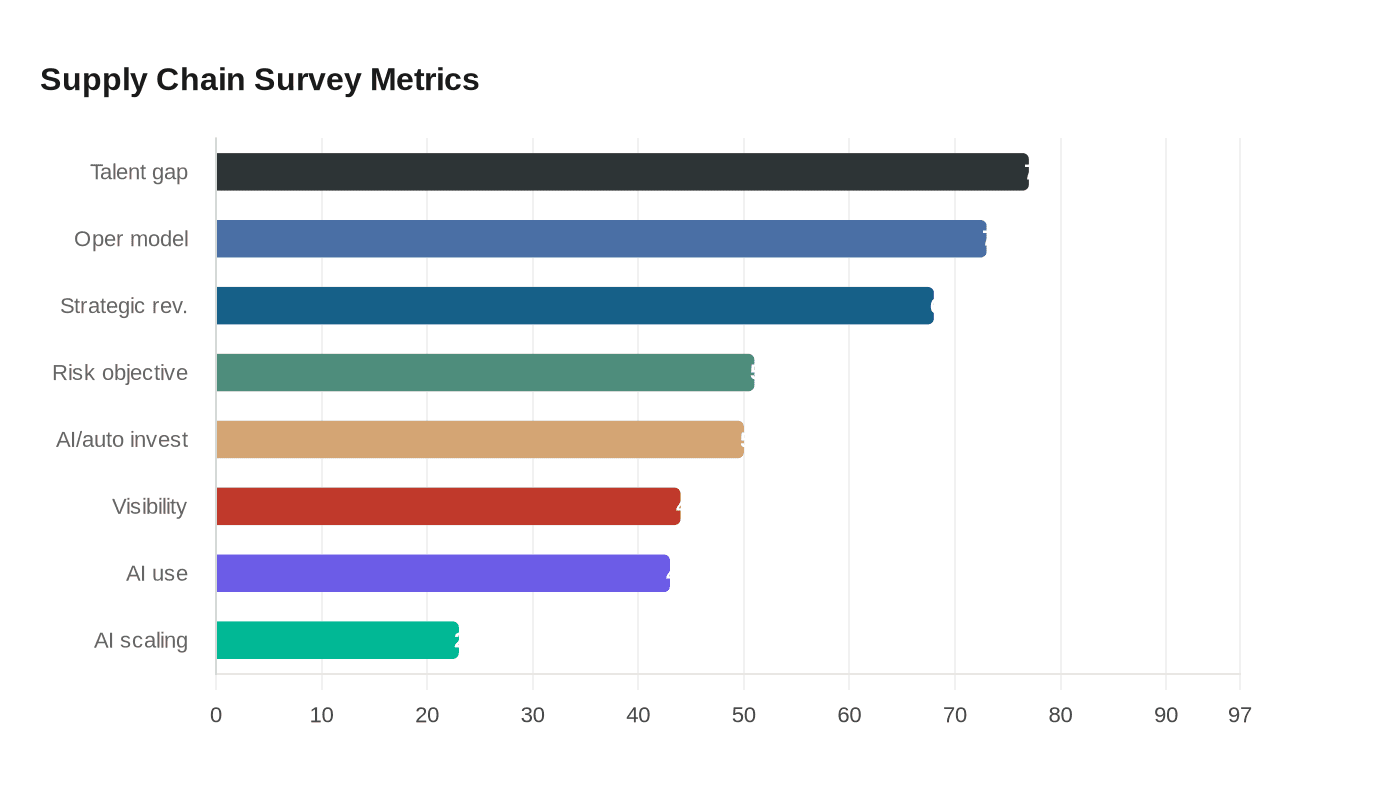
AI is already moving from pilot to scale. KPMG said 43% of organizations have implemented AI in at least one supply-chain area, and another 23% are actively scaling it. Sixty-eight percent are holding regular strategic review meetings with C-suite leadership, a sign that supply chain has moved closer to board-level decision-making. That alignment reflects how far the function has shifted from a back-office cost center: resilience, digitization and data discipline are now part of enterprise performance, and for KPMG, that means more demand for consultants who can deliver all three at once.
This article was produced by Prism’s automated news system from verified source data, official records, and press releases, then run through automated quality and moderation checks before publishing. The system is built and supervised by the people who set the standards it runs under. Read our full AI policy.
Did this article answer your question?


.pdf%2F_jcr_content%2Frenditions%2Fcq5dam.thumbnail.319.319.png&w=1920&q=75)