KPMG cuts 10% of US audit partners amid cost pressures
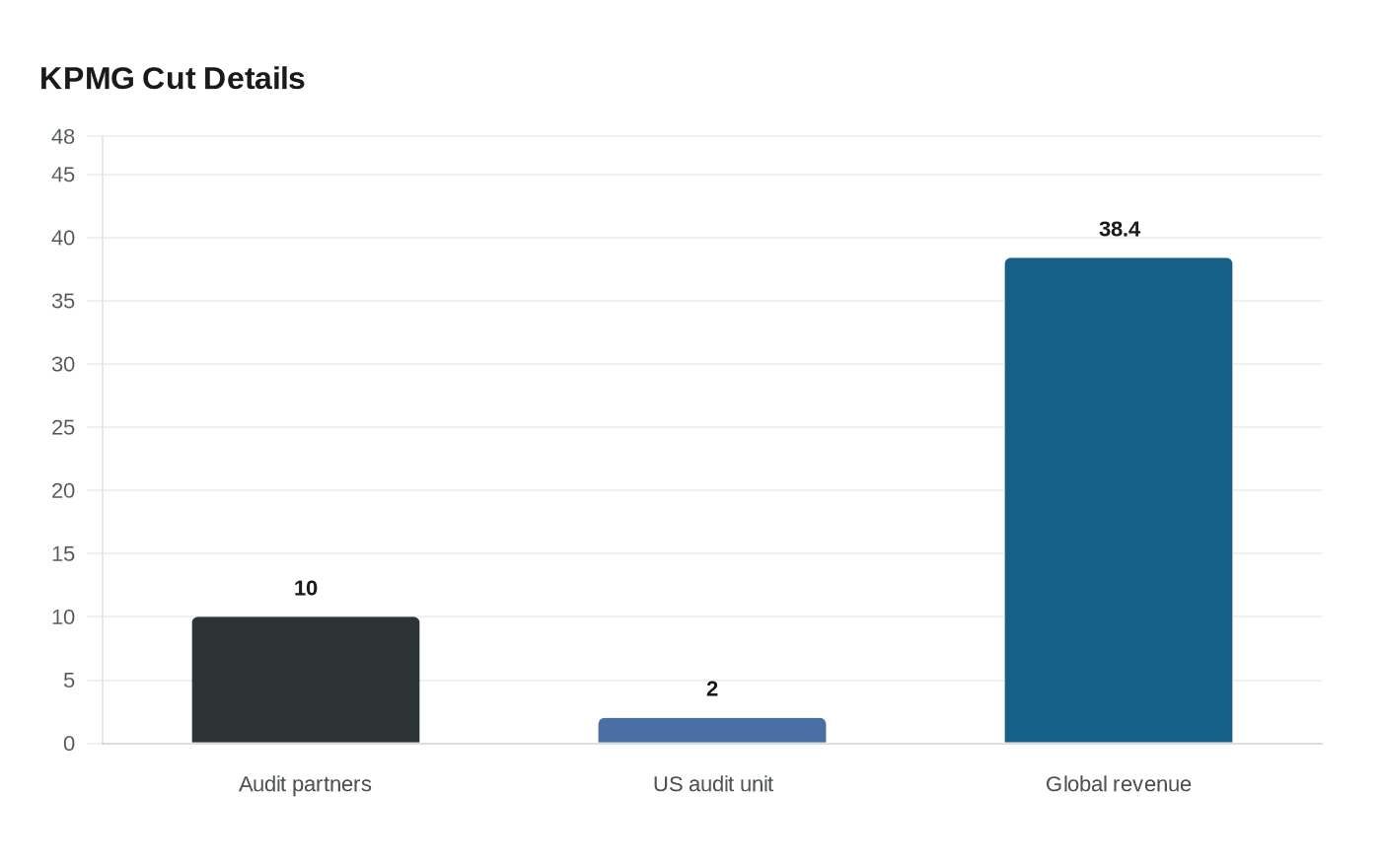
KPMG is cutting about 10% of its US audit partners after years of failed retirement nudges. The move shows how hard the firm is pushing on cost, performance and staffing in a tightly regulated business.

KPMG is cutting about 10% of its US audit partners after years of trying, and failing, to shrink the group through voluntary retirements. The move puts fresh pressure on a business already wrestling with slower turnover, tougher performance expectations and a market that is forcing Big Four firms to squeeze more margin out of every engagement.
Affected partners will receive financial packages and placement support, the firm said. But the scale of the reduction points to a sharper internal reset than a routine cleanup. For years, KPMG tried to encourage exits through retirement offers; the low uptake suggests many partners were unwilling to leave on management’s timetable, forcing the firm to move from incentives to mandatory cuts.
The timing matters for audit teams on the ground. Partners are not just senior rainmakers, they are the names tied to client relationships, technical sign-off and staffing decisions. Removing roughly one in 10 of them means the remaining partners will absorb more accounts, more review work and more pressure to keep audits moving during a period when deadlines are already tight. In a business built on review layers, any reduction at the top ripples through managers, seniors and staff who do the fieldwork.
The cut also lands in a business shaped by SEC and PCAOB independence and partner-rotation rules, which make the timing and allocation of audit partners especially sensitive. In practice, that means the firm cannot simply stretch partner tenure or shift the same people across engagements without considering rotation and independence constraints. When partner numbers fall, those rules become harder to manage, not easier.
This is not KPMG’s first move on its US audit workforce. In October 2025, the firm cut 195 people from the business, about 2% of the unit, citing low employee turnover and changes in how it runs its core operations. Together, the two rounds suggest KPMG is redesigning the audit franchise, not just trimming expenses.
The pressure comes even as KPMG International keeps growing overall. The firm reported global revenue of US$38.4 billion for FY2024, up 5.1%, with audit revenue rising 6% and global headcount reaching 275,288. That contrast, growth at the top line and cuts in a core practice, is a warning sign for the wider profession: firms are still hiring, investing and expanding in some areas, but they are also demanding tighter productivity, sharper pricing discipline and more technology-driven efficiency from audit leaders.
For KPMG’s audit partners, the message is blunt. In a business where client service, quality control and regulatory compliance are already non-negotiable, the partner track is getting smaller, more selective and much less forgiving.
This article was produced by Prism’s automated news system from verified source data, official records, and press releases, then run through automated quality and moderation checks before publishing. The system is built and supervised by the people who set the standards it runs under. Read our full AI policy.
Did this article answer your question?


.pdf%2F_jcr_content%2Frenditions%2Fcq5dam.thumbnail.319.319.png&w=1920&q=75)