KPMG Performance Hub postings reveal managed services career path
Performance Hub looks like KPMG's managed-services track in action, built on QA, analytics, coaching and client-ready delivery, not simple back-office processing.
KPMG's Performance Hub job ads read like a blueprint for managed services after the old back-office model has been stripped away. The Orlando Service Delivery Technician role and the St. Louis Senior Analyst role are both marked experienced-level, and both frame the work as high-volume, quality-controlled service delivery rather than routine processing.
What the postings reveal about Performance Hub
In Orlando, the technician is expected to conduct complex analyses, produce high-quality outputs, review other analysts' work, approve client-ready deliverables, and safeguard confidential files under documentation and security rules. In St. Louis, the senior analyst supports internal and external clients from a centralized team, coordinates across locations, reviews deliverables, manages schedules, and helps build standard operating procedures and training initiatives. Taken together, the listings suggest a managed-services lane that sits between delivery operations and client service, with quality control built into the job itself.
What the day-to-day work appears to be
That mix makes Performance Hub look less like a generic support center and more like a hybrid role: part operations lead, part quality gatekeeper, part coach. The postings emphasize feedback, mentoring, compliance with standards, and stakeholder management, which means staff are not just producing output, they are checking, shaping and signing off on it before it reaches a client or an engagement leader.
The rhythm of the work also looks different from classic project consulting. The St. Louis role points to a centralized, high-performing team working across geographies with virtual communication tools, while the Orlando role calls for ongoing monitoring of productivity and quality metrics. For KPMG people used to the boom-and-bust feel of busy season, that points to a steadier service line with a constant operational cadence, where throughput and accuracy matter every day rather than only at peak deadlines.
The skills stack is more technical than the old support model
KPMG is also signaling that the job is no longer just about spreadsheets and inbox management. The Orlando listing calls for structured data analysis, SQL or Python, AI tools, Microsoft Office and enterprise collaboration tools, while the broader Performance Hub language stresses learning, development and access to leading market tools. In practice, that makes technical fluency part of the job, not a side skill.
That matters because KPMG's own Business Support Services materials say the firm is embedding AI and GenAI across operations, and that AI-powered tools are meant to free up time for critical thinking and problem-solving. Performance Hub fits that direction, except with the extra burden of client-ready output and deliverable control. In other words, this is managed services as an analytics and workflow engine, not managed services as clerical overflow.
Why this matters for career paths
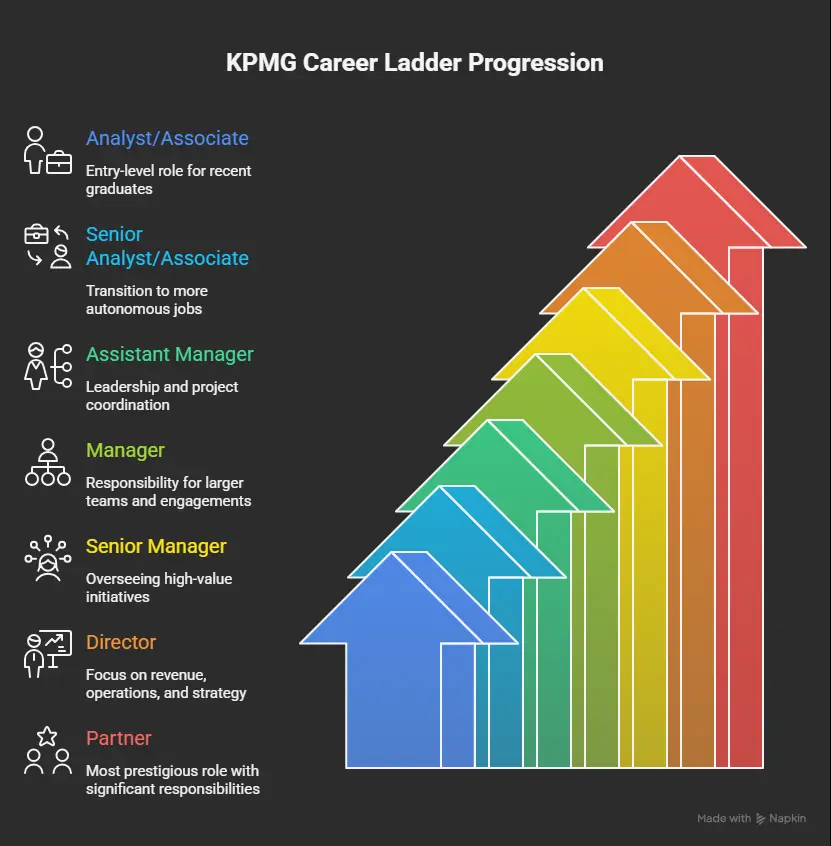
For employees weighing the partner track against other routes inside the firm, the big shift is that managed services at KPMG is being packaged as a professional track of its own. The postings reward people who can coach others, document process, keep KPIs on target and manage risk across repeatable work, which creates a ladder based on operational leadership and technical depth, not just business development.
That can be attractive for professionals who want structure, repetition and a closer tie to measurable output. It can also appeal to people who want a role that feels more controllable than traditional client-facing work, where staffing swings and seasonal pressure can dominate the calendar. The trade-off is that the bar is high on throughput, accuracy and consistency, so the job may be steadier in shape even if it is not lighter in intensity.
How it fits KPMG's managed-services strategy
The postings make more sense when placed beside KPMG's broader managed-services push. The firm says modern managed services now cover front-, middle- and back-office work, and that traditional labor-arbitrage outsourcing is no longer enough. Its model is pitched as a way to move clients from transactional support to transformational operating models, with subscription-based delivery that offers predictable costs and flexible scaling.
That is not just positioning language. KPMG's 2026 Managed Services Outlook is based on a survey of 1,224 senior leaders at large global organizations, and it says 91 percent view managed services as important for agentic AI delivery, 87 percent say managed services are highly integrated into digital transformation, and AI capability is buyers' number one consideration. The same research says 8 in 10 companies expect expanded enterprise-wide managed services to drive long-term value, while 9 in 10 business leaders want more from managed services than a purely transactional model.
Control-heavy work is where the model gets real
KPMG is also applying managed services to compliance-heavy workflows. On its KYC managed-services page, the firm says financial-crime compliance costs rose for 99 percent of financial institutions, reaching $61 billion in the U.S. and Canada, and argues that KYC managed services pair regulatory expertise, skilled professionals and intelligent automation to improve control without giving up speed. That is the logic behind Performance Hub: industrialize judgment-heavy work without losing the quality checks firms still need.
For KPMG staff, the clearest takeaway is that Performance Hub points to a future where operations, analytics and oversight sit much closer together than they used to. The jobs suggest a managed-services business that expects people to deliver, review, coach and automate at once, which means the next generation of career growth may be measured as much by how well you run the machine as by how well you sell the work.
Know something we missed? Have a correction or additional information?
Submit a Tip