KPMG report says AI value depends on orchestration, governance, and talent
KPMG’s first Global AI Pulse found 64% of leaders see value from AI, but only 11% are AI leaders and 74% still worry about security.

KPMG’s first Global AI Pulse suggests the AI conversation has moved past whether companies should experiment and into the harder question of whether they can actually run the technology at scale. Built on responses from 2,110 C-suite and business leaders across 20 countries, territories and jurisdictions, the survey found that 64% said AI had been delivering meaningful business value, even as 74% remained somewhat or greatly concerned about data security, privacy and risk.
That split matters for consultants, auditors and deal advisers inside KPMG because the market is no longer buying isolated pilots. It is buying orchestration: AI-enabled operating models that connect workflows and decision-making, governance that is built into the rollout, and workforce capability that reaches beyond a small digital team. KPMG’s framing is clear that the next phase of AI work will not sit only with technologists. It will require people who can translate risk, controls, transformation and industry process into something a client can actually run every day.
The talent gap shows up sharply in the numbers. KPMG said 68% of organizations reported some confidence in their talent pipeline, but fewer than a quarter were very confident, and only 11% of respondents were classified as AI leaders. The report also found that organizations confident in their talent pipeline were nearly four times as likely to report meaningful business outcomes, at 77% compared with 20%. For KPMG staff, that turns AI fluency into more than a talking point. It becomes part of the promotion path, especially for anyone who wants to advise clients on how to redesign operating models rather than just demo tools.
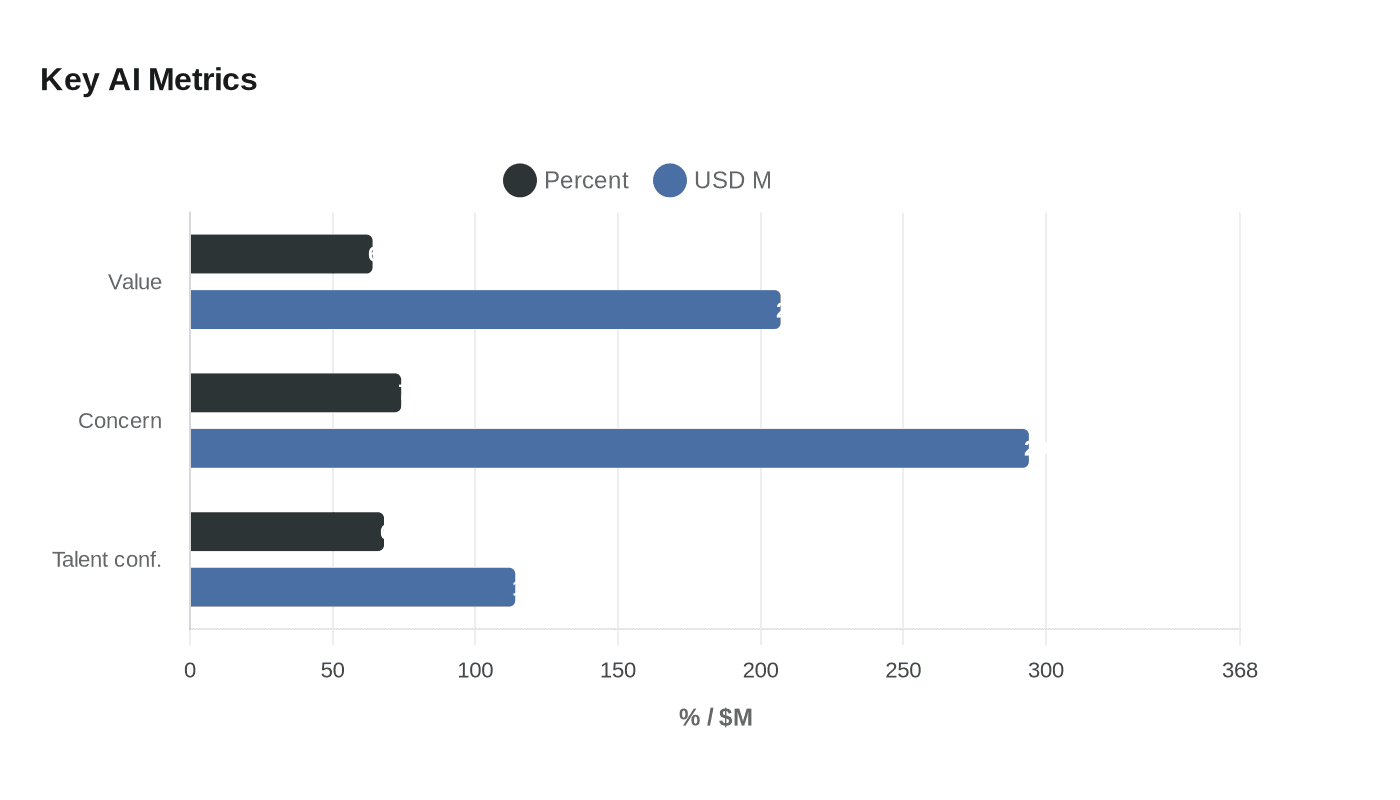
The report also said most organizations now require human validation of AI agent outputs, a sign that control remains central even as automation spreads. KPMG’s own spending data points to a market still pushing hard into AI: one U.S. pulse put average projected spending at $207 million over the next 12 months, nearly double the same period a year earlier, while a tech-focused pulse put the average at $294 million. The message is not that companies are pulling back. It is that they are spending more and demanding more proof that the systems are governed, secure and useful.
The shift is sharper when compared with KPMG’s 2025 surveys. Last year, 68% of leaders said investor pressure to show ROI on GenAI was important or very important, and 93% said those investments had improved competitive position and planned to raise spending to nearly $114 million over the next year. In 2026, the question is no longer whether AI helps. It is whether firms can organize people, controls and workflows fast enough to turn investment into repeatable execution.
This article was produced by Prism’s automated news system from verified source data, official records, and press releases, then run through automated quality and moderation checks before publishing. The system is built and supervised by the people who set the standards it runs under. Read our full AI policy.
Did this article answer your question?


.pdf%2F_jcr_content%2Frenditions%2Fcq5dam.thumbnail.319.319.png&w=1920&q=75)