KPMG reviews show solid culture, but workload and promotions lag
KPMG’s 2,751 Indeed reviews keep the firm at 3.8, but pay, promotions and work-life balance remain the loudest complaints. That clashes with its talent-brand pitch.
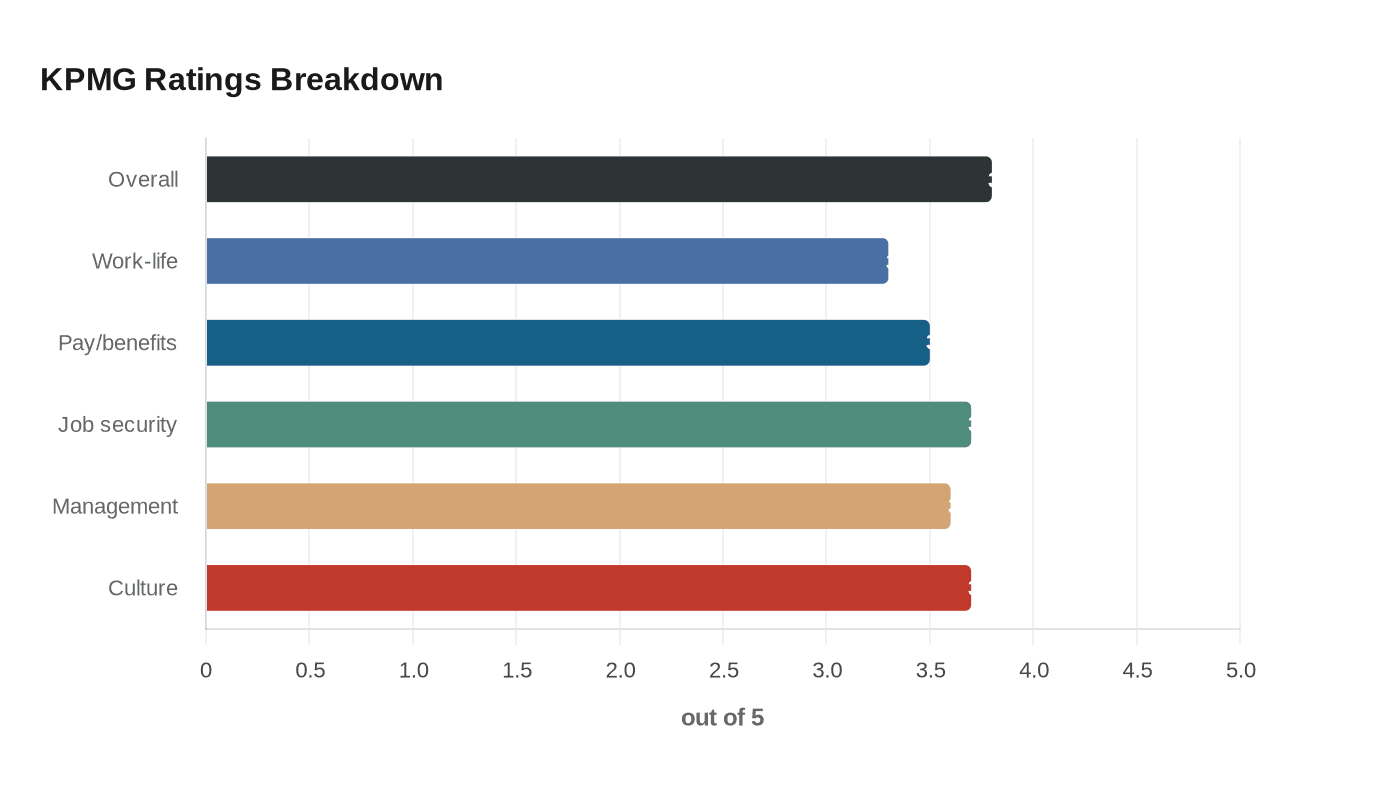
KPMG’s latest Indeed snapshot shows a firm with solid overall standing, but three pressure points keep surfacing: pay, promotion speed and work-life balance. The reviews page, updated April 16, drew from 2,751 reviews and 9,804 total ratings, giving KPMG an overall score of 3.8 out of 5. The weakest sub-score was work-life balance at 3.3, followed by pay and benefits at 3.5. Job security and advancement came in at 3.7, management at 3.6 and culture at 3.7.
That split lands awkwardly next to KPMG’s own talent pitch. The firm says people are its “most valuable asset” and frames the employee experience as a place to build a “thriving career.” Its careers materials also stress a “comprehensive, competitive benefits package” and mobility through domestic and global rotations. The review page suggests that, for many employees, the gap between that branding and day-to-day reality is still being measured in hours, bonuses and how long it takes to move up.
The newest comments on the page sharpen that picture. Some reviewers praise supportive colleagues, learning opportunities, generous PTO and the ability to buy extra time off. Others describe a different KPMG: one technology assurance associate said the role can feel like “endless documentation” instead of technical growth, while another reviewer said promotion pipelines are backed up and bonuses or salary increases feel unreliable. A review posted April 15 said culture is poor and busy season can mean extremely long hours every day of the week.
For auditors, consultants and advisory staff, that is more than grumbling. When employees publicly say they feel stuck, underpaid or overworked, the firm is not just facing a morale issue. It is taking a hit on retention risk, manager trust and the everyday experience that shapes whether early-career staff see a future on the partner track. It also matters in a business where utilization and staffing decisions drive how work feels on the ground.
The broader context makes the reviews harder to dismiss as an isolated complaint. KPMG International says its member firms operate in 138 countries and territories and employ more than 276,000 people. It said on December 16, 2025 that globally aggregated FY25 revenue reached $39.8 billion, up 5.1% in local currency and 5.4% in U.S. dollars, after restating the comparison on a continued-operations basis. Even at that scale, promotion bottlenecks and workload strain can show up fast at the office level.
KPMG has also been studying employee strain inside its own workforce. In its February 4, 2025 Working Parents Survey, 76% of respondents said becoming a parent boosted their motivation at work, but the same research pointed to high levels of guilt, burnout and dissatisfaction with personal well-being. Fully in-office parents were more satisfied with career-progression opportunities than hybrid or fully remote peers. Taken together, the reviews and the internal surveys point to the same conclusion: KPMG’s culture still has credibility, but the firm’s biggest talent risks remain the pace of advancement and the weight of the work.
This article was produced by Prism’s automated news system from verified source data, official records, and press releases, then run through automated quality and moderation checks before publishing. The system is built and supervised by the people who set the standards it runs under. Read our full AI policy.
Did this article answer your question?


.pdf%2F_jcr_content%2Frenditions%2Fcq5dam.thumbnail.319.319.png&w=1920&q=75)