KPMG roundup spotlights digital services taxes, transfer pricing, and refund ruling
KPMG’s tax week shows how one desk can face a Belgian DST, Philippine income-tax questions, and a $109 million U.S. refund fight in the same stretch. The pressure is less policy theater than staffing reality.
A week that looks simple only from far away
One KPMG tax week can mean a proposed digital services tax in Belgium, a source-of-income reset in the Philippines, and a $109 million refund case in the United States all landing at once. That is the real story here: not a tidy list of global developments, but a workload map for the people expected to translate them into client advice, filings, and controversy support.
For KPMG teams, the pace matters because the issues do not sit in one lane. They cut across indirect tax, corporate income tax, transfer pricing, international minimum tax, information reporting, and litigation risk. The result is a familiar Big 4 tension: clients want fast answers, but the facts, filing calendars, and local rules all move at different speeds.
Belgium adds another digital tax project to the queue
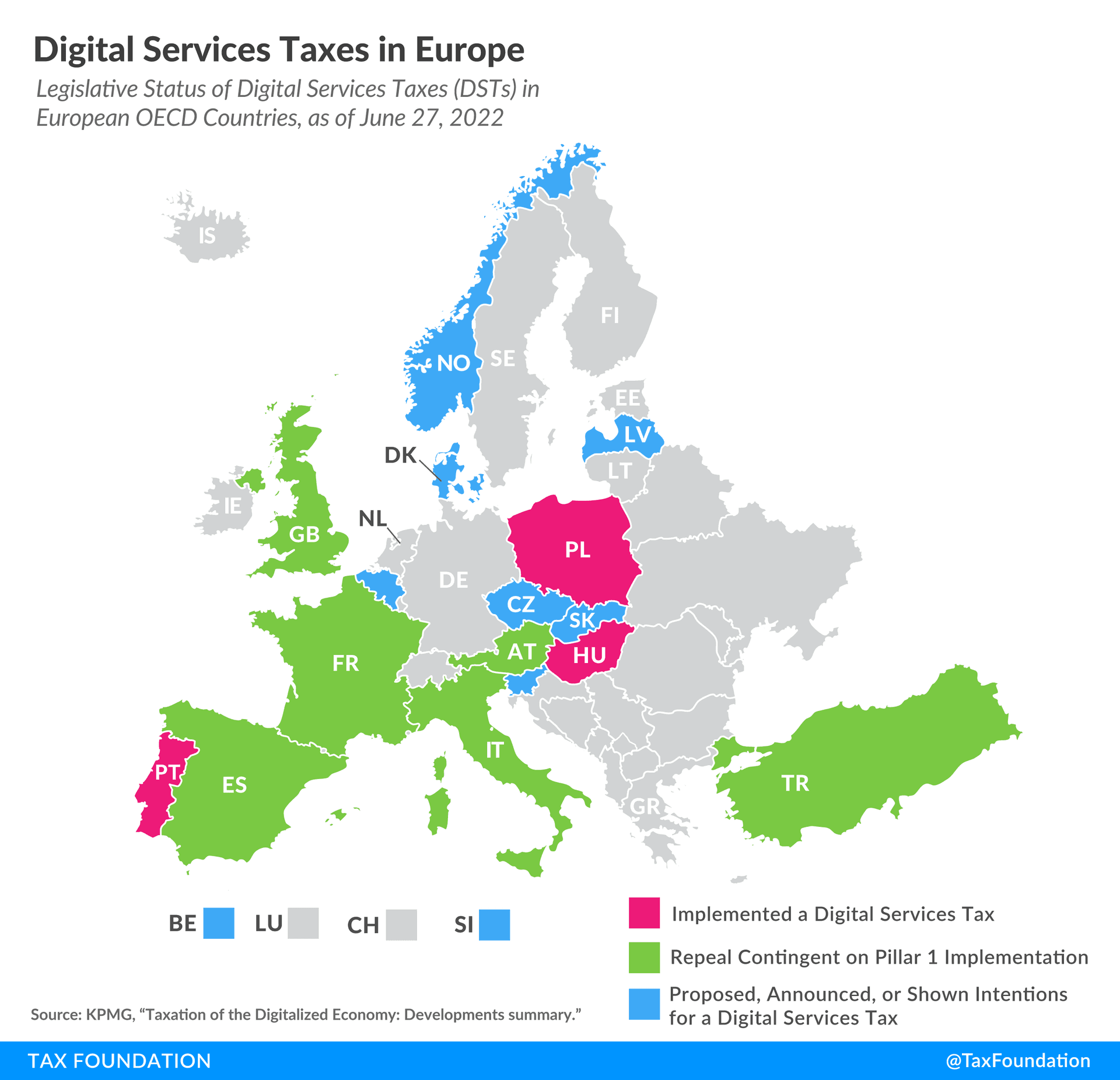
Belgium’s proposed 3 percent digital services tax is the kind of item that looks straightforward in a headline and gets messy on a working paper. The Belgian Chamber of Representatives accepted Bill No. 56K1491001 for consideration on April 17, 2026, and KPMG says the proposal would apply from January 1, 2027 to multinational groups with more than €750 million in revenue that provide digital services in Belgium without a permanent establishment.
That combination is what makes the policy operationally thorny. Groups would need to decide which revenue streams fall in scope, whether Belgian user-facing activity is enough to trigger exposure, and how the tax interacts with existing entity structures that were never built for a digital-services levy. For advisers, the practical lift is not just modeling the tax itself. It is explaining which business lines, customer arrangements, and local contracting structures are suddenly part of the conversation.
For practitioners inside KPMG, this is exactly the kind of issue that demands a narrow specialist and a broad coordinator at the same time. Someone has to know the Belgian legislative detail, but someone else has to understand how the tax might affect pricing, data flows, and the group’s wider European footprint.
Philippines guidance narrows a common misconception
The Philippines is the clearest example in this week’s package of how a short circular can change the way teams screen a client question. Revenue Memorandum Circular No. 24-2026, issued on March 30, 2026, clarified that cross-border services are not automatically subject to Philippine income tax solely because they are classified as cross-border services.
That sounds technical, but it matters because it pushes back against a crude shortcut that can produce over-withholding, bad structuring calls, or unnecessary disputes. The clarification sits against the backdrop of earlier Bureau of Internal Revenue circulars and the Supreme Court’s August 30, 2022 Aces Philippines Cellular Satellite Corp. ruling, which sharpened attention on source-of-income rules for offshore services.
For a tax team, this is the kind of issue that turns into a same-day client call. A multinational may be asking whether a service fee, remote support arrangement, or cross-border technical service should be treated as Philippine-source income. The answer is no longer something a generalist can wave away with a broad label. It needs a read on the circular, the court ruling, and the actual flow of services, people, and value creation.
A U.S. refund denial keeps economic substance front and center
The most eye-catching litigation item in the roundup is the Tenth Circuit’s decision in Liberty Global Inc. v. Commissioner, No. 23-1410. The court issued its decision on April 21, 2026, and affirmed the district court’s denial of Liberty Global’s $109 million refund claim under the economic substance doctrine.
The size of the claim is what gives the case its shareability, but the real significance for practitioners is broader. A nine-figure refund dispute is a reminder that courts are still willing to test whether a tax result had enough substance behind it to survive challenge. That has implications well beyond the taxpayer in the case, especially for transaction teams, controversy specialists, and in-house tax functions trying to decide how aggressively to defend structures that look neat on paper but complicated in practice.
For KPMG people, this is where specialization pays off and also where staffing pressure rises. Litigation, planning, and controversy teams need to speak the same language quickly, because clients do not experience these as separate subjects. They experience them as one question: can we still rely on this position, and what happens if a court says no?
Pillar Two is no longer theoretical in the day-to-day workflow
Pillar Two shows up in this roundup the way it now shows up in real life: less as a concept and more as a filing and notification machine. OECD materials place GloBE rules inside the October 2021 Two-Pillar Solution, built around a 15 percent minimum tax target for large multinational groups. That framework now has local versions that force teams to keep track of who files, where, and by when.
Finland’s regime applies to large-scale corporate groups from tax year 2024, and the Finnish Tax Administration says all constituent entities located in Finland must submit a GloBE information return, although filing can be centralized to a single entity. That sounds efficient until the group has to decide who the central filer should be, which data owner controls the inputs, and whether local finance teams are ready to hand over the necessary information on time.
Hungary adds a different kind of burden. The Hungarian Tax Authority published amended GloBE notification guidance on February 20, 2026, after a ministerial decree that took effect on February 26, 2026. The updated form introduces new mandatory reporting fields, clarifies designated local organizations, expands disclosures for joint ventures, and applies first to tax years beginning in 2025. In practice, that means more coordination, not less. Someone has to chase group data, another person has to validate the local designation logic, and another has to make sure the notification matches the tax year it is tied to.
For teams already juggling audit season, advisory delivery, and promotion-cycle pressure, Pillar Two is a staffing problem as much as a technical one. The work is repeatable, but it is not light, and it often lands on the same people who are already managing other international tax projects.
Transparency rules keep spreading beyond income tax
Luxembourg’s DAC8 transposition shows how quickly transparency work is broadening out. The Administration des contributions directes said the law enacted on March 27, 2026 implements DAC8 by expanding automatic exchange of information to crypto-asset service providers and updating CRS, DAC6, and DAC7-related provisions. Broader legislative materials also show that the new transparency framework is intended to reach crypto assets, life insurance income, and certain advance cross-border rulings.
That is a lot for one compliance stack, and it matters because transparency rules do not stay siloed. If a client has digital assets, reporting obligations, and cross-border rulings in the same group structure, one local change can create a cascade of review work across tax, legal, finance, and compliance teams.
The Bahamas underscores that same point from a different angle. The Bahamas Competent Authority said on March 23, 2026 that the AEOI portal for FATCA and CRS registration and reporting would remain open until August 31, 2026, and the Ministry of Finance held a CRS and AEOI industry symposium on April 22, 2026. That combination suggests compliance is not a back-office afterthought; it is a live industry issue. More broadly, Bahamas legislation also reflects concern about international scrutiny and the need to avoid non-cooperative jurisdiction listings.
Australia fits into this same week as well, with transfer pricing updates adding another specialist workstream to the pile. Even without a single headline-grabbing number, that matters because transfer pricing is the kind of issue that demands consistency across jurisdictions, entities, and documentation files.
What this means for KPMG teams
The common thread is not that tax is becoming more complicated. It already is. The point is that complexity is now landing in clusters, with different deadlines, different regulators, and different risk profiles arriving in the same week. That pushes firms toward tighter specialization, faster internal routing, and more deliberate staffing models, especially when client response times keep shrinking.
For KPMG professionals, the week is a reminder that the value is no longer just knowing the rule. It is knowing how a Belgian DST, a Philippine source-of-income clarification, a U.S. refund denial, and a Pillar Two notification obligation might collide inside one multinational group. That is where the pressure sits now, and where the next client fire drill is most likely to start.
This article was produced by Prism’s automated news system from verified source data, official records, and press releases, then run through automated quality and moderation checks before publishing. The system is built and supervised by the people who set the standards it runs under. Read our full AI policy.
Did this article answer your question?


.pdf%2F_jcr_content%2Frenditions%2Fcq5dam.thumbnail.319.319.png&w=1920&q=75)