KPMG says front-office silos are costing companies growth opportunities
87% of leaders say integration is a priority, but only 5% have done it. KPMG says the gap is leaving revenue on the table and overloading frontline teams.

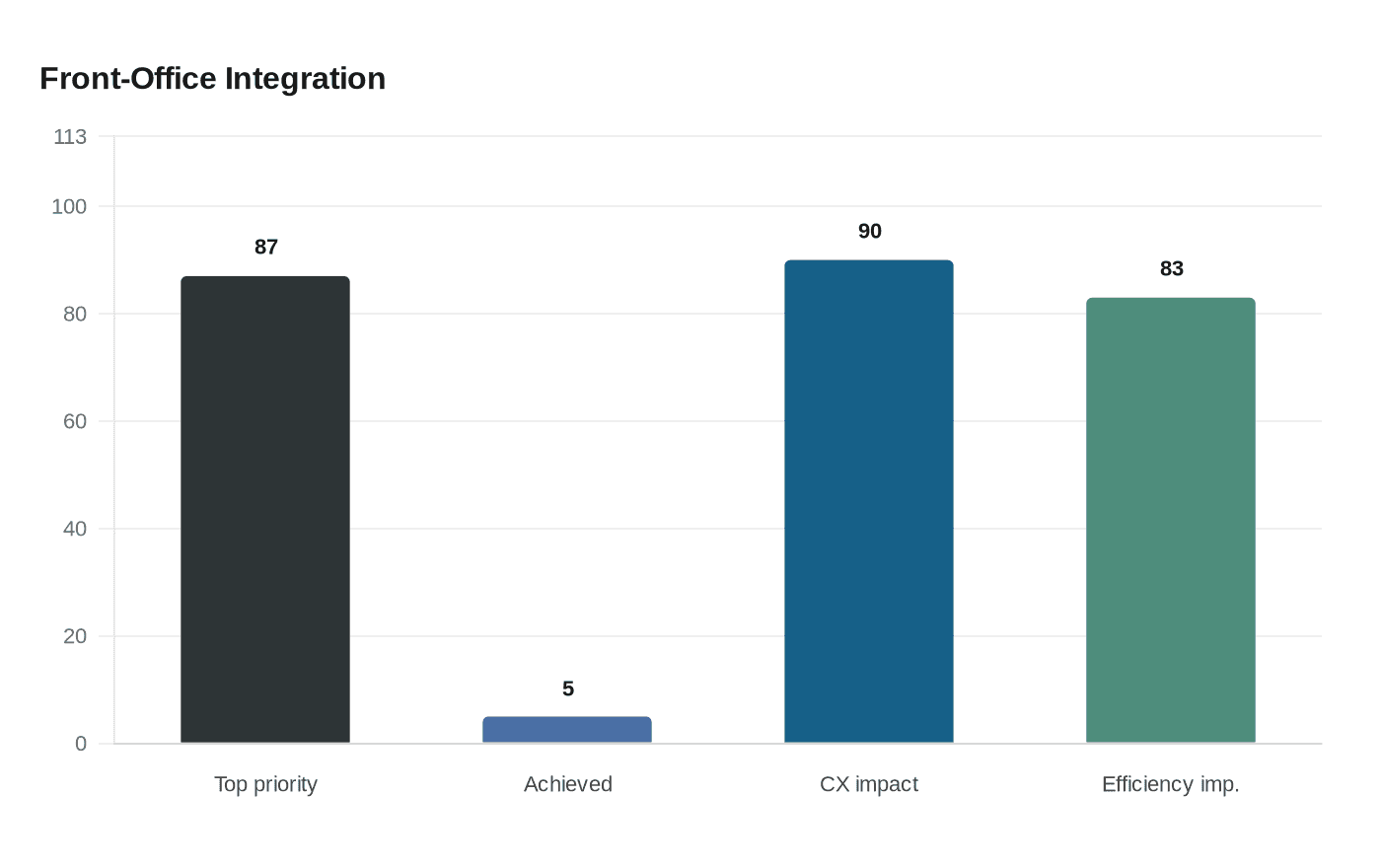
KPMG is arguing that one of the most common management slogans in the market, front-office integration, is still breaking down in the same places it always has: sales, service and data. In a report released from New York on April 20, the firm said 87% of leaders view integration across customer-facing functions as a top priority, yet only 5% of companies have actually achieved it.
That gap matters because KPMG is tying it directly to growth, not just organization charts. The firm says integrated companies are three times more likely to post higher revenue growth, a claim that turns what can sound like an operating-model debate into a hard commercial one. For companies trying to sell more, retain more and respond faster, the problem is not simply that teams sit in different boxes. It is that disconnected systems force employees to reconcile conflicting data, repeat work across functions and hand off customers between departments that do not share the same view of the account.
The report is based on KPMG’s 2026 Customer Advisory Research, a survey of 300 executives. Thirty-six percent of respondents were C-suite leaders, while 64% were SVP, EVP, VP or department heads. The sample cut across financial services, technology, media and telecom, consumer and retail, manufacturing, healthcare and life sciences, and energy, natural resources and chemicals. That mix matters because the handoffs between sales, service, finance and operations affect margin and customer experience in every one of those sectors.

KPMG says the strongest evidence for the payoff comes from companies that have already integrated customer-facing functions. Ninety percent of leaders at those firms said integration had a high impact on customer-experience maturity, and 83% said it had a high impact on operational and cost efficiency. The biggest obstacles were familiar ones: legacy systems, cited by 38% of leaders, and siloed data, cited by 30%.
The firm’s answer is a five-step playbook over the next 24 months: build a unified data layer, turn data into intelligent workflows, integrate customer interactions so AI can be adopted more effectively, work with partner ecosystems through a build-with strategy, and align change management around the human side of the transition. KPMG says AI-enabled workflows are already dissolving the old boundaries between sales, marketing and service, but it also says leaders have often confused structural alignment with true integration.
Scott Lieberman, KPMG US Customer Advisory Leader, said leaders are right to prioritize integration, but need to connect strategy to execution by moving beyond technology alone and focusing on process and people. For KPMG, that message fits a longer-running pitch. Its Connected Enterprise model frames transformation as a customer-centric, sector-tailored effort that aligns enterprise, operations and technology around customer, employee and stakeholder expectations. For consultants and advisory teams inside the firm, the business case is clear: if front-office silos stay in place, clients keep paying for extra labor and missing growth that should have been captured the first time around.
Know something we missed? Have a correction or additional information?
Submit a Tip