KPMG Survey Finds AI Spending Surge Paired With Stronger Hiring Plans
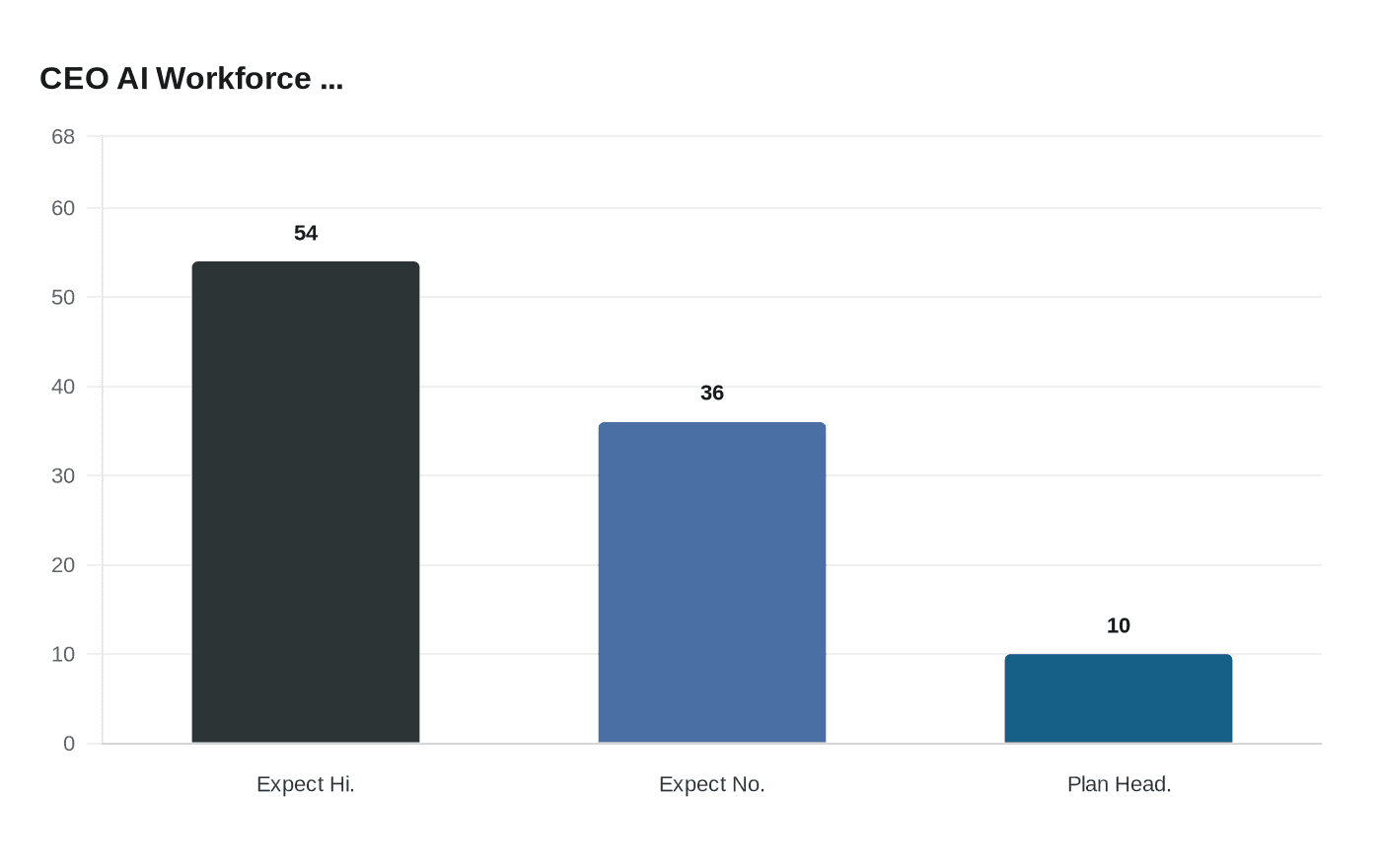
More than half of CEOs surveyed by KPMG expect AI to boost hiring in 2026, while fewer than 1 in 10 plan to cut headcount.

A KPMG survey of 100 CEOs at large US companies found that more than half expect AI to increase their hiring in 2026, directly challenging the widespread assumption that AI investment and job growth cannot coexist. Fewer than one in 10 of those same leaders plan to reduce headcount as a result of their AI investments, while 36% anticipate no workforce change at all.
The KPMG US CEO Outlook Pulse results, summarized in coverage published March 20, also note that businesses are committing up to 20% of capital budgets globally to AI, making the coexistence of heavy technology spend and expanding payrolls a defining tension of the current moment in corporate strategy.
Tim Walsh, CEO of KPMG US, frames the calculus through what he calls the "labour cost margin," a concept he described to Fortune as a three-part question: "What is my mix of labour? What's my mix of technology? And what's the overall cost of delivering that engagement?" That framing treats AI not as a substitute for headcount but as one variable in a cost equation that still requires human judgment and execution on the other side.
Walsh was candid about the limits of anyone's foresight on where this leads. "There is no doubt that every single layer within the labour pool is going to be disrupted," he said. "But anyone who tells you what it is going to do or knows what the shape of it is going to be is not being truthful, because it is unclear at the moment."
For KPMG professionals tracking their own firm's direction, Walsh's comments on internal hiring are worth noting. KPMG is bringing in technologists in ways it previously did not, and is building out a category Walsh calls "orchestrators": people who manage substantial portions of workflow to ensure completion, accuracy, and appropriate outputs. That role description maps closely onto what many senior associates and managers already do informally, coordinating AI-generated work product with client expectations and quality standards, though the firm is now hiring explicitly for that function.
The survey's headline finding cuts against a narrative that has dominated boardroom discussions: that AI spending and workforce expansion are a zero-sum trade-off. With 36% of CEOs expecting no change and a majority expecting growth, the data suggests executives are betting that deploying AI at scale will require more people, not fewer, at least in the near term.
For anyone on the partner track at KPMG or in advisory roles where billable capacity defines advancement, the distinction between automation and augmentation has real stakes. The emergence of the "orchestrator" as a named job category suggests the firm sees workflow management and output oversight as durable sources of value, not transitional roles to be eliminated once models improve.
Know something we missed? Have a correction or additional information?
Submit a Tip