KPMG survey finds consumers cutting costs, still prioritizing travel and experiences
Consumers reported higher living costs, but 60% still planned summer travel, forcing KPMG client teams to rethink pricing, staffing and value.

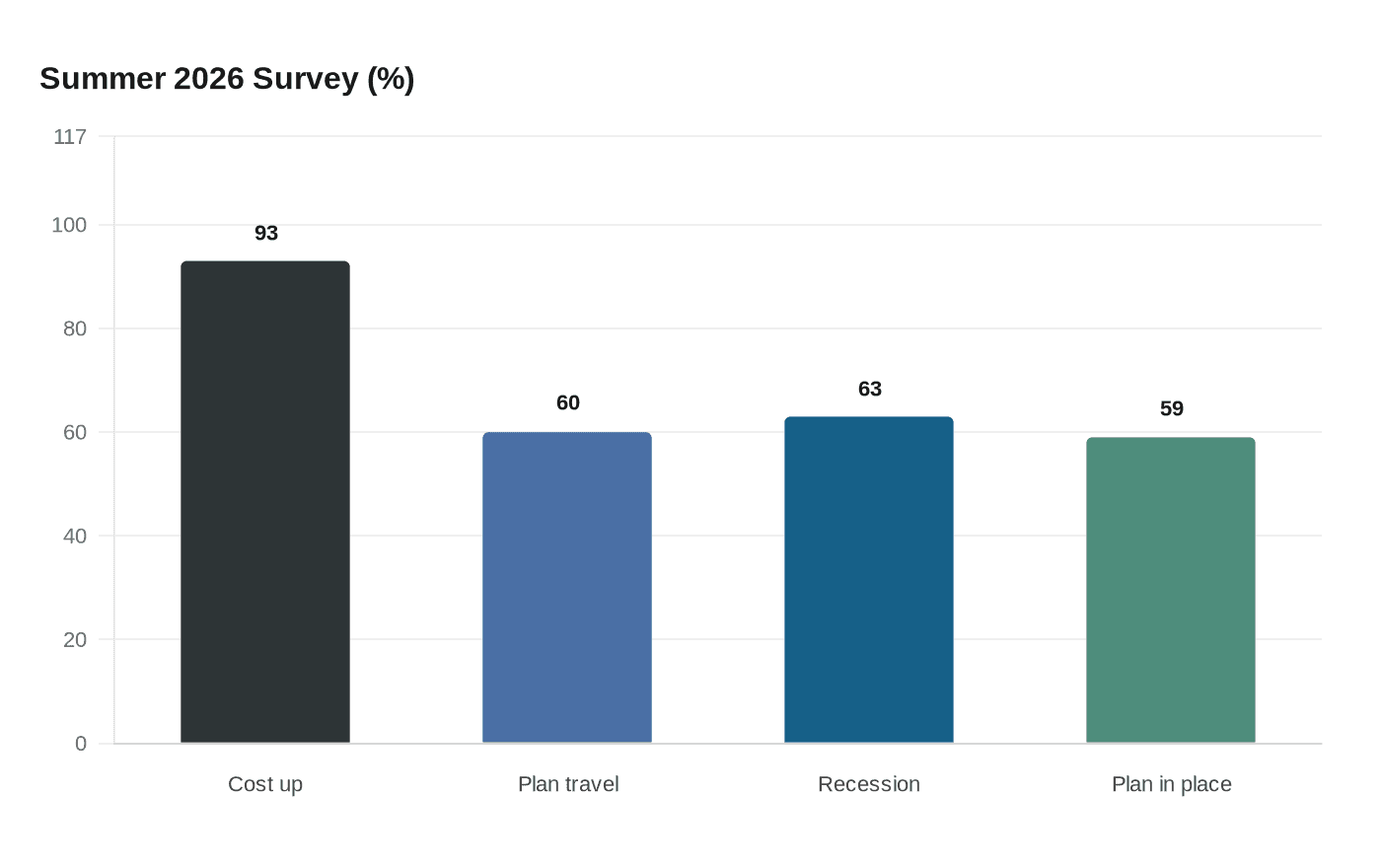
A consumer squeezed by higher prices is not disappearing from the market, but the rules of the sale are changing. KPMG’s Summer 2026 Consumer Pulse found that 93% of respondents said their cost of living rose over the past year, yet 60% still planned to travel this summer, a signal that retail, hospitality, travel and strategy teams have to treat demand as selective, not weak.
The survey, fielded from February 27 to March 18, 2026, included 1,544 respondents and showed a household mood that is cautious but not frozen. Sixty-three percent expected a recession in the next year, down from 70% last year, and 59% said they already had a financial plan in place. KPMG’s read is that consumers are still spending, but they are making sharper tradeoffs, trimming nonessential purchases and reserving money for items they see as worth it.

Travel is where that divide shows up most clearly. KPMG said travel spending was expected to fall 7% year over year, even though the number of trips was projected to decline only slightly. In other words, households appear willing to protect the trip while shrinking the budget around it. Among those more likely to travel, 54% said they were looking for a specific experience or event, 38% said they were switching to cheaper alternatives where possible, and 34% were saving money by staying with family and friends.
That has direct implications for client-facing teams inside KPMG LLP. Pricing can no longer assume that a destination, brand or season alone will carry premium rates. Hotels remained the top lodging choice at 55%, but the mix matters: 69% of travelers planned to stay in the U.S., while 21% planned international trips, down from 28% in 2025. Higher-income households were driving an outsized share of spending, with more than 70% of people earning over $100,000 saying they planned to travel. Wealthier travelers were also more likely to choose vacation rentals and luxury resorts, while lower-income travelers leaned toward staying with friends or family.
The same segmentation is showing up in everyday spending. Seventy-six percent of consumers said they were eating at home more often to save money, and nearly one-third rarely or never go out to dinner or order takeout. Consumers said groceries and restaurants posted the biggest price increases, a warning that service businesses may need leaner menus, tighter labor scheduling and more disciplined value messaging to hold traffic.
Technology is also changing the buying process. KPMG said 27% of consumers now use AI tools when planning trips, up from 14% two years ago. That shift matters for revenue management, personalization and digital-commerce teams because consumers are arriving with more comparisons, more price awareness and less patience for unclear value. Compared with KPMG’s 2025 summer survey, where 39% reported decreased income, this year only 20% did, but the broader picture is still one of cautious spending and more exacting decisions about where money goes.
This article was produced by Prism’s automated news system from verified source data, official records, and press releases, then run through automated quality and moderation checks before publishing. The system is built and supervised by the people who set the standards it runs under. Read our full AI policy.
Did this article answer your question?


.pdf%2F_jcr_content%2Frenditions%2Fcq5dam.thumbnail.319.319.png&w=1920&q=75)