KPMG Survey: U.S. Companies Shift From Tariff Planning to Active Execution
More than half of U.S. companies are already reconfiguring supply chains, and KPMG's new survey signals that trade advisory and transformation work is moving from conversation to contract.

The waiting is largely over. KPMG's 2026 Tariff Survey, released Monday from its New York office, found that U.S. companies have pivoted from analyzing the tariff regime introduced last year to actively executing supply-chain overhauls, a shift that is reshaping where work gets done, which skills matter, and how consulting engagements at firms like KPMG get staffed and scoped.
The survey documents a decisive turn. As recently as last October, KPMG found that 63% of businesses were in early-stage discussions or active evaluations about reshoring, but only 10% had taken concrete action. The new findings show companies have crossed that threshold in significant numbers, with more than half already working to reconfigure supply chains, including reshoring manufacturing operations to the U.S. Nearly half said those adjustments take seven to twelve months to implement, meaning the execution wave that began building in late 2025 is now cresting.
The margin pressure driving that urgency is real: 57% of U.S. companies reported declining gross margins as a direct result of tariffs in a mid-2025 KPMG survey, and the latest data shows the pressure has intensified rather than abated. Some sectors are funding capital investment to physically relocate production. Others, facing higher labor and operating costs that make full reshoring impractical, are pursuing supplier diversification, tighter inventory management, and repricing strategies as intermediate steps.
For KPMG's advisory and deals practices, the survey functions as a forward-looking workload indicator. Engagements that were previously exploratory, trade policy scenario planning, customs duty modeling, transfer pricing structuring, indirect tax remediation, are now converting to execution mandates with defined timelines and deliverables. Cross-border carve-outs and onshore or nearshore transactions are expected to generate increased deal flow wherever tariffs materially alter transaction economics. The 48% of organizations that KPMG's 2026 CEO Outlook Pulse found were actively modeling and deploying tariff mitigation strategies, and the 41% deploying AI to optimize trade compliance, represent a client base that needs integrated advice, not siloed service lines.
The talent strain runs in two directions simultaneously. Clients are funding large transformation budgets, compressing delivery timelines and lifting utilization expectations for consultants. At the same time, demand is spiking specifically for digital supply-chain specialists, professionals with hands-on SAP and ERP experience, procurement analytics capability, and supplier risk assessment skills. KPMG has signaled an internal push for reskilling and secondments to fill that gap, a dynamic that creates opportunity for senior managers and managers who can credibly lead multi-discipline engagements but also creates scheduling friction during peak implementation cycles.
The workforce implication most likely to surprise: only 14% of surveyed companies plan to reduce headcount in response to tariff pressures, per KPMG's earlier data. The reshaping is more about where roles sit geographically and what skills they require than about cuts. Procurement analytics, trade compliance, and supplier risk functions are being elevated from back-office support to strategic priorities, exactly the capabilities KPMG is positioning to deliver. Professionals who can operate across trade policy, tax structuring, and operational transformation, and who can demonstrate measurable outcomes in client resiliency or cost recovery, will find the next six to twelve months unusually favorable for building the kind of cross-functional record that moves promotion cases forward.
SUMMARY: More than half of U.S. companies are already reconfiguring supply chains; KPMG's new survey signals trade advisory work is shifting from conversation to active contract.
CONTENT:
The waiting is largely over. KPMG's 2026 Tariff Survey, released Monday from its New York office, found that U.S. companies have pivoted from analyzing the tariff regime introduced last year to actively executing supply-chain overhauls, a shift that is reshaping where work gets done, which skills command premium, and how engagements at firms like KPMG get staffed and scoped.
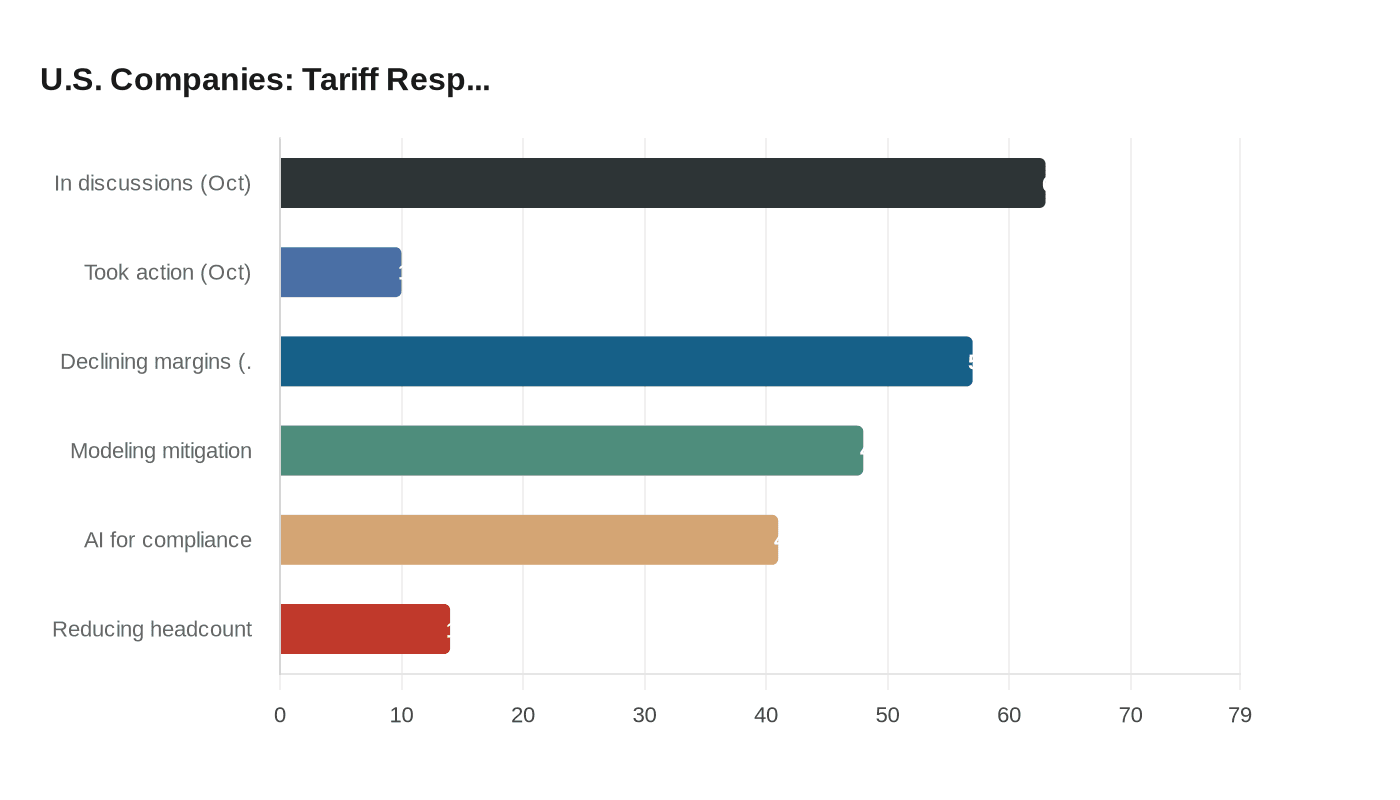
The shift is measurable. As recently as last October, KPMG found that 63% of businesses were in early-stage discussions or active evaluations about reshoring, but only 10% had taken concrete action. The new findings show companies have crossed that threshold in significant numbers, with more than half already working to reconfigure supply chains, including reshoring manufacturing to the U.S. Nearly half said those adjustments take seven to twelve months to implement, meaning the execution wave that began building in late 2025 is now cresting.
The margin pressure driving that urgency has not relented. In mid-2025, 57% of U.S. companies reported declining gross margins as a direct result of tariffs. The 2026 survey shows the pressure has intensified. Some sectors are funding capital investment to physically relocate production. Others, facing higher labor and operating costs that make full reshoring impractical, are pursuing supplier diversification, tighter inventory management, and repricing as intermediate steps. Across both groups, trade policy has become what KPMG describes as a material operating concern for CFOs, no longer a contingency item but a standing line in the budget.
For KPMG's advisory and deals practices, the survey functions as a workload accelerant. Engagements that were previously exploratory, trade policy scenario modeling, customs duty analysis, transfer pricing restructuring, indirect tax remediation, are converting to execution mandates with defined timelines and deliverables. Cross-border carve-outs and onshore or nearshore transactions are expected to generate increased deal flow wherever tariffs have altered transaction economics. The 48% of organizations in KPMG's 2026 CEO Outlook Pulse that were actively modeling and deploying tariff mitigation strategies, and the 41% deploying AI to optimize trade compliance, represent a client base that needs integrated advice, not siloed service lines.
The talent strain runs in both directions at once. Clients are funding large transformation budgets and compressing delivery timelines, which lifts utilization expectations for consultants and creates pressure on PTO during implementation phases. At the same time, demand is spiking for digital supply-chain specialists with hands-on SAP and ERP experience, procurement analytics capability, and supplier risk assessment skills. KPMG has signaled an internal push for reskilling and secondments to close that gap, a dynamic that creates real opportunity for managers and senior managers who can lead multi-disciplinary engagements but also introduces scheduling friction during peak cycles.
The survey's most counterintuitive finding for anxious workers: only 14% of companies plan to reduce headcount in response to tariff pressure. The reshaping is more about where roles sit geographically and what skills they require. Procurement analytics, trade compliance, and supplier risk management are being elevated from back-office support to strategic functions. Professionals at KPMG who can operate credibly across trade policy, tax structuring, and operational transformation, and who can document measurable outcomes in client resiliency or cost recovery, enter the next twelve months with an unusually strong case for promotion.
This article was produced by Prism’s automated news system from verified source data, official records, and press releases, then run through automated quality and moderation checks before publishing. The system is built and supervised by the people who set the standards it runs under. Read our full AI policy.
Did this article answer your question?


.pdf%2F_jcr_content%2Frenditions%2Fcq5dam.thumbnail.319.319.png&w=1920&q=75)