NASBA tool helps KPMG CPAs navigate multistate practice rules
NASBA’s mobility tool can save KPMG CPAs from relicensing headaches when work crosses state lines. For hybrid teams, it can decide who can staff, sign, and serve without delay.
The multistate rulebook now matters as much as the client list
For KPMG CPAs, the biggest mobility risk is not travel. It is getting pulled into a client need in the wrong state and learning too late that the license on file is not enough. NASBA’s CPA Mobility tool turns that into a practical check before a staffer gets assigned, a manager approves coverage, or a partner routes work to a new office.

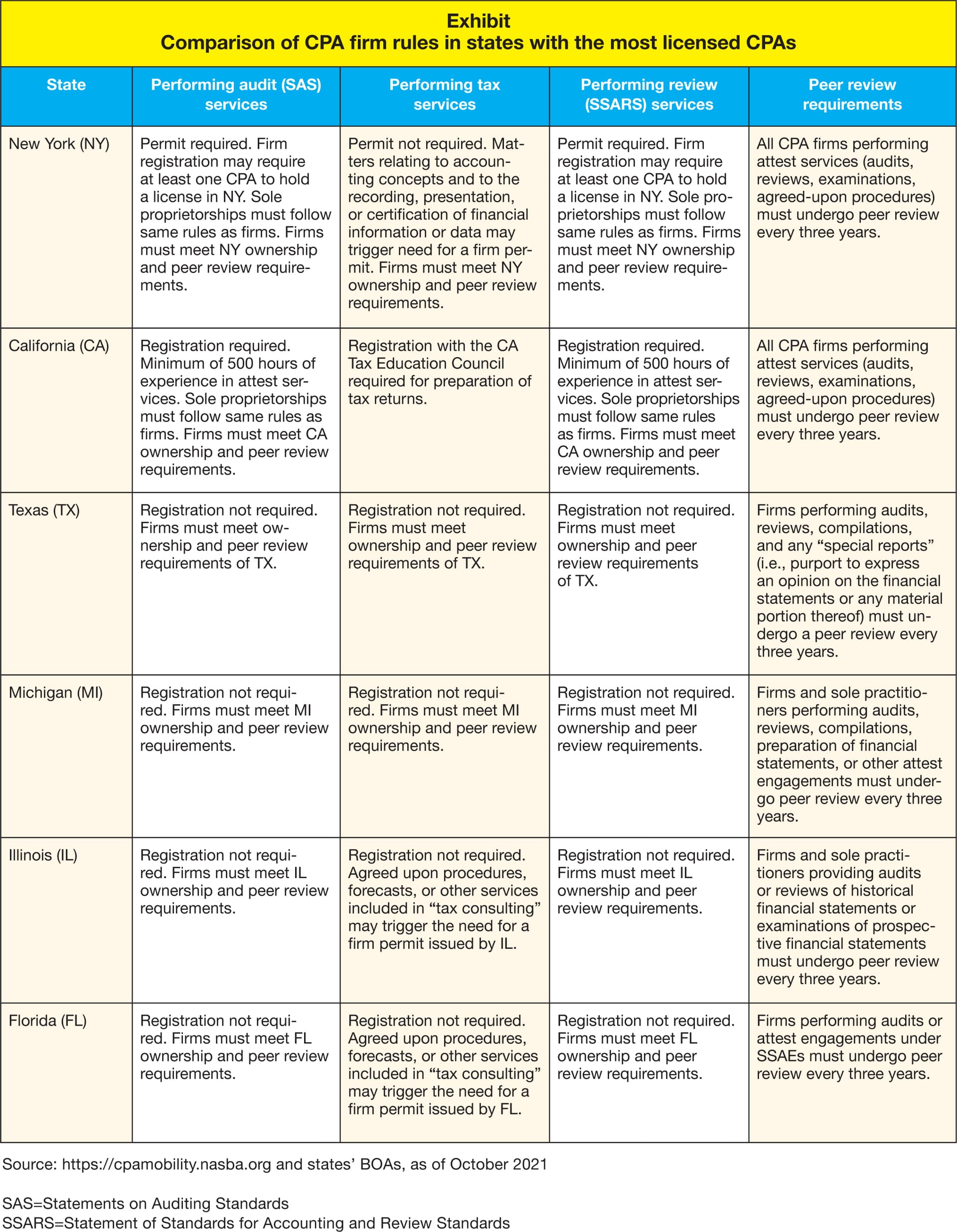
That matters because practice privilege can open a wider market for daily work without forcing a second license in every state. It also matters because the rules are not uniform. Washington, for example, requires a CPA using practice privilege to have a principal place of business outside the state and to consent to the board’s jurisdiction and discipline. California adds another layer by requiring a NASBA CredentialNet substantial-equivalency determination before a CPA can practice under a privilege there.
What the NASBA tool is built to do
NASBA’s site is more than a general explainer. It is designed to let CPAs check practice privilege requirements by state or territory, with summaries that NASBA says are verified and approved by state boards of accountancy for accuracy and completeness. The tool is based on current state board law and rules, but NASBA also warns that it may lag slightly behind effective dates and cannot guarantee a mobility outcome because state-specific factors may still apply.
That caution is important for busy-season reality. A team may assume a home-state license travels with the person, only to find that a destination jurisdiction needs notice, a fee, a separate firm rule, or a specific equivalency determination. NASBA’s own reminder is blunt: it is the CPA’s responsibility to know the current rules in the jurisdiction where the work will be performed.
Why this hits KPMG’s day-to-day work
At KPMG, mobility is not just a personal credential issue. It is an operating constraint. Auditors, tax specialists, and advisory professionals often support national clients, move between offices, and fill gaps where local staffing is tight. If you are relocating, rotating, or joining a cross-border engagement, the mobility question can decide whether you can start immediately or sit on the bench while compliance catches up.
That has direct effects on client coverage and on internal staffing. Managers need to know who can supervise, who can sign, and who can perform restricted services in a given jurisdiction. A team that understands mobility rules can avoid last-minute resourcing problems, preserve deadlines, and reduce the risk that a promising transfer turns into a bureaucratic delay.
The talent angle is just as real. For accountants thinking about a long runway at a Big Four firm, the ability to move without redoing licensure in every state can shape whether a transfer is smooth, whether a promotion path stays on schedule, and whether a hybrid setup remains workable. In practical terms, mobility can make the difference between taking the client work that comes up and being blocked by state lines.
How the mobility framework took shape
NASBA’s system is built around Section 23 of the Uniform Accountancy Act. The broader idea started with a 2006 AICPA-NASBA initiative that aimed to make CPA mobility work more like a driver’s license across state lines. Since then, the profession has built a model that tries to preserve public protection while reducing artificial barriers between jurisdictions.
The numbers show how deeply this has spread. The AICPA says 49 states plus Washington, D.C., Puerto Rico, and the U.S. Virgin Islands have adopted mobility for nonattest services. It also says 29 states have adopted mobility for attest services, often called firm mobility. That split matters inside a firm like KPMG because a CPA may be able to serve a client under one set of rules for tax or advisory work, while attest work brings a different layer of state and firm requirements.
The Uniform Accountancy Act’s 9th edition, issued in July 2025, reflects that evolution. It says differing state requirements had created artificial barriers in the 55 U.S. licensing jurisdictions. NASBA’s newer model-law materials also describe a shift from a state-based view of mobility to an individual-based one, which reflects how licensure and cross-border practice are being tied more closely to the person’s qualification path.
The limits matter as much as the promise
Practice privilege is not a free pass. NASBA says a CPA must be in good standing, and the destination jurisdiction must actually adopt the relevant rule. Some states require notice or a fee. Others layer on firm-level conditions for attest work, which means a CPA’s personal license status is only part of the analysis.
That is why “mobility” can mean different things in different places. The CPA Journal has pointed to Texas as an example where out-of-state CPA firms performing certain attestation services no longer needed to be licensed by, or register with, the Texas Board of Accountancy beginning September 1, 2019. In Washington, the rules focus on principal place of business and jurisdictional consent. In California, the extra step is the substantial-equivalency determination through NASBA’s CredentialNet process.
For KPMG people staffing multi-state engagements, those distinctions are not academic. They affect whether a specialist can be deployed quickly, whether a team can expand coverage during a surge, and whether a relocation requires a compliance pause.
Why licensure reform is now a talent issue
The mobility story sits inside a larger pipeline debate. On May 14, 2025, AICPA and NASBA approved model legislation creating a new pathway to CPA licensure that combines a bachelor’s degree with two years of professional experience and the CPA exam. Their message was that public protection should remain intact while the profession gains flexibility.
KPMG has already signaled that it sees licensure as a workforce issue, not just a regulatory one. In October 2024, the firm said it was the first Big Four firm to publicly advocate for alternative CPA licensure pathways that emphasize experience after a bachelor’s degree. That stance fits the reality facing firms now: the supply of licensed talent is constrained, the work is increasingly distributed across offices and states, and mobility rules can either speed up staffing or slow it down.
Amy Tongate’s framing captures the shift well. Mobility is moving from where a CPA is licensed to how that CPA was licensed. For KPMG professionals, that change is not abstract. It affects where you can work, how fast you can move, and how easily the firm can put the right person in front of the client when the call comes in.
This article was produced by Prism’s automated news system from verified source data, official records, and press releases, then run through automated quality and moderation checks before publishing. The system is built and supervised by the people who set the standards it runs under. Read our full AI policy.
Did this article answer your question?


.pdf%2F_jcr_content%2Frenditions%2Fcq5dam.thumbnail.319.319.png&w=1920&q=75)