How to ace a Lululemon retail interview, from guest service to culture fit
Lululemon interviews reward candidates who can prove brand fluency, guest-service judgment, and real examples that fit the role. Generic retail answers will not carry you far.
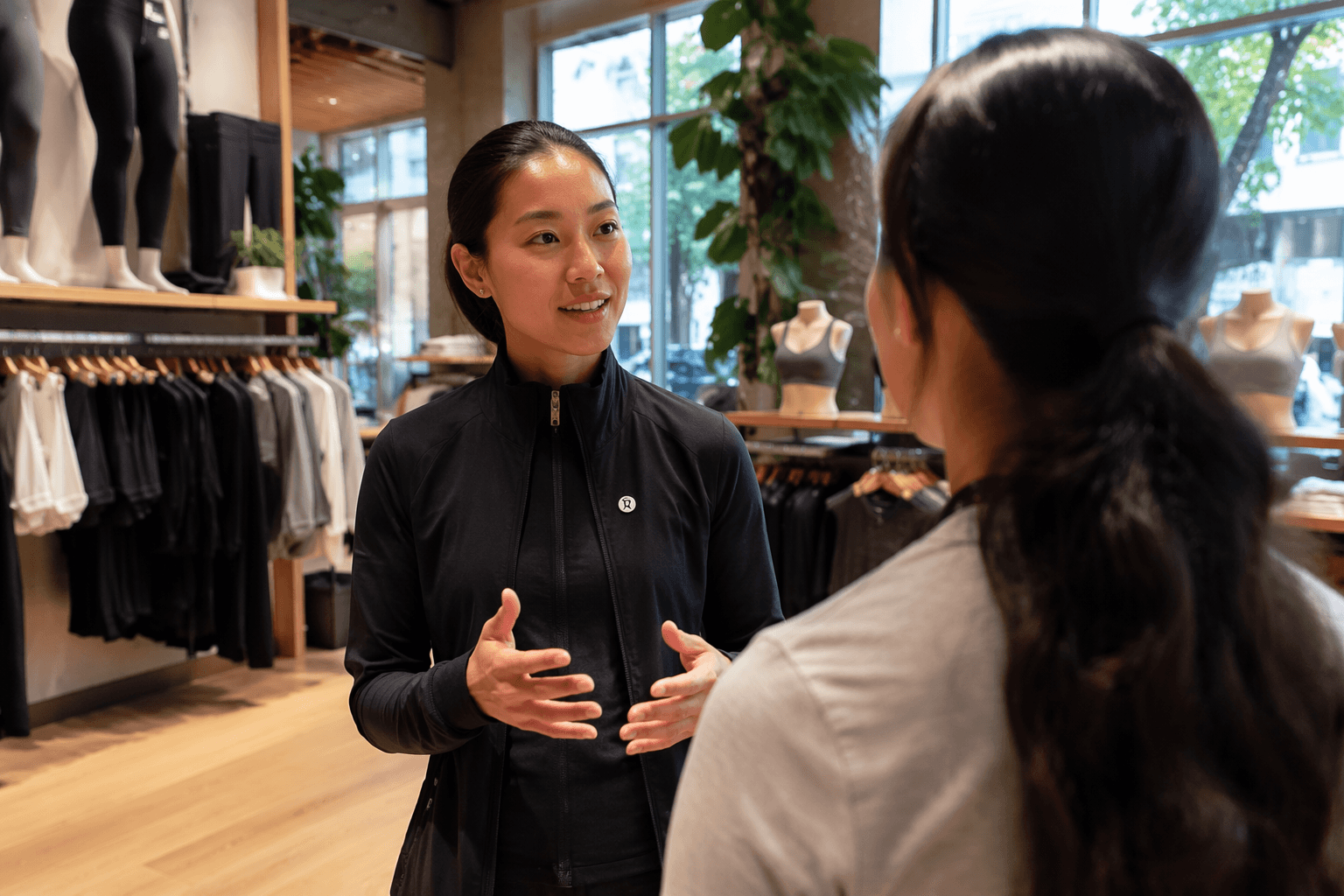
At Lululemon, the first screen is rarely about whether you like athleisure. Hiring managers are looking for proof that you understand a brand built around guest connection, can handle a busy floor, and can back up every claim with a real example from retail, school, sports, or any customer-facing job. Lululemon has more than 700 stores in 17 countries, 39,000 employees, and $11.1 billion in 2025 revenue.
What the interview is really testing
The basic retail interview questions stay remarkably consistent: why you want the role, what you know about the company, how you handle a challenge, and how you work with customers. At Lululemon, those questions map to a culture that emphasizes personal responsibility, fun, courage, inclusion, and connection, along with a purpose to elevate human potential by helping people feel their best.
That means a polished answer is not enough. An educator candidate should be ready to explain why the brand’s pace, product mix, and guest expectations appeal to them. A key leader should show they can keep the floor steady when the store is busy, while an assistant store manager should be able to talk about coaching, accountability, and operational follow-through without sounding scripted.
Show you know the brand, not just the product
Lululemon’s interview bar is easier to meet when you can place the company in its own history. It was founded in Vancouver in 1998, opened its first retail space in a local yoga studio in Kitsilano, opened its first official store in Vancouver in 2000, and opened its first U.S. store in Santa Monica, California, in 2003.
The company’s strategy centers on product innovation, guest experience, and market expansion. In an interview, that shows up when new product arrives, traffic spikes, and leaders are expected to turn a brand promise into an in-person experience.
If you are interviewing, make it clear that you understand that balance. A strong answer sounds more like: you value how the brand mixes performance apparel with community engagement, and you understand that a premium retail floor has to feel polished, active, and personal all at once.
Lead with concrete stories, not general confidence
The same weakness comes up again and again in retail candidates: broad claims without proof. Lululemon interviews are no different. If you say you are calm under pressure, be ready with one situation where a guest had a problem, the floor was busy, or a teammate needed help and you still kept service moving.
Use short, specific examples that show what you did, not just what you believe.
- Describe a time you helped a guest choose between products or solve a fit issue.
- Explain how you handled a rush, a last-minute shift change, or a team member who fell behind.
- Show how you learned a new product category quickly and used that knowledge with confidence.
- If you are moving into leadership, talk about how you coached someone through a mistake or reset expectations on a busy floor.
For educators, the strongest stories usually center on guest interaction and product knowledge. For key leaders, the best examples show floor leadership, communication, and how you keep standards up while helping the team stay composed. For assistant store managers, interviewers will listen for evidence that you can juggle people, process, and sales pressure without losing the brand tone.
Make your answer fit the role you want
The same story should sound different depending on the job. An educator candidate should lean into guest service, product interest, and adaptability.
A key leader should add more depth around coaching and execution. In a business that keeps growing, with 44 net new company-operated stores added in 2025, leaders have to help maintain consistency while stores scale.
An assistant store manager should be ready to connect people leadership to business results. It is about managing coverage, supporting development, and keeping the guest experience steady when the store is under pressure.
Know how the company talks about community
Lululemon’s community engagement is grounded in thinking globally, acting locally, and adapting to guests’ and community’s needs. The company ties that work to events and services focused on movement and mindfulness, and it uses ambassador partnerships to help shape classes and campaigns. A candidate who talks only about product misses part of the brand.
If you have volunteered, coached, taught fitness, helped run a local event, or built relationships in a neighborhood setting, that can matter. The key is to connect that experience to how you would contribute inside the store, not just outside it. A candidate who understands community can usually explain how they would help a guest feel seen, not just sold to.
Lululemon’s 2025 launch of lululemon Gives adds another layer to that story. The initiative aims to equip 20 million people globally by 2030 with resources for mental health and wellbeing through movement and mindfulness.
Ask questions that sound like a future teammate
Strong candidates do not just answer well. They ask questions that show they understand the job, the brand, and the store.
- How does this store define strong guest connection day to day?
- What does success look like in the first 90 days for an educator, key leader, or assistant manager?
- How do community events and ambassador partnerships show up in store planning?
- What does your team expect from someone supporting product innovation on the floor?
- How do leaders balance guest experience with inventory, staffing, and operational demands?
Useful questions include:
A good thank-you note should be just as focused. Mention one part of the conversation, such as guest service, coaching, or community work, and tie it back to the kind of store contributor you would be. That keeps the follow-up concrete and memorable.
Thousands of posted questions and reviews on Glassdoor suggest a large applicant pool.
This article was produced by Prism’s automated news system from verified source data, official records, and press releases, then run through automated quality and moderation checks before publishing. The system is built and supervised by the people who set the standards it runs under. Read our full AI policy.
Did this article answer your question?