Lululemon workers may seek new accommodations for religion and pregnancy
A shift swap, uniform tweak, or break request can trigger multiple accommodation laws at once, especially on a fast-moving retail floor.
A Sunday shift, a pregnancy symptom, or a head covering at a lululemon store can implicate Title VII, the ADA, the PWFA, and lactation rules at the same time. That is where a simple “no” turns into avoidable risk on the sales floor.
Why the overlap matters in a lululemon store
In a company with 39,000 employees worldwide, more than $10 billion in annual revenue in 2024, and a company-operated store fleet that has grown by nearly 50% over the past five years, a lot of accommodation decisions are being made by frontline managers, not lawyers. That means educators, key leaders, and assistant store managers are often the people deciding whether a request gets solved early or escalates into a complaint. lululemon’s IDEA language puts inclusion “at the center of everything,” and its 2023 IDEA report put diverse representation at 41% in stores and 27% in Director+ and Assistant Manager+ roles, with a 100 Disability Equality Index score after two years at 80.
Religion is not just about holidays
Title VII requires reasonable accommodation for sincerely held religious beliefs and practices unless the employer can show undue hardship. After the Supreme Court’s decision in Groff v. DeJoy on June 29, 2023, that hardship standard is not a minor inconvenience test anymore: the burden must be substantial in the overall context of the business. Common examples include flexible scheduling, voluntary shift swaps, prayer breaks, and exceptions to no-hats rules for religious head coverings.
For lululemon, that can mean more than one religious accommodation request in the same week. A key leader who schedules a Saturday closing shift for a Sabbath observer, or rejects a hijab or other head covering because it does not fit the uniform standard, is not just making a taste decision about presentation. That manager is deciding whether the store can keep a worker engaged without violating Title VII.
Pregnancy duties now sit on a separate track, and they can stack with disability law
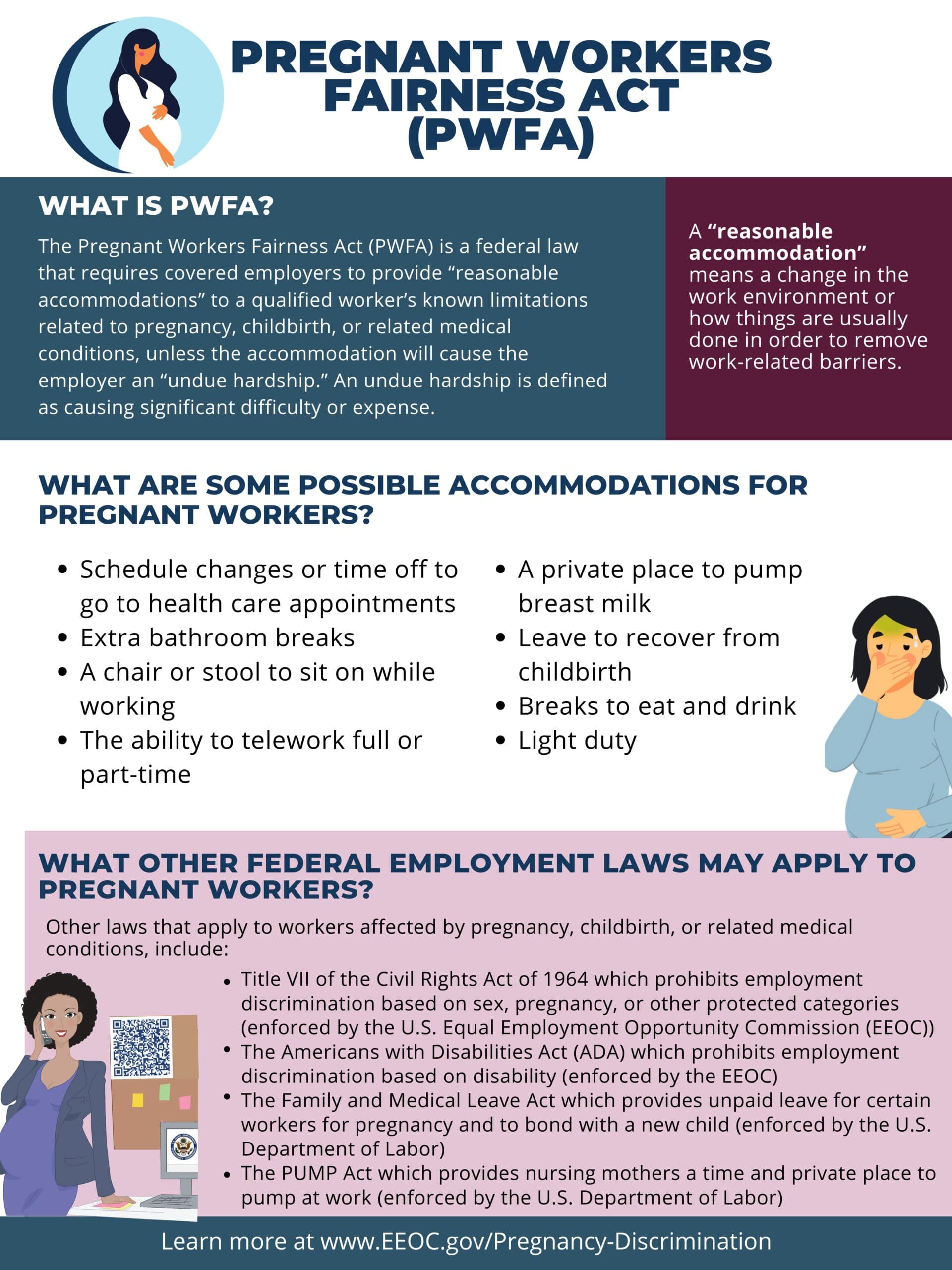
The PWFA went into effect on June 27, 2023, and the EEOC’s final rule was issued on April 15, 2024, published on April 19, 2024, and took effect on June 18, 2024. Under that law, most employers with 15 or more employees must provide reasonable accommodations for known limitations related to pregnancy, childbirth, or related medical conditions unless doing so would create an undue hardship. Pregnancy itself is not a disability under the ADA, but some pregnancy-related impairments can qualify as disabilities and trigger ADA accommodations too.
That is where store-floor judgment gets tricky. If an educator asks to sit more often because of pregnancy-related fatigue, needs to avoid heavy lifting during recovery, or needs a different break pattern because of a medical limitation, the request may be covered by the PWFA, and sometimes the ADA as well. Managers should not force leave if a workable adjustment keeps the employee on the floor.
Postpartum and pumping workers are part of the same accommodation picture
Retail leaders also need to separate pregnancy from the postpartum period. Most nursing workers are entitled to reasonable break time and a private space, other than a bathroom, to pump breast milk for up to one year after birth, and PWFA and Title VII protections also apply to postpartum and pumping workers. On a store schedule packed with product launches, ambassador events, and back-to-back guest traffic, that means the break request is not optional just because the floor is busy.
This is one of the easiest places to get it wrong at lululemon, because the request often arrives as a practical scheduling issue rather than a formal legal one. If an assistant manager tells a worker to “just wait until after the rush” to pump, or assigns the only private space to another use, that can create a second problem on top of the original one.
The interactive process is the part managers cannot skip
Applicants and employees have the right to ask for changes during both hiring and employment, and the interactive process is the way to find a workable solution. For store leaders, that means a request should trigger a conversation, not a reflexive denial based on inconvenience, optics, or a rigid dress code. A request can start with a sentence as simple as “I need a different schedule,” and still be enough to require action.
The best retail response is to identify the actual barrier first. If the barrier is a shift conflict, look at swaps or schedule changes. If it is standing, look at a stool or altered task mix. If it is uniform policy, check whether the rule can bend for a sincere belief or a medical limitation. If it is pumping, protect the time and the private space.
This article was produced by Prism’s automated news system from verified source data, official records, and press releases, then run through automated quality and moderation checks before publishing. The system is built and supervised by the people who set the standards it runs under. Read our full AI policy.
Did this article answer your question?