AI and automation dominate restaurant show as labor costs rise
Drive-thru orders, kitchen handoffs and manager dashboards are the first McDonald’s jobs likely to shift as AI and automation spread.

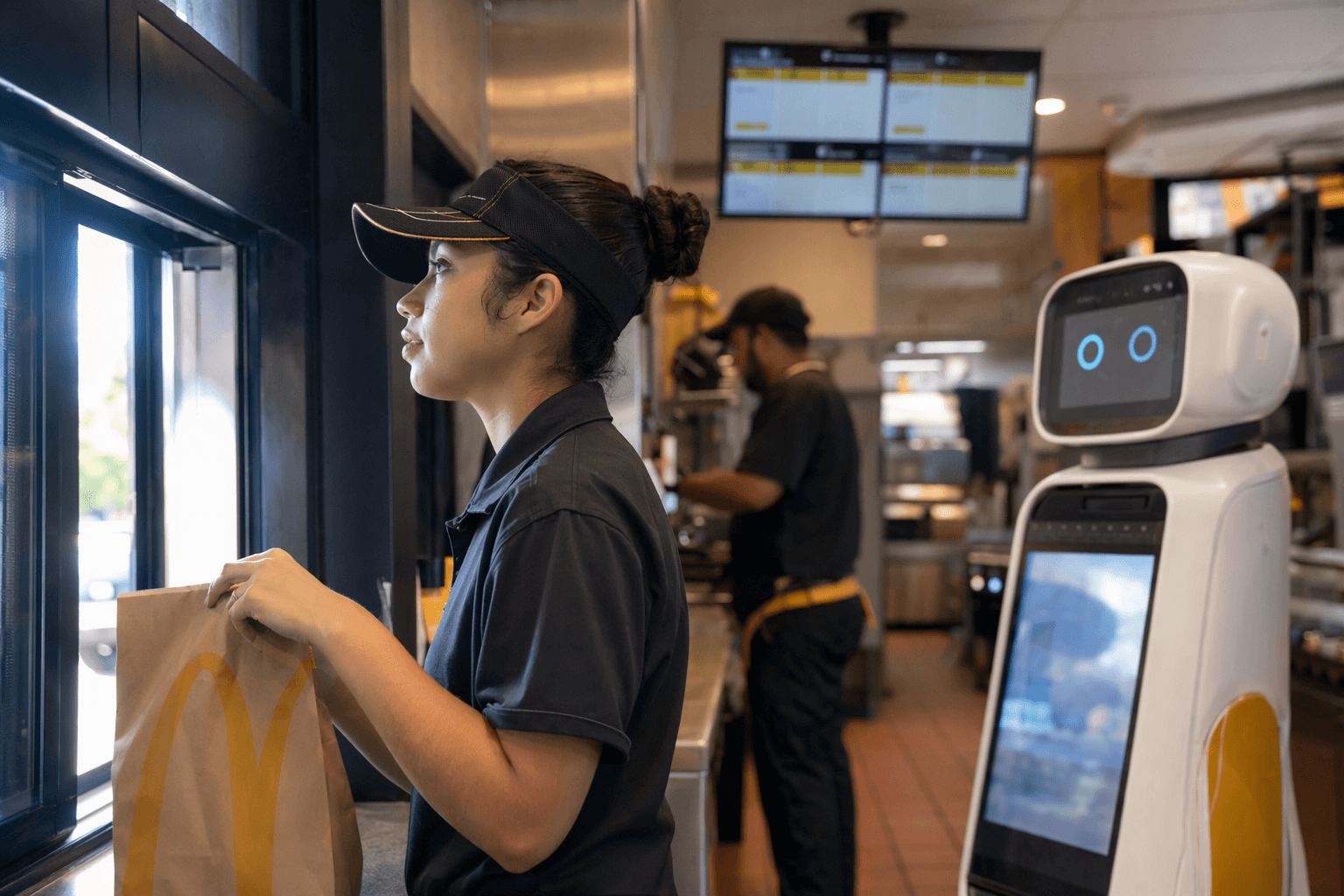
The first McDonald’s jobs to feel AI and automation are likely the ones that touch every rush: drive-thru order taking, front-counter transactions, kitchen handoffs and the manager screens that decide who is where and when. For crew members, that can mean fewer repetitive taps and more machines doing the routine work, but it can also mean tighter speed targets, faster exception handling and more pressure to keep service moving with fewer hands.
That was the clear message from the National Restaurant Association Show in Chicago, which ran at McCormick Place from May 16 to May 19. AI and automation sat alongside kitchen equipment, sustainable packaging, beverages and other restaurant tech themes as operators searched for ways to offset rising labor costs, margin pressure and cautious consumer spending. In practical terms, that usually means more digital order channels, more equipment at the line and more expectation that people will supervise systems instead of doing every task manually.
For McDonald’s workers, the stakes are immediate because the company is already running at enormous scale. McDonald’s reported 3.8% global comparable sales growth in the first quarter of 2026 and 6% global systemwide sales growth. It said it operates more than 44,000 locations and serves about 68 million people each day. When a chain that large changes its operating playbook, the effects show up fast in drive-thrus, kitchens and scheduling software.
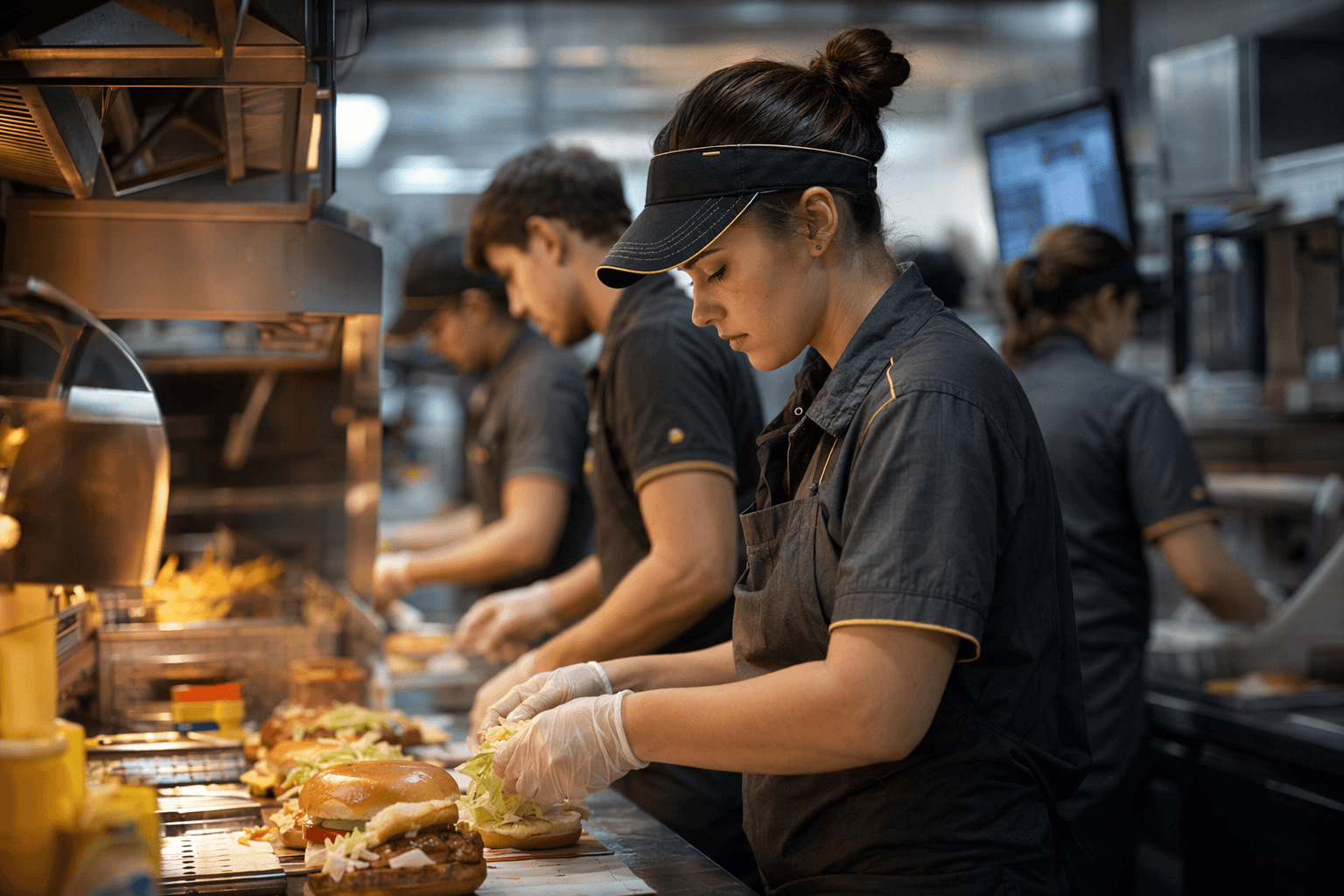
The likely first changes are in the spots where time is easiest to measure. Voice AI can take over more order-taking work. Order accuracy tools can catch mistakes before a bag leaves the window. Kitchen automation can narrow the number of steps needed to assemble a meal. Digital pickup systems can shift labor away from the counter and toward managing app orders, handoffs and exceptions. That does not remove the need for people, but it does change what managers expect from them.
McDonald’s has already signaled where it is headed. The company has a multi-year global partnership with Google Cloud to connect cloud technology across thousands of restaurants and apply generative AI solutions. Its 2025 annual report said the environment ahead includes AI and automation as both risks and opportunities, and McDonald’s described its digital push as a “once-in-a-generation transformation.” The company’s Speedee Labs, a 21,000-square-foot innovation hub at headquarters, is focused on optimizing menu, equipment and processes while bringing tech and AI into the operation.
That matters because McDonald’s is still growing, with a long-term goal of 50,000 global units by 2027. Expansion and automation are moving together, not separately. For crews and shift managers, the job change forecast is clear: the work is becoming more digital, more measured and more dependent on people who can keep the restaurant fast without making it feel robotic.
Know something we missed? Have a correction or additional information?
Submit a Tip