Burger King sales rise on viral Whopper, signaling tougher competition for McDonald's
Burger King’s Whopper refresh helped lift U.S. sales 5.8%, while Popeyes fell 6.5%. For McDonald’s, the bigger lesson is that value only works when stores can execute it fast and cleanly.

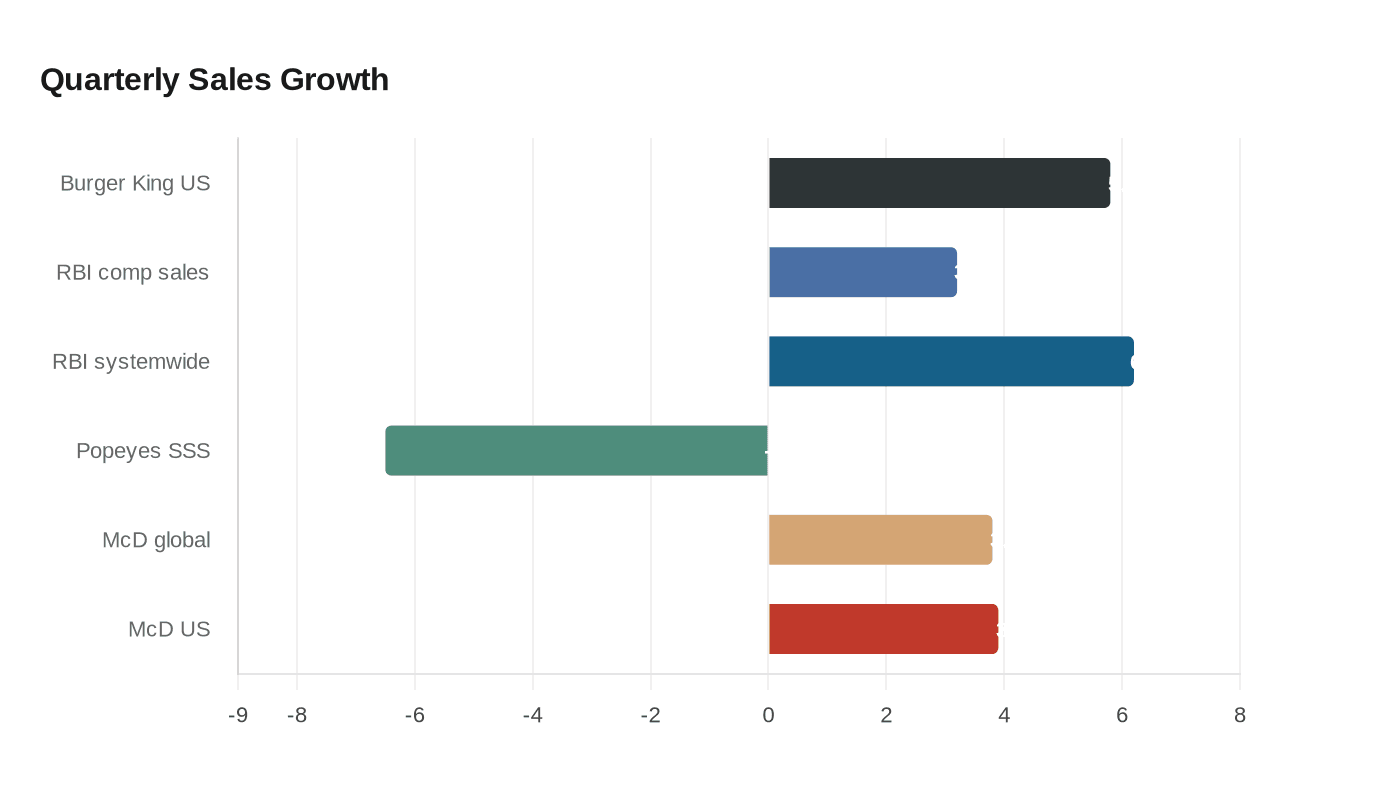
Burger King’s latest quarter showed how quickly a simple product story can change the traffic mix. U.S. comparable sales rose 5.8% as the chain leaned on what Restaurant Brands International called a stronger Whopper, a sign that even one improved hero item can move guests when the offer is easy to understand and the product lands well.
That matters for McDonald’s because the value fight is no longer just about price. It is about whether a chain can make its message sharp enough for customers and simple enough for stores. Burger King updated the Whopper on Feb. 26 for the first time in nearly 10 years, adding a more premium bun, fresher vegetables, improved mayonnaise and box packaging after guest complaints that the sandwich had been smushed. In the kind of tight-margin traffic war McDonald’s crews live with every day, that is a reminder that a cleaner offer can beat a louder one.
Restaurant Brands International said consolidated comparable sales rose 3.2% in the quarter ended March 31, system-wide sales grew 6.2% and revenue reached $2.264 billion. Chief executive Josh Kobza said Burger King’s results reflected several years of work to elevate the guest experience, and the company also said it resumed share repurchases in March and still expects to buy back $500 million in stock this year.
Popeyes was the warning sign on the other side of the portfolio. Same-store sales fell 6.5% and systemwide sales dropped 3.9%, in what Restaurant Business described as the chain’s worst quarter in about 20 years. RBI said Popeyes is moving quickly to fix the slump, with a turnaround centered on restaurant operations, service, a narrower menu focused on core items and more consistent everyday value. The chain already launched a $5 Faves Menu in January and has stepped up field support and guest-experience rallies in about 20 markets.
For McDonald’s operators, the operational lesson is plain. Value promotions only help if the offer is clear, the kitchen can handle it and the line does not slow down under the weight of too many choices. Promotions that create confusion can turn into longer drive-thru times, more guest questions and more pressure on crews trying to keep throughput high. Promotions that are simple and well-supported can do the opposite, helping stores turn traffic into profitable orders.
McDonald’s had its own proof point. Global comparable sales rose 3.8% in the first quarter, and U.S. comparable sales were up 3.9%, helped by value offerings, marketing and menu innovation such as the Extra Value Menu, the Big Arch Burger, new sauces and a partnership tied to Netflix’s KPop Demon Hunters. McDonald’s also said systemwide sales to loyalty members topped $38 billion over the trailing 12 months across 70 loyalty markets.
The competition now looks less like a broad brand war and more like an execution test. Burger King’s gains and Popeyes’ struggles show that in fast food, “value” is not one strategy. It is whether the offer is clear enough to win guests and simple enough for stores to deliver it well.
This article was produced by Prism’s automated news system from verified source data, official records, and press releases, then run through automated quality and moderation checks before publishing. The system is built and supervised by the people who set the standards it runs under. Read our full AI policy.
Did this article answer your question?