McDonald’s guide maps a path from crew member to franchisee
McDonald’s is turning restaurant work into an ownership pipeline, but the real question is whether the path is open enough to be more than a morale story.
McDonald’s is selling more than a job ladder here: it is trying to make restaurant experience look like the first rung on the way to ownership. The pitch matters because the company says roughly 95% of its restaurants worldwide are owned and operated by independent local business owners, and more than 95% of U.S. restaurants are run by franchisees. In a system that large, the route from crew member to owner is not a side story. It is part of how the brand replenishes operators, retains talent, and keeps a massive franchise network staffed.
What Opportunity Pathways is really doing
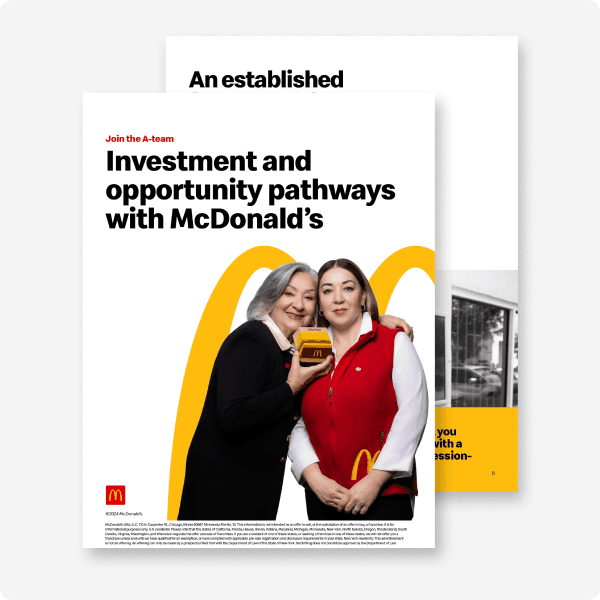
The Opportunity Pathways guide frames the owner/operator role as “in business for yourself, but not by yourself,” which is classic McDonald’s language with a practical point underneath it: the company wants candidates to see ownership as structured, not mysterious. That is a significant message for crew members, shift managers, and restaurant leaders who know the pace of the grill line and the pressure of the rush, but may not know how those skills translate into balance sheets, lease questions, labor law, or financing.
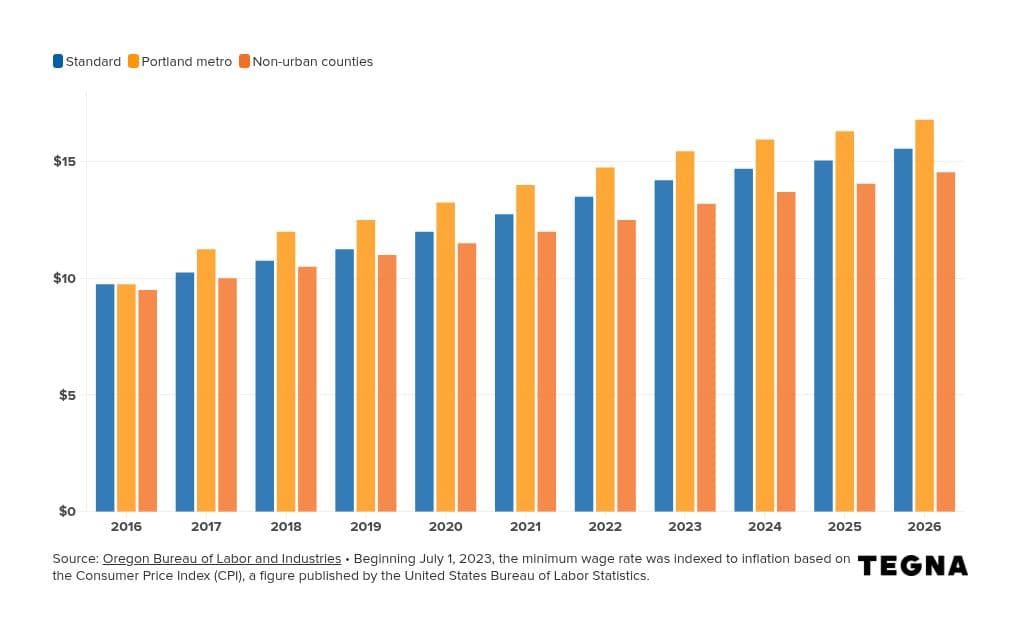
This is where the guide reads less like a recruiting brochure and more like a labor-to-ownership map. McDonald’s is signaling that restaurant work can be a career pipeline, not just a temporary stop, and that the skills learned in-store can lead to training, support, and eventually franchise consideration. In a labor market shaped by Fight for $15, minimum wage fights, automation, and AI-driven scheduling or ordering systems, that promise carries weight. If the company wants workers to believe there is a future beyond hourly work, it has to show a path that feels real.
How the path is supposed to work
McDonald’s says its training teaches candidates how to run a business and run a restaurant, and that all franchisees must complete training before purchasing restaurants. That training generally lasts 6 to 12 months and can be completed on a part-time basis, which makes the process sound designed for someone still working while preparing for ownership. For managers already comfortable with staffing, food safety, and throughput, the harder lift is the financial and legal side, and McDonald’s is explicit that training is meant to bridge that gap.
The company also says it does not franchise territories and does not work with applicants who want a specific restaurant location or limited geographic area. That detail matters more than it may first appear. It means this is not a choose-your-own-location system where an aspiring owner can shop for a preferred corner of town. Development teams select and build new sites, and the new site is franchised separately, which keeps site control firmly in corporate hands even as day-to-day operations are pushed to independent operators.

McDonald’s also says it does not permit franchise partnerships or investors at this time. That cuts against the kind of passive ownership model that some people imagine when they hear “franchise.” The company is looking for operators, not silent capital. For workers trying to imagine a future in the system, that makes the ladder narrower but also clearer: the goal is to turn restaurant experience into active ownership, not to create a landlord class.
The money question is still the gatekeeper
The most important reality check in the guide is financial. McDonald’s says it generally requires a minimum of $500,000 of non-borrowed personal resources to be considered for a franchise. Its U.S. franchising page also recommends a minimum of $750,000 in net liquid assets to be considered for an opportunity. Even then, the company says the minimum does not guarantee approval or the purchase of a restaurant.
That combination tells you a lot about who can and cannot reasonably picture themselves in the system. For an hourly worker, even a strong manager, this is not a simple upward transfer. It is a capital-intensive leap that most restaurant employees will not be able to make without years of savings, outside wealth, or another source of money. The guide may widen the imagination of what McDonald’s work can become, but the financial bar still limits how many people can actually cross it.
There is also an important distinction between opportunity and certainty. McDonald’s says it does not develop new restaurant locations with the intent of issuing the franchise to a specific individual. That means the company is not handing out stores to workers who simply put in enough years. The site comes first, the operator comes later, and the system remains tightly managed from the top.
Why diversity language matters here
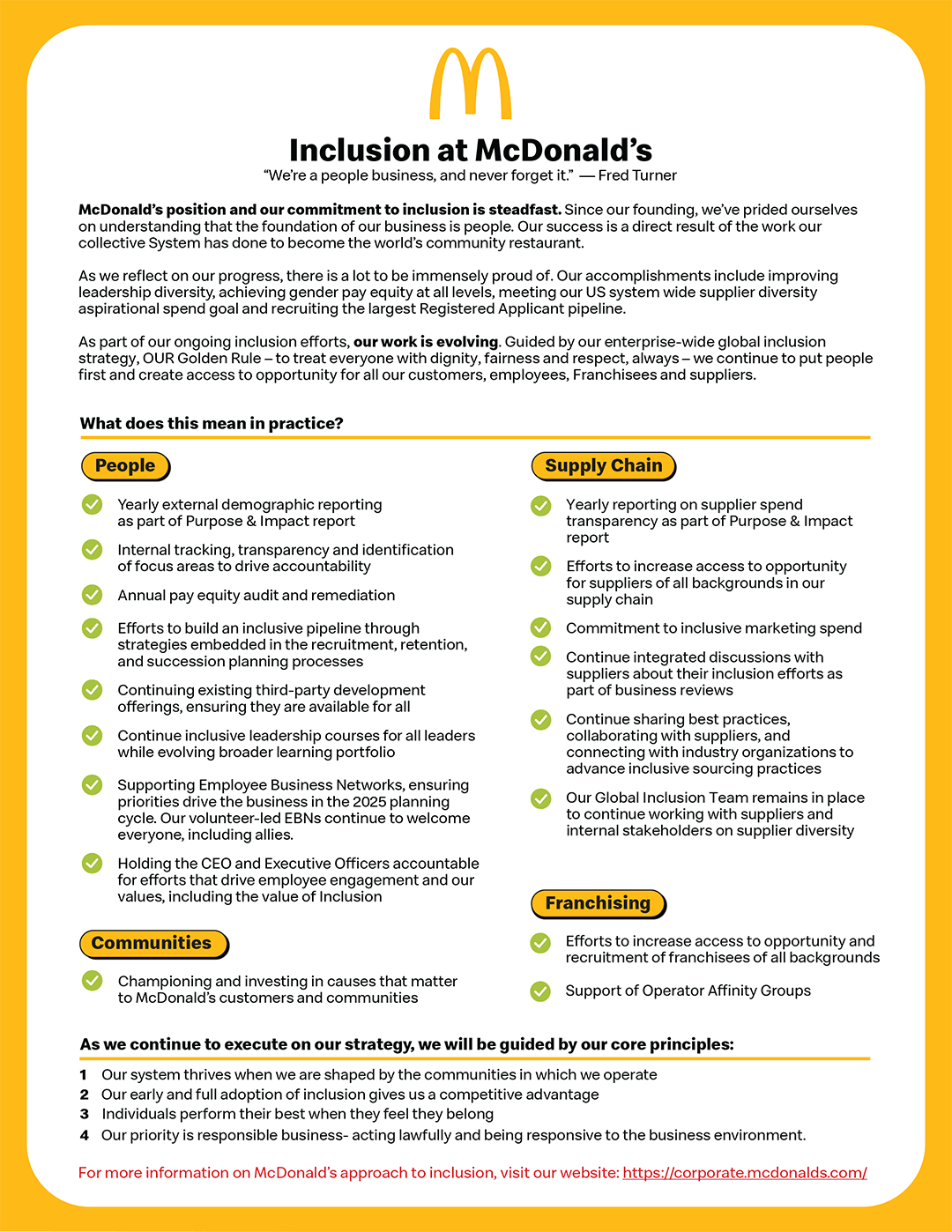
McDonald’s says it is committed to increasing the number of franchisees from all backgrounds, including historically underrepresented groups. Its 2023-2024 diversity snapshot showed that 30% of U.S. franchisees are women and 33% identified as Asian, Black, or Hispanic. Those figures matter because ownership in fast food has long been discussed in terms of who gets access to capital, mentoring, and existing operator networks.
That is where this guide has to be read alongside the company’s broader franchise story. McDonald’s says it is an equal opportunity franchisor by choice, and the framing suggests the company wants the path to look open. But openness is not the same thing as accessibility. A guide can demystify the process, but it cannot erase the cash threshold, the training window, or the fact that the company controls locations and site development.
What workers and operators should watch next
For crew members and managers, the real question is whether Opportunity Pathways becomes a meaningful internal mobility tool or just a polished morale message. A serious pathway should make it easier to understand how in-store performance, management experience, and operational discipline connect to ownership preparation. It should also make the financial hurdle more transparent, because aspiration without capital access can turn into frustration.
Existing franchisees should read the guide as a succession signal. McDonald’s runs one of the largest foodservice systems in the world, with over 44,000 locations in more than 100 countries, so operator turnover and next-generation recruitment are not small issues. A company with that footprint needs a steady bench of owners who understand the brand, the labor model, and the local market. The guide suggests McDonald’s knows that the future of the system depends on recruiting operators as deliberately as it recruits customers.
The larger history is hard to miss. Ray Kroc opened the first McDonald’s restaurant in Des Plaines, Illinois, in 1955, and the company later acquired the brothers’ rights in 1961 for $2.7 million. The brand has spent decades turning a single restaurant model into a worldwide franchising machine. Opportunity Pathways updates that old story for a workforce that expects clearer mobility, more transparency, and fewer empty promises. If the path is real, it could give restaurant work a rare bridge to ownership. If it is not, workers will spot the gap quickly.
This article was produced by Prism’s automated news system from verified source data, official records, and press releases, then run through automated quality and moderation checks before publishing. The system is built and supervised by the people who set the standards it runs under. Read our full AI policy.
Did this article answer your question?