California fast-food workers push McDonald's for stronger ICE raid protections
California fast-food crews want a real ICE raid protocol, and one San Jose McDonald’s walkout showed what happens when managers cannot say they will protect workers.
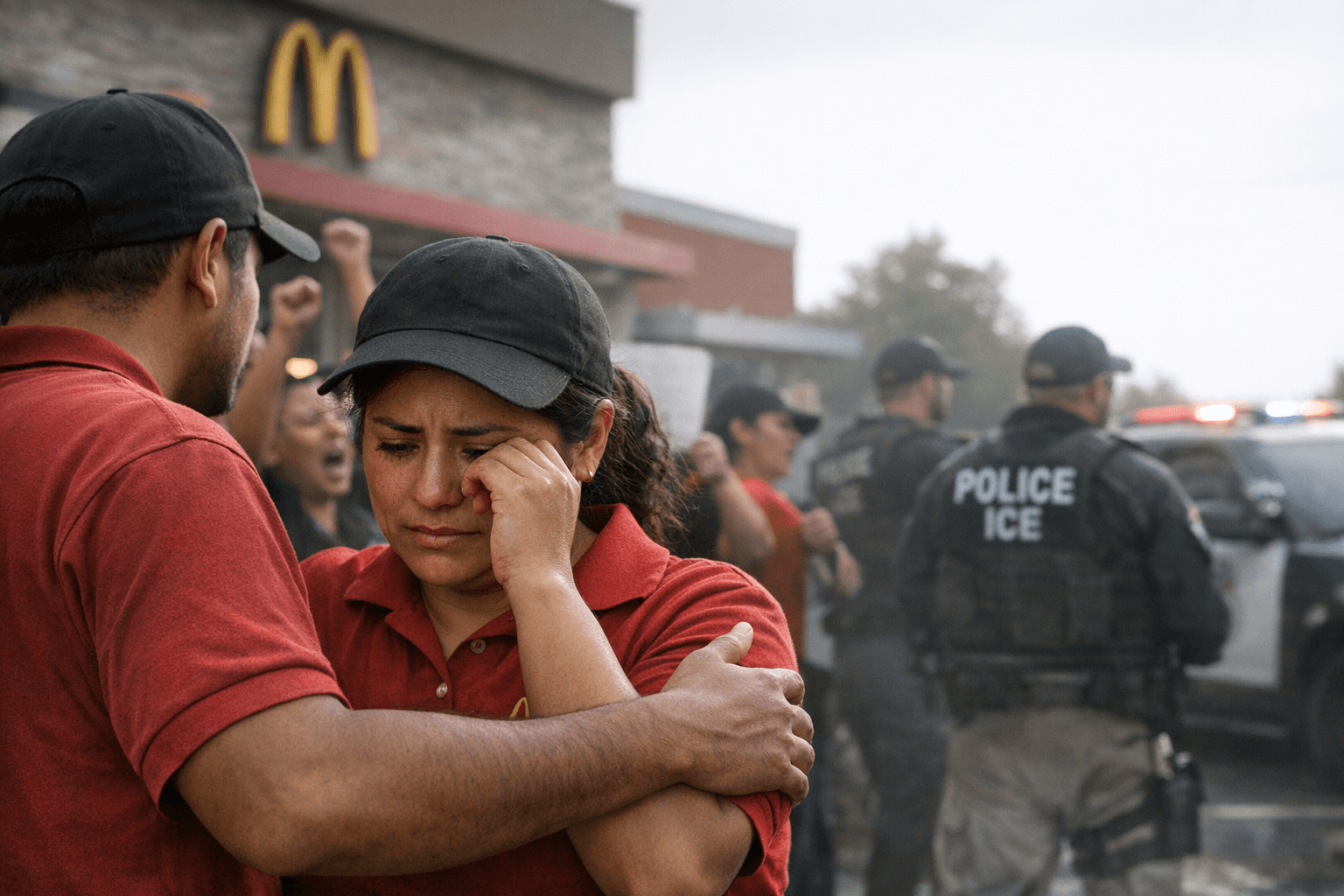
California McDonald’s crews are being pushed into the center of immigration enforcement, and the next shift may hinge on whether a manager knows exactly what to do if ICE walks in. Workers and labor advocates are pressing for stronger protections as raids spread, with the immediate question not abstract policy but who answers the door, who speaks to officers, and whether employees know they can keep working without panic.
The legal baseline in California is already clear. The Immigrant Worker Protection Act took effect on January 1, 2018, and bars employers from voluntarily allowing immigration agents into nonpublic workplace areas unless the agents present a judicial warrant. The California Attorney General and Labor Commissioner enforce the law, and civil penalties can reach $2,000 to $5,000 for a first violation and $5,000 to $10,000 for later violations. For restaurant operators, that means back-of-house kitchens, break rooms and storage areas are not casual entry points for enforcement.
The California Fast Food Workers Union says its new pledge would put that rule in writing for employers, keeping immigration agents out of employees-only areas without a signed judicial warrant and requiring annual know-your-rights training from independent trainers. That training matters because restaurant managers are the people who will have to make the first call under pressure: whether a public lobby is open to officers, how to verify a warrant, how to document what happened, and how to avoid turning a lunch rush into a floor-wide panic.
The fear is spreading beyond immigration status itself. Workers and advocates say employees who are worried about raids are less likely to report unsafe conditions, wage theft or abusive management, which makes the workplace less transparent for everyone. In California’s fast-food sector, that concern hits a workforce that numbered more than 630,000 in 2025, with about 80 percent people of color, 60 percent Latino/a and more than a quarter immigrants. A UCLA Labor Center report cited in the reporting put the workforce at roughly 60 percent Latino, nearly two-thirds women and more than a quarter immigrants.
The tension has already surfaced inside McDonald’s. In San Jose, workers at a McDonald’s franchise walked out after management would not promise to help employees if ICE showed up. Workers said earlier enforcement waves had already driven some people to miss shifts, while those who remained faced heavier loads and less certainty about what their managers would do in a raid.
The stakes extend past one brand. CalMatters reported in 2025 that some restaurants were temporarily closing or losing business as raids and fear spread, in an industry that employs about 1.8 million California residents. DHS later said arrests in the Los Angeles enforcement operation reached 2,792 since it began in June 2025, and one eyewitness account described customers abandoning their cars in a McDonald’s drive-thru during a raid. Even New York’s attorney general now frames the rule the same way: ICE may enter public restaurant areas, but not private spaces like kitchens or break rooms without a judicial warrant or permission. For McDonald’s franchisees and crew chiefs, the gap between that rule and real-world readiness is where the next crisis is likely to land.
This article was produced by Prism’s automated news system from verified source data, official records, and press releases, then run through automated quality and moderation checks before publishing. The system is built and supervised by the people who set the standards it runs under. Read our full AI policy.
Did this article answer your question?