DOL guidance spells out nursing-mother break rights at McDonald's
The DOL’s nursing-mother guidance turns pumping into a scheduling right, not a favor, and McDonald’s managers have to plan break coverage, privacy, and pay around it.

Pumping is a shift-planning issue, not an afterthought
At McDonald’s, the hardest part of a nursing-mother break is rarely the law itself. It is the rush hour. Tight labor coverage, short breaks, and cramped back-of-house space can make pumping feel like a disruption, but the Department of Labor’s guidance makes one thing clear: the burden is supposed to sit with the employer, not the worker.
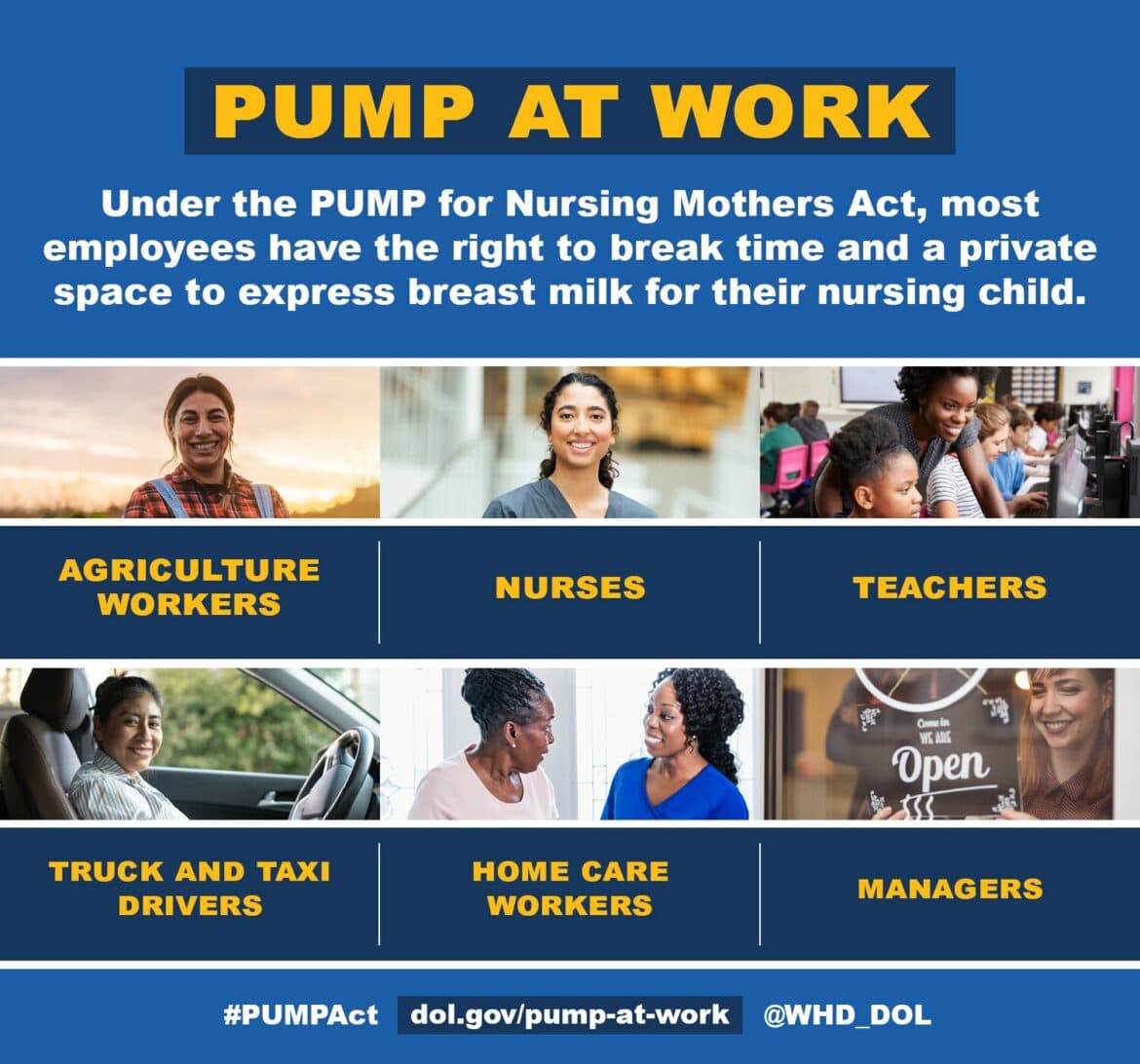
Under the Fair Labor Standards Act, as expanded by the PUMP Act, most nursing employees have the right to reasonable break time and a private place other than a bathroom that is shielded from view and free from intrusion to express breast milk for up to one year after the child’s birth. For a restaurant crew running drive-thru, lobby, and kitchen at full speed, that is not a theoretical accommodation. It is a scheduling obligation that has to be built into the day before the lunch rush starts.
What McDonald’s workers can ask for
The most useful way to think about this right is operationally. If you are nursing and working in a McDonald’s restaurant, you can ask for the basics that make the right usable in real life:
- Reasonable break time to pump
- A private space that is not a bathroom
- A space that is shielded from view and free from intrusion
- Break coverage that lets the store keep moving without making you improvise
- Pay for pumping time when you are not completely relieved of duty
That last point matters in fast food. If a manager expects you to keep half an eye on the front counter, the fryer, the headset, or the line while pumping, the DOL says that time must be paid. The agency also says employers cannot count pump breaks against productivity measures or quotas, and they cannot require workers to make up the time later. In other words, the break cannot be treated like a personal inconvenience that gets pushed into the employee’s unpaid time budget.
How this works in a busy restaurant
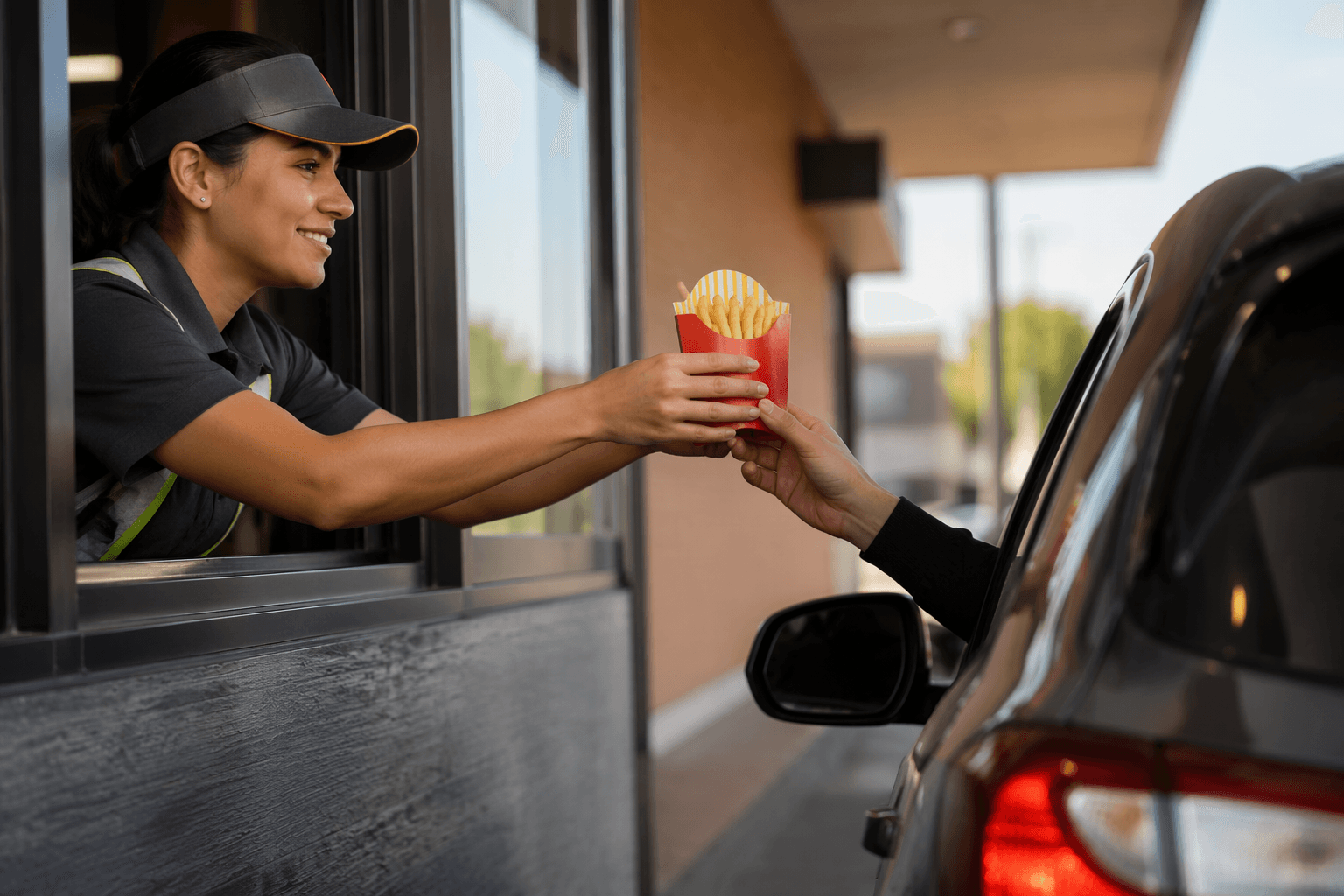
McDonald’s is built on constant customer flow, so a nursing break needs more than good intentions. The DOL says restaurant employers may temporarily convert existing space, such as a storage room or a manager’s office, into a compliant pumping area. The space needs at least a place to sit and a flat surface for the pump, and it has to be available whenever the employee needs it.
That practical detail is what makes the issue so different from office work. A restaurant does not always have a spare room, but it often has a room that can be adapted. A storage area can be cleared, a manager’s office can be shielded, a chair and flat surface can be added, and cameras can be adjusted so the worker has privacy. The point is repeatability. A one-time improvisation is not enough if the schedule keeps bringing the worker back to the same problem every shift.
For a crew member, the smartest move is to raise the issue early, before it becomes a scramble during peak service. For a manager, the job is to translate the request into coverage: who steps in, where the worker goes, and how long the break takes without leaving the floor exposed.
Why the timing of the law matters
The legal framework is newer than many restaurant workers realize. The FLSA first added pump-at-work protections in 2010. The PUMP Act was signed on December 29, 2022 as part of the Consolidated Appropriations Act of 2023, and the broader remedies became enforceable on April 28, 2023. The Department of Labor has said the law extended coverage to as many as 9 million more employees who were not previously covered.
That timeline matters because a lot of store-level managers still treat pumping like an exception instead of part of the normal staffing conversation. The DOL’s 2024 retail-and-restaurant guidance is designed to stop that. It tells employers that break time, privacy, and pay are not side issues. They are part of the shift plan, just like order-taking, register coverage, and closing duties.
What this means inside McDonald’s’ franchise system
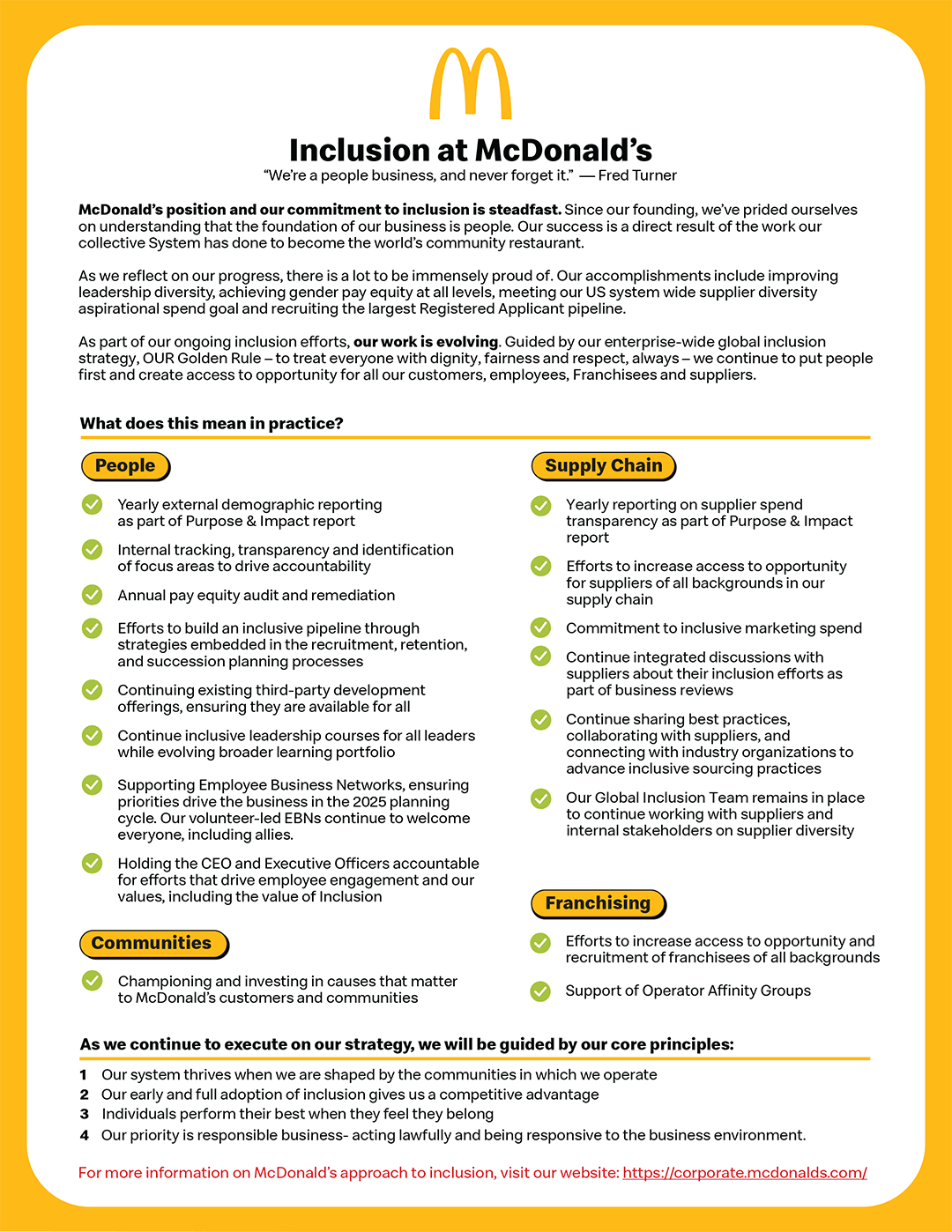
McDonald’s adds another layer, because the company’s standards say all McDonald’s restaurants, whether company-owned or franchised, are subject to the same standards. That means workers should not be told that the rules disappear just because a store is run by a franchisee. The standards may be implemented locally, but the baseline expectation is the same across the system.
That matters for crew members who move between stores, for managers who are trying to keep labor costs in line, and for franchise operators who may be tempted to treat pumping breaks as a staffing problem to be solved informally. The DOL guidance pushes the opposite direction. It says the right has to be built into restaurant operations, not negotiated shift by shift.
The lawsuit shows what goes wrong when stores improvise
The stakes became public in February 2024, when a proposed collective action lawsuit filed in Illinois federal court alleged that McDonald’s employees in Kansas and New York were forced to pump in a stockroom corner, a bathroom, or a back office without privacy. One worker alleged she had no break at all for roughly half her shifts. The complaint said the conditions caused anxiety, humiliation, and emotional distress.
That case is important because it shows how quickly a pumping issue can become a dignity issue. A worker who has to choose between feeding a child and holding a shift together is not facing a paperwork problem. She is dealing with a workplace design problem, and in a restaurant that prides itself on systems, the failure is visible.
The real takeaway for workers and managers
For McDonald’s employees, the right is straightforward: ask for time, a private non-bathroom space, and a schedule that covers the break without forcing you to improvise in the middle of service. If you are still on duty while pumping, that time should be paid. If your store is trying to treat pumping like a productivity hit, the DOL guidance says that is not how it works.
For managers and franchise operators, the lesson is just as direct. A pumping break is not a favor to fit in when the line dies down. It is part of the staffing model. In a business built on speed, the employer has to make room for the realities of work and family life, or the restaurant will keep turning a protected right into a daily conflict.
This article was produced by Prism’s automated news system from verified source data, official records, and press releases, then run through automated quality and moderation checks before publishing. The system is built and supervised by the people who set the standards it runs under. Read our full AI policy.
Did this article answer your question?