Higher gas prices squeeze restaurant traffic, McDonald's workers feel it
Gas at $4.55 is already thinning restaurant traffic, and McDonald's is leaning harder on value menus as crews face choppier rushes and slower dayparts.

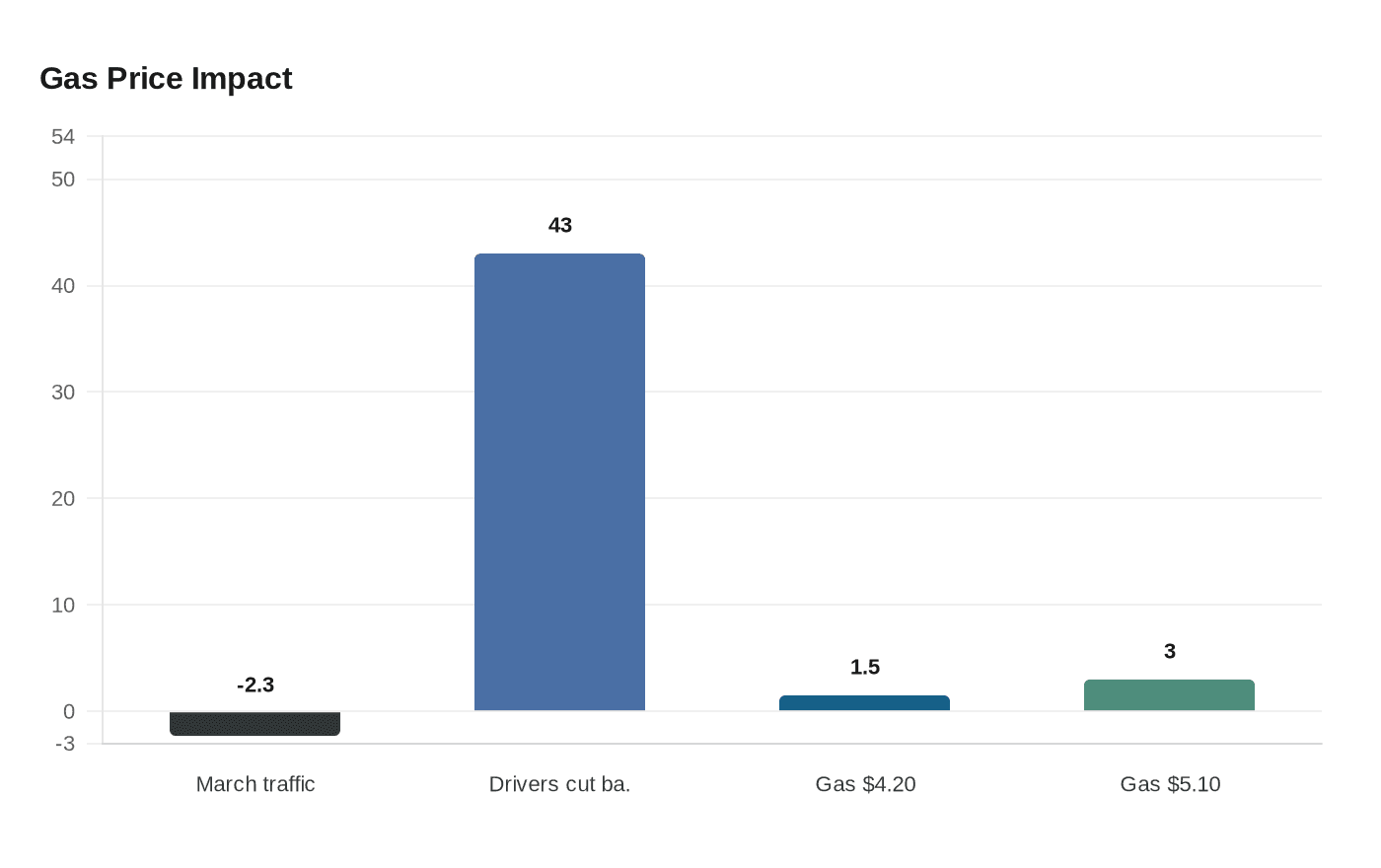
Higher gasoline prices are already changing how often people pull into restaurants, and at McDonald’s that pressure lands first on the schedule board. The national average price for regular gas hit $4.55 on May 7, while Black Box Intelligence said March restaurant traffic fell 2.3% from a year earlier and its broader industry gauge marked the eighth straight month of negative traffic growth.
That slowdown matters inside a McDonald’s restaurant because labor needs rise and fall with the flow of cars. A Numerator survey cited by CNBC found 43% of drivers said they had cut back on dining out or takeout since gas prices started moving higher. When households start watching every trip, stores can see uneven breakfast and late-night sales, thinner lunch peaks and more pressure on managers to rework staffing before the day is over.
McDonald’s has responded by leaning harder into value. On April 21, the chain expanded its McValue platform in the United States with a new Under $3 Menu and a $4 Breakfast Meal Deal at participating restaurants. The company said the goal was to give customers “more choice and flexibility,” but the operational message is just as clear: value is now a traffic defense, not just a marketing pitch.
The stakes were visible in McDonald’s first-quarter 2026 results. The company reported global comparable sales up 3.8% and global systemwide sales up 11% to more than $34 billion for the quarter. Chief executive Chris Kempczinski said value leadership was working and traffic had improved, but he also warned that “consumer spending could be getting a little bit worse” as higher fuel prices squeezed households.
Kempczinski went further on the earnings call, saying gas prices linked to the Iran war were disproportionately hurting lower-income consumers. Reuters reported that McDonald’s was seeing a softer start to the second quarter, even after beating Wall Street’s revenue and adjusted earnings expectations. That is the tension franchise operators know well: the brand can post solid corporate numbers while individual stores still wrestle with day-by-day traffic swings.
Industry analysis points to how quickly the pain can show up. Revenue Management Solutions data cited in news reports found that gas around $4.20 could translate into roughly 1.5% fewer fast-food visits, while $5.10 gas could mean about a 3% drop. For McDonald’s crews, that means the pressure is not abstract. It shows up as choppier rushes, more value orders that can drag on check averages, and staffing decisions made one shift at a time.
This article was produced by Prism’s automated news system from verified source data, official records, and press releases, then run through automated quality and moderation checks before publishing. The system is built and supervised by the people who set the standards it runs under. Read our full AI policy.
Did this article answer your question?