How to apply for McDonald’s jobs, and why hiring varies by location
McDonald’s makes applying easy, but the real hiring rules shift by store. Know where to apply, who controls the job, and what can change before you accept an offer.
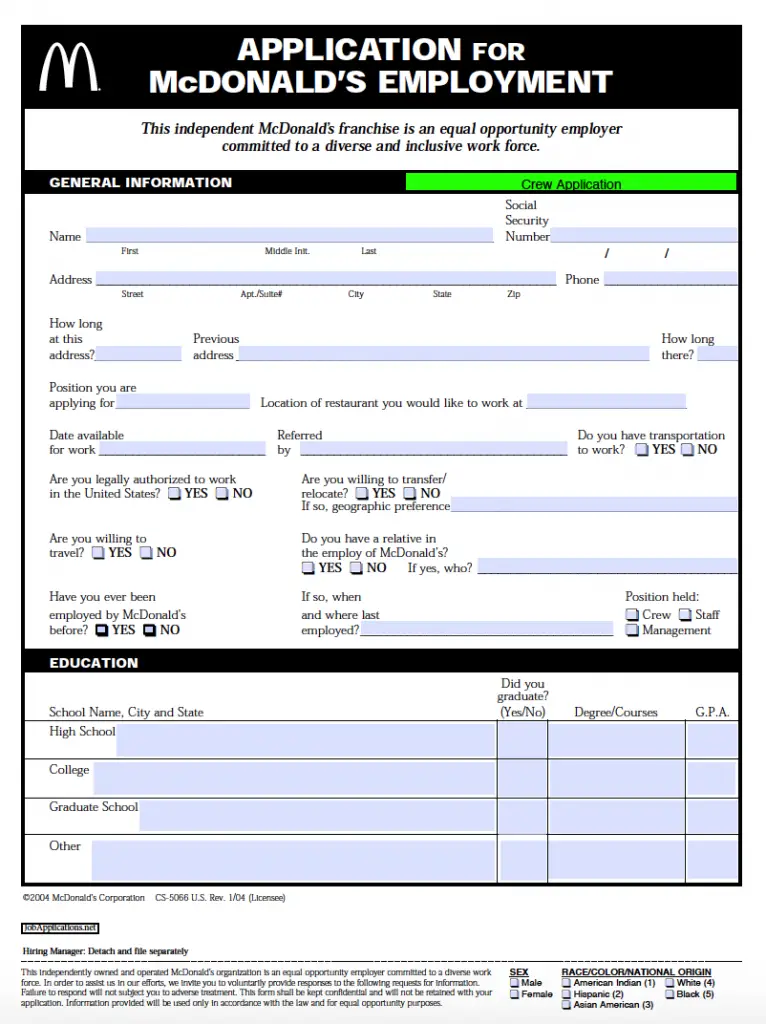
McDonald’s makes the front door to its jobs look simple: go to the careers site, choose Restaurant Jobs or Corporate Jobs, and start searching. The harder part comes after that, because a restaurant role is often decided at the store level, not by a single national hiring office. For anyone trying to get hired fast, the smartest move is to treat the application as the first step in a local process that can differ by restaurant, franchise owner, and market.
Start with the right portal
The clearest path is McDonald’s careers website, where applicants are directed to look under Restaurant Jobs or Corporate Jobs. McDonald’s also runs a dedicated restaurant jobs portal, plus a global careers page that lets people search by location. That setup matters because the job search is not just about finding an opening; it is about finding the specific restaurant, or office, that will actually handle the next step.
For restaurant applicants, the practical move is to search by location and then drill down to the individual restaurant posting. McDonald’s says that if you want to know whether a location is hiring, you should use the Restaurant Jobs page, which in most cases sends you to that brand restaurant’s own site. The company’s jobs site showed 53,993 open jobs at the time of retrieval, which is a reminder that this is a huge, constantly moving system rather than a single hiring queue.
What hiring looks like once you apply
McDonald’s says restaurant hiring is handled at the store level. That means the person reviewing your application, deciding whether to call you back, and setting expectations about the role may be tied to the specific restaurant, not to a national team. The company also says there are two kinds of restaurants: company-owned restaurants and restaurants independently owned and operated by franchisees, and hiring policies can vary between them.
That local control is why applicants should not assume every McDonald’s job works the same way. The shift you get, the timing of onboarding, and the questions you need to ask can all depend on where you apply. In practice, a fast-food application is not only about whether the store is hiring, but whether that location is staffed, who is managing the schedule, and how quickly the restaurant can move someone from application to first shift.
Crew to management, with benefits that depend on the location
McDonald’s restaurant careers portal says restaurants are hiring across all levels, from Crew team members through Management. That is important for workers who think of McDonald’s as only a first job, because the company presents the restaurant path as a ladder, not just an entry point. The portal also says benefits and perks are available only for certain positions and may vary by location, which means the offer you see in one store may not match the offer at another.
That variation is not a small detail. For restaurant workers, it can shape the whole experience of taking the job, especially when a shift schedule, training plan, or benefit package is attached to one store’s labor budget rather than a uniform companywide standard. A clear application process helps, but the best applicants still compare stores the way they would compare any other workplace: by asking what the schedule looks like, who approves time off, and what advancement looks like after the first few months.
How to cut down on confusion and drop-off
The easiest way to move through the process is to keep the search narrow and ask direct questions early. Start with the official careers site, check whether the role is restaurant or corporate, and use the location-based search to confirm that the store you want is actually hiring. If you find a store posting, read it closely, because the details around pay, perks, and onboarding may be different from the last McDonald’s job you saw.
- Is this restaurant company-owned or franchise-operated?
- Who will contact me after I apply?
- What days and hours are you hiring for first?
- When does training start, and how long does it take?
- Which benefits apply to this specific job?
A few practical questions can prevent a lot of no-shows and false starts:
Those questions matter because the fastest hires are usually the ones that get clarity before the interview ends. For managers, the best way to reduce drop-off is to make the next step obvious: tell candidates exactly who is following up, what they need to bring, and when they should expect to hear back.
Use the tools McDonald’s already gives applicants
McDonald’s corporate careers site says a virtual recruiting assistant named Sam can help job seekers search for a job and then connect them to the next steps for submitting an application. That can be especially useful for applicants who are new to the process or who are trying to sort through multiple openings at once. In a company this large, a guided search can keep people from bouncing out of the process before they ever reach a manager.
McDonald’s also says its company employees in corporate offices and company-owned and operated restaurants totaled over 150,000 at year-end 2024, with about 70 percent based outside the United States. That global footprint helps explain why the hiring system looks segmented. A job search that feels routine in one city may sit inside a much bigger network that stretches through Chicago, Mexico City, Utrecht, and far beyond, with local rules layered on top of global branding.
Why the location piece matters for workers
This is where McDonald’s differs from a simple online application for a single employer. The company’s scale, its franchise structure, and its local hiring control all pull in different directions. For workers, that can create confusion, but it also means one store’s process should not be taken as the rule for every McDonald’s.
That distinction matters in a workplace where wage debates, automation pressure, and franchise-versus-corporate tension all shape how the job feels on the ground. A person applying for crew work is not just looking for a logo on a sign; they are trying to find out who really runs the shift, how quickly they can get trained, and whether the job will match the way it was described online. At McDonald’s, the application is national, but the job is local, and that is the first thing every applicant should understand before clicking submit.
This article was produced by Prism’s automated news system from verified source data, official records, and press releases, then run through automated quality and moderation checks before publishing. The system is built and supervised by the people who set the standards it runs under. Read our full AI policy.
Did this article answer your question?